
Dental implants abroad: how many trips you may need and how to plan them
Dental implants usually happen in stages, so treatment abroad often means more than one trip. Here is what each visit may involve and how to plan your travel around your own treatment plan.
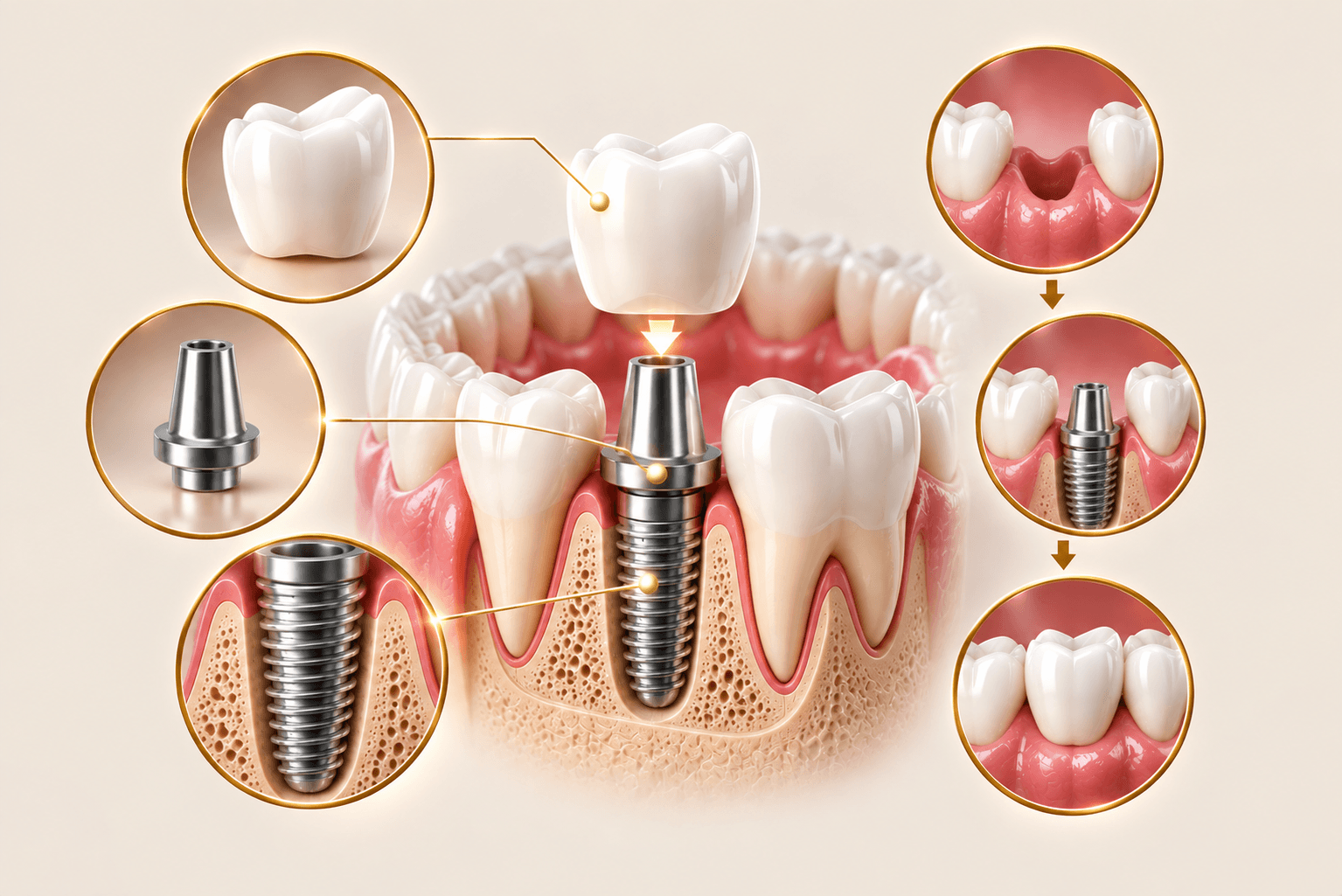
If you are thinking about dental implants abroad, one of the first practical questions is how many times you will need to travel. Unlike a filling or a clean, implant treatment usually happens in stages, with a healing period in the middle. That means many patients make two or more trips, but the exact number depends on your mouth, your health and the plan your dentist puts together for you.
This guide explains why implants often need several visits, what usually happens on each trip, and how to plan your travel so it fits around your treatment.
Why dental implants abroad often need more than one trip
A dental implant is a small titanium or ceramic post placed in the jawbone to replace the root of a missing tooth. Once it has fused with the bone, a crown, bridge or denture is attached on top. That fusing process, called osseointegration, is the main reason treatment is spread out.
The bone needs time to grow around the implant and anchor it firmly. How long this takes varies a lot from person to person, and the final teeth are normally only fitted once the dentist is happy that healing is complete. In practice, most courses of treatment follow these stages:
- Consultation and planning
- Preparation, if needed (extractions, gum treatment or bone grafting)
- Implant placement
- Healing while the implant bonds with the bone
- Abutment and impressions or digital scans
- Fitting and adjusting the final crown, bridge or denture
Some of these steps can take place during the same visit, while others need weeks or months in between. That is why the number of trips is usually decided case by case.
What usually happens on each trip
Every treatment plan is different, but many patients travelling for implants follow a pattern along these lines.
First trip: assessment and implant placement
On arrival, the clinic examines your mouth and takes X-rays or a 3D scan. The dentist confirms whether implants are suitable and finalises the plan. If you need teeth taken out or gum disease treated, this may happen first. The implants are then placed during minor oral surgery, usually under local anaesthesia, and you go home the same day. Some clinics also offer sedation.
In some cases, a temporary tooth can be fitted on the same day as the implant. Whether this is possible depends on your bone and the clinic's assessment, so it is never something to assume in advance.
The healing period at home
After the first trip, you return home while the implant heals. You may have a few days of soreness and swelling at first, then a longer, quieter phase while the bone bonds with the implant. Following your aftercare instructions carefully during this time really matters.
Second trip: the final teeth
Once healing is complete, you travel back for the abutment, impressions or scans, and the fitting of your permanent crown, bridge or implant-supported denture. The dentist checks your bite and makes adjustments so the new teeth feel comfortable.
Possible extra trips
Some people need an additional visit, for example if bone grafting or a sinus lift is needed before implants can be placed, or if the final teeth need further adjustment. Ask the clinic early on whether your plan is likely to include extra stages.
Factors that can change the number of visits
No one can tell you the exact number of trips without examining you. Things that can affect your timeline include:
- How much bone you have: if there is not enough, bone grafting or a sinus lift may be needed first, which can add a stage.
- The health of your gums: active gum disease needs treating before implants are placed.
- The number of implants: a single implant and a full-arch restoration are planned very differently.
- Whether a temporary tooth can be fitted straight away: this depends on bone quality and stability.
- Your general health: smoking, poorly controlled diabetes and some medicines can slow healing.
- How quickly you heal: healing varies from person to person and cannot be predicted precisely.
How to plan your trips for dental implants abroad
Good planning can make treatment abroad feel much calmer. A few practical tips:
- Ask for a written timeline. Request a treatment plan that shows the expected stages, the number of visits and roughly how many days each one may take.
- Send your records in advance. Many clinics can review recent X-rays or scans before you travel, which helps them give you a more realistic plan.
- Keep your travel flexible. Where possible, choose bookings you can change, in case the dentist advises extra healing time.
- Allow rest days after surgery. Avoid planning a long flight or a packed sightseeing schedule straight after implant placement. Ask the clinic when it is reasonable for you to travel.
- Plan soft food and quiet days. In the first days, eating soft food, chewing on the other side and avoiding smoking and alcohol are commonly advised.
- Check what is included. Ask for an itemised plan covering scans, temporary teeth, sedation, follow-up visits and how aftercare is arranged, and remember to budget for travel and accommodation on every trip.
- Arrange follow-up at home. Ask how check-ups will work once you are back home, and whether a local dentist can help if something needs looking at between visits.
Questions to ask the clinic before you book
Clear answers help you compare clinics fairly. Consider asking:
- How many trips do you expect for my case, and why?
- How long should I stay for each visit?
- Will I have a temporary tooth during the healing phase?
- What happens if healing takes longer than planned?
- Which implant brand and crown materials do you use?
- How is aftercare handled once I am home?
- What qualifications and implant experience do your dentists have?
When to talk to a doctor
Before booking, speak to a dentist or doctor if you have any long-term condition, take medicines that affect bone or blood clotting, have had radiotherapy to the head or neck, or smoke. These can all affect whether implants suit you and how you heal.
After surgery, contact your treating dentist promptly if you notice pain or swelling that gets worse instead of better, bleeding that does not settle, signs of infection, or numbness or tingling that does not go away. Recovery, risks and suitability are different for everyone, so always follow the advice of the dentist treating you.
Compare verified clinics for your implants
Planning dental implants abroad is easier when you can see clear treatment plans side by side. You can explore our dental implant clinics and treatment information, compare verified clinics at your own pace and send one free request. The clinics will then contact you to discuss your case, your likely number of trips and the next steps, with no obligation to go ahead.