
Planning all-on-4 abroad: how to choose a clinic and plan your two trips
Thinking about all-on-4 abroad? This guide covers how to compare clinics, which questions to ask, and how to plan the surgery trip, the healing time at home and the final bridge visit calmly.
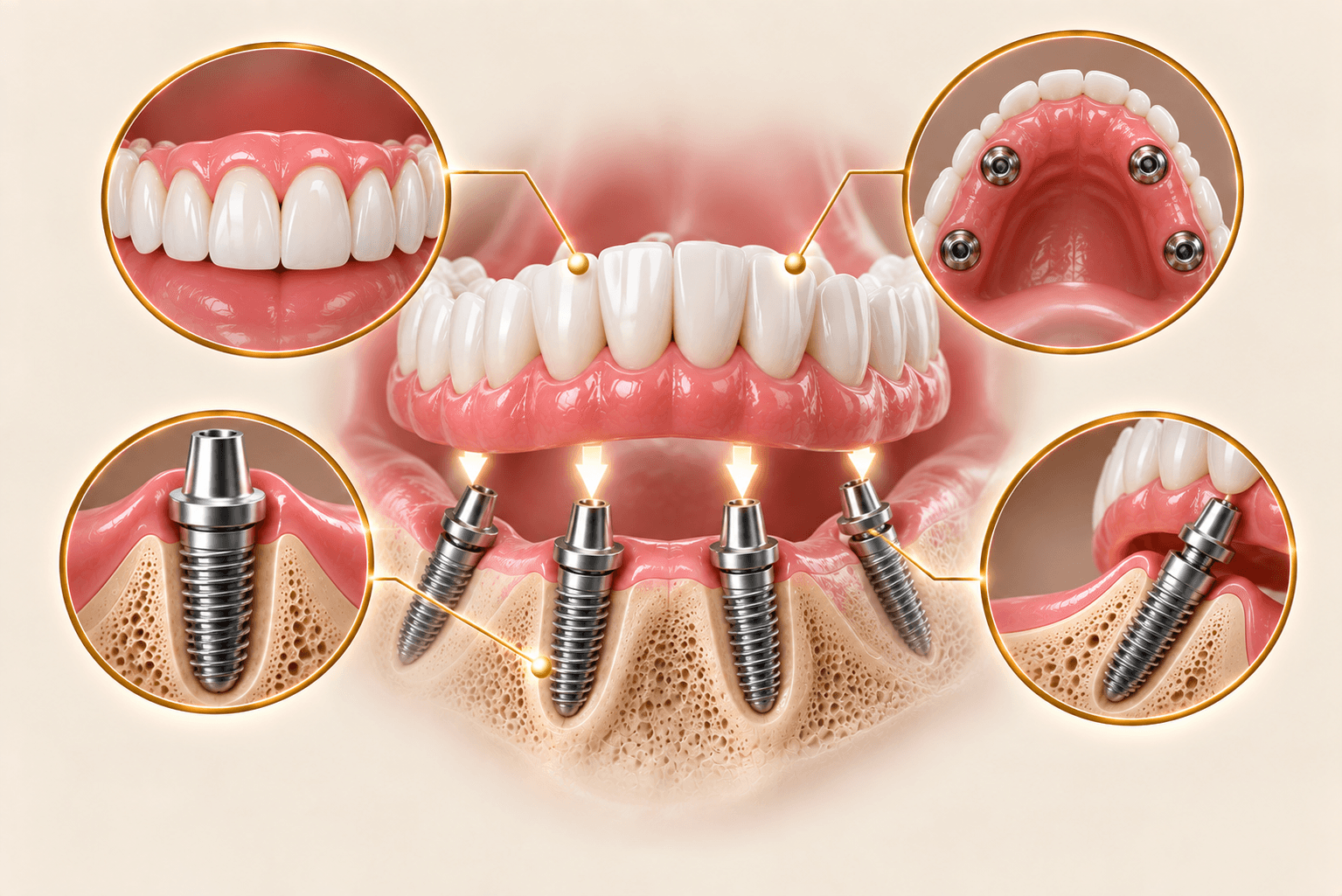
Replacing a full arch of teeth is a big decision, and travelling for treatment adds a few more things to think about. Many patients look into all-on-4 abroad because it lets them compare clinics in different countries and find a treatment plan that fits them. To make it work well, you need to pick the clinic carefully and plan your trips with care. This guide walks you through both, step by step.
All-on-4 dental implants replace a full upper or lower arch of missing, badly damaged or failing teeth with a fixed bridge held by four implants in the jawbone. The back implants are often angled to make the most of the bone you have, which can reduce the need for bone grafting in some patients. Whether this approach suits you can only be decided by a dentist after an examination and scans.
How all-on-4 abroad usually works: two trips
When you travel for All-on-4, treatment is usually split into two visits, because the implants need time to bond with the bone before the final bridge can be made.
- First trip: consultation, 3D scan, final planning, extractions if needed, placement of the four implants and, in many cases, a temporary fixed bridge fitted soon afterwards
- Healing at home: the implants gradually fuse with the bone over a period of months, while you wear the lighter temporary bridge
- Second trip: the final, custom-made bridge is fitted and your bite is adjusted
Your clinic will explain the plan for your case. Some people need extra steps, such as bone grafting or a sinus lift, and this can change the timing and the number of visits.
How to choose a clinic for All-on-4 abroad
A clear treatment plan and honest answers matter more than the lowest price. Look for a clinic that is open about:
- The qualifications and full-arch experience of the dentist who will do the surgery
- How treatment is planned, including whether a 3D scan is used
- Which implant system it uses
- What is included in the price and what may cost extra
- How aftercare works once you are back home
It helps to compare a few clinics side by side. Look at how quickly and clearly they answer, whether they ask about your medical history, and whether they explain risks as well as benefits. If a clinic promises perfect results or pushes you to decide fast, take that as a reason to slow down.
Questions to ask before you book
Write your questions down and ask for answers in writing. Useful ones include:
- Who will carry out the surgery, and how many full-arch cases do they treat?
- Which implant brand is used, and can a dentist in my home country service it?
- Is a 3D scan or CT scan part of the planning?
- What does the quote include: scans, extractions, sedation, the temporary bridge, the final bridge, follow-up visits?
- What material will the final bridge be made of, for example acrylic, composite, zirconia or a metal framework?
- How many trips will I need, and how long should I plan to stay each time?
- What happens if a problem comes up after I return home?
Ask for a written cost breakdown so you can see exactly what each offer covers. Prices differ between countries and clinics, and the cost depends on your individual plan, so it can only be confirmed after an examination.
Planning your first trip
The first trip is usually the more demanding one, so give yourself some breathing room.
- Send your records early: recent X-rays, a list of your medicines and details of any health conditions help the clinic plan
- Be open about your health: conditions such as uncontrolled diabetes, smoking, teeth grinding and medicines that affect bone or blood clotting can all affect suitability and healing
- Do not rush the schedule: ask the clinic how long to stay after surgery, so they can check healing before you fly
- Choose comfortable accommodation: you will want to rest, use cold packs and eat soft food
- Consider bringing a companion: surgery is often done under local anaesthesia with sedation, and sometimes general anaesthesia, so having someone with you can help
- Ask about travel advice: check with your clinic when it is reasonable to fly after surgery in your case
Most people have swelling, some bruising and discomfort for the first days. This is usually managed with medicines prescribed by the dentist. How quickly you recover differs from person to person.
Between the trips: healing at home
The time at home matters as much as the surgery. During this phase you will usually be asked to:
- Follow a soft diet and avoid chewing hard foods on the temporary bridge
- Keep the area clean as instructed, often with gentle rinses
- Avoid smoking, as it can slow healing and is known to increase the risk of implant problems
- Take medicines exactly as prescribed
- Attend remote check-ups or send photos if the clinic asks
It is also a good idea to find a local dentist before you travel who is willing to see you if needed. Ask your clinic for a written summary of your treatment, including the implant system used, so a local dentist knows what was done.
Planning your second trip
The second trip is for the final bridge. It is often shorter, but it can still involve several appointments for fitting and bite adjustments. Ask the clinic in advance how many visits to expect, so you do not book a return flight that leaves too little time.
Before you leave, make sure you understand how to clean the bridge every day, how often to have professional check-ups, and what the warranty or follow-up arrangement covers. Over the long term, the bridge needs care just like natural teeth.
When to talk to a doctor
All-on-4 is an established treatment, but like any surgery it carries risks. These include infection, implants that do not fuse with the bone, nerve irritation causing numbness or tingling, sinus problems with upper implants, breakage of the bridge and gum inflammation around implants. Risks and suitability differ for each person and should be discussed with your treating dentist.
Contact your clinic or a local dentist or doctor promptly if you notice:
- Swelling or pain that gets worse instead of better
- Fever, pus or a bad taste that does not go away
- Bleeding that does not stop
- Numbness in the lip or chin that lasts
- A loose implant or a cracked or loose bridge
If you have a long-term health condition or take regular medicines, talk to your own doctor before you book, so you can go ahead with confidence.
Ready to take the next step? You can compare verified clinics, read about the treatment and send one free request on our All-on-4 dental implants page. Clinics will then contact you, so you can ask your questions and choose at your own pace.