
All-on-4 dental implants: a fixed full arch on four implants
All-on-4 dental implants replace a full arch of missing or failing teeth with a fixed bridge held by four implants. This guide covers who may be suitable, the treatment steps, recovery, risks and what affects the cost.
About All-on-4 dental implants
All-on-4 dental implants are a way to replace a full arch of missing or failing teeth with a fixed bridge supported by four implants placed in the jawbone. The back implants are often angled to make the most of available bone, which can reduce the need for bone grafting in some patients.
Key facts
- Treats: a full upper or lower arch of missing teeth, badly damaged teeth or loose dentures
- How it is done: four implants are placed in the jaw and a fixed bridge is attached to them
- Anaesthesia: usually local anaesthesia, often with sedation, and sometimes general anaesthesia
- Hospital stay: normally an outpatient procedure, so you go home the same day
- Recovery phases: early healing with a temporary bridge, a healing period while the implants fuse with the bone, then the final bridge is fitted
Who is suitable for All-on-4 dental implants?
All-on-4 is usually considered for adults who have lost most or all teeth in one jaw, or whose remaining teeth cannot be saved. It can also suit people who find removable dentures uncomfortable. Whether it is right for you can only be decided by a dentist after an examination and scans.
Factors the dentist will usually look at include:
- The amount and quality of bone in your jaw
- Your gum health and general health
- Conditions such as uncontrolled diabetes, which can affect healing
- Smoking, which is known to increase the risk of implant problems
- Some medicines, for example those that affect bone or blood clotting
- Teeth grinding and your bite
If there is not enough bone, the dentist may suggest a different approach, such as bone grafting, more implants or another type of implant.
How is the All-on-4 procedure done?
The treatment usually starts with a consultation, a 3D scan and a treatment plan. On the day of surgery, any remaining failing teeth are removed, four implants are placed and, in many cases, a temporary fixed bridge is attached soon afterwards. The final bridge is made once the implants have healed.
A typical sequence looks like this:
- Planning: examination, X-rays or CT scan, discussion of your medical history and goals
- Surgery: extractions if needed, placement of two straight front implants and two angled back implants
- Temporary teeth: a lighter provisional bridge, often fitted shortly after surgery when the implants are stable enough
- Healing: the implants gradually bond with the bone over a period of months
- Final bridge: a stronger, custom-made bridge is fitted and your bite is adjusted
When you travel abroad, this often means two trips: one for surgery and temporary teeth, and a second one for the final bridge. Your clinic will explain the plan that fits your case.
What is recovery like after All-on-4?
Most people have swelling, some bruising and discomfort for the first days after surgery, which is usually managed with medicines prescribed by the dentist. A soft diet is normally needed during the healing phase. How quickly you recover differs from person to person.
General points patients are often given:
- Rest after surgery and follow all aftercare instructions
- Use cold packs and take medicines exactly as prescribed
- Eat soft foods and avoid chewing hard foods on the temporary bridge
- Keep the area clean as instructed, often with gentle rinses
- Avoid smoking, as it can slow healing
- Attend all check-ups, including remote follow-up if you have travelled
Over the long term, the bridge needs daily cleaning and regular professional check-ups, just like natural teeth.
What are the risks and side effects?
All-on-4 is an established treatment, but like any surgery it carries risks. Most side effects are temporary, though complications can happen. Your dentist should explain the risks that apply to you personally.
Possible risks include:
- Pain, swelling, bruising and bleeding after surgery
- Infection around the implants
- Implants that do not fuse with the bone and need to be replaced
- Nerve irritation, which can cause numbness or tingling in the lip or chin
- Sinus problems with upper jaw implants
- Breakage or wear of the temporary or final bridge
- Gum inflammation around implants (peri-implantitis) if cleaning is not thorough
Good planning, an experienced team and careful aftercare help lower these risks, but no clinic can rule them out completely.
What affects the cost of All-on-4 dental implants?
The cost depends on your individual treatment plan, so it can only be confirmed after an examination. Prices differ between countries and clinics, and also depend on what is included in a quote.
Common cost factors are:
- One jaw or both jaws
- Brand and type of implants used
- Material of the final bridge, such as acrylic, composite, zirconia or a metal framework
- Extractions, bone grafting or sinus lift if needed
- Scans, sedation or general anaesthesia
- Number of visits and length of stay
- Aftercare, warranties and follow-up appointments
When you compare offers, ask for a written breakdown so you can see exactly what each quote covers.
How do I choose a clinic abroad for All-on-4?
Pick a clinic that is open about its qualifications and planning process, and about how it handles aftercare. A clear treatment plan and honest answers to your questions matter more than the lowest price.
Useful questions to ask:
- Who will do the surgery, and how experienced are they with full-arch implants?
- Which implant system is used, and can it be serviced in your home country?
- Is a 3D scan part of the planning?
- What is included in the price, and what may cost extra?
- How many trips are needed, and how long should you plan to stay?
- What happens if there is a problem after you return home?
Bring your medical history and a list of your medicines to the consultation, and allow enough time between visits for healing.
On our marketplace you can compare verified clinics offering All-on-4 dental implants and send one free request. The clinics then contact you to discuss your options. Your treating dentist will decide which treatment is suitable after examining you.
This page gives general information and is not medical advice. A doctor at the clinic will assess whether a treatment is right for you.
Clinics offering All-on-4 dental implants
 Hayaat Clinic Verified
Istanbul, Türkiye
- All-on-4 dental implants
- Zirconium Crowns
- Dental implants
- Rhinoplasty
English, Arabic, Turkish, French
- Hotel
- Airport transfer
- Interpreter
- Aftercare
Frequently asked questions
Will I leave with teeth on the day of surgery?
In many cases a temporary fixed bridge is attached on the day of surgery or shortly after, if the implants are stable enough. This isn't possible for everyone. Bone quality and how firmly the implants sit when placed both play a part. Your dentist will tell you during planning whether temporary teeth straight away are likely in your situation, and what the alternative would be.
How long do All-on-4 implants last?
With good oral hygiene and regular check-ups, implants are designed as a long-term solution. How long they last differs from person to person, though. Smoking, gum health, teeth grinding and general health all make a difference. The bridge itself may need repairs or replacing over time because of normal wear. Ask your clinic about expected maintenance and any warranty conditions.
Is All-on-4 better than dentures?
All-on-4 gives you a fixed bridge that isn't taken out for cleaning, and many patients find it more stable than removable dentures. It does involve surgery, a longer treatment process and usually higher costs. Dentures may still be a sensible choice for some people. The right option depends on your health, bone, budget and preferences, so discuss both with a dentist.
Does All-on-4 surgery hurt?
The procedure is done under local anaesthesia, often with sedation or sometimes general anaesthesia, so you shouldn't feel pain during surgery. Afterwards, swelling, tenderness and some discomfort are common for a few days. These are usually managed with prescribed painkillers and cold packs. Everyone experiences recovery differently, so follow your dentist's instructions and get in touch with the clinic if pain gets worse instead of better.
How do I clean All-on-4 implant teeth?
You brush the bridge every day like natural teeth, and also clean underneath it and around the implants. Water flossers, interdental brushes or special floss are often recommended for this. Regular professional check-ups and cleaning are also important, and sometimes the dentist removes the bridge to clean it thoroughly. Your clinic should show you the right technique and tools for your bridge.
Related treatments
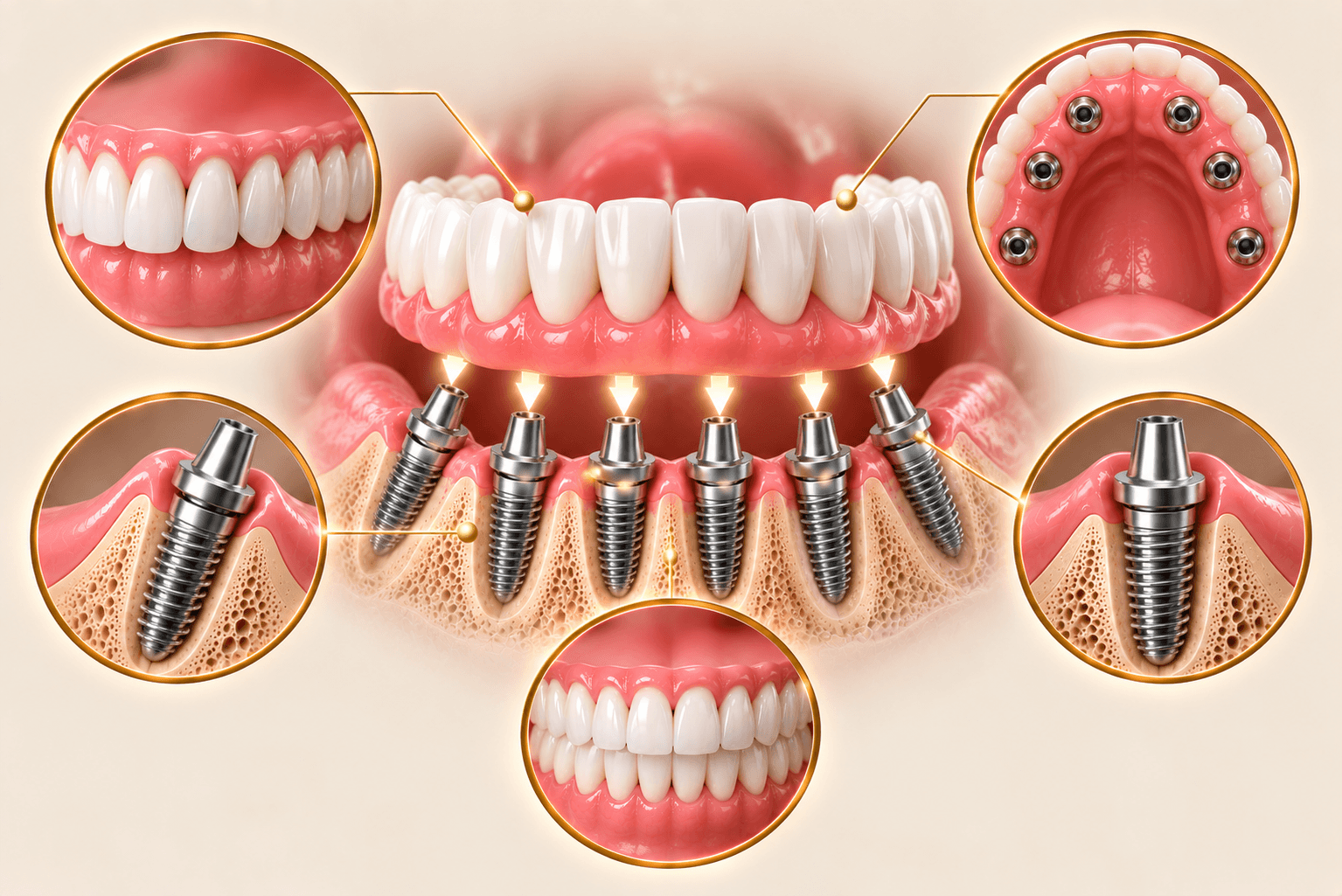
All-on-6 dental implants
All-on-6 dental implants replace a full arch of missing or failing teeth with a fixed bridge supported by six implants. The bridge is screwed in place, so it is not taken out at home like a removable denture.
Verified clinics: 1
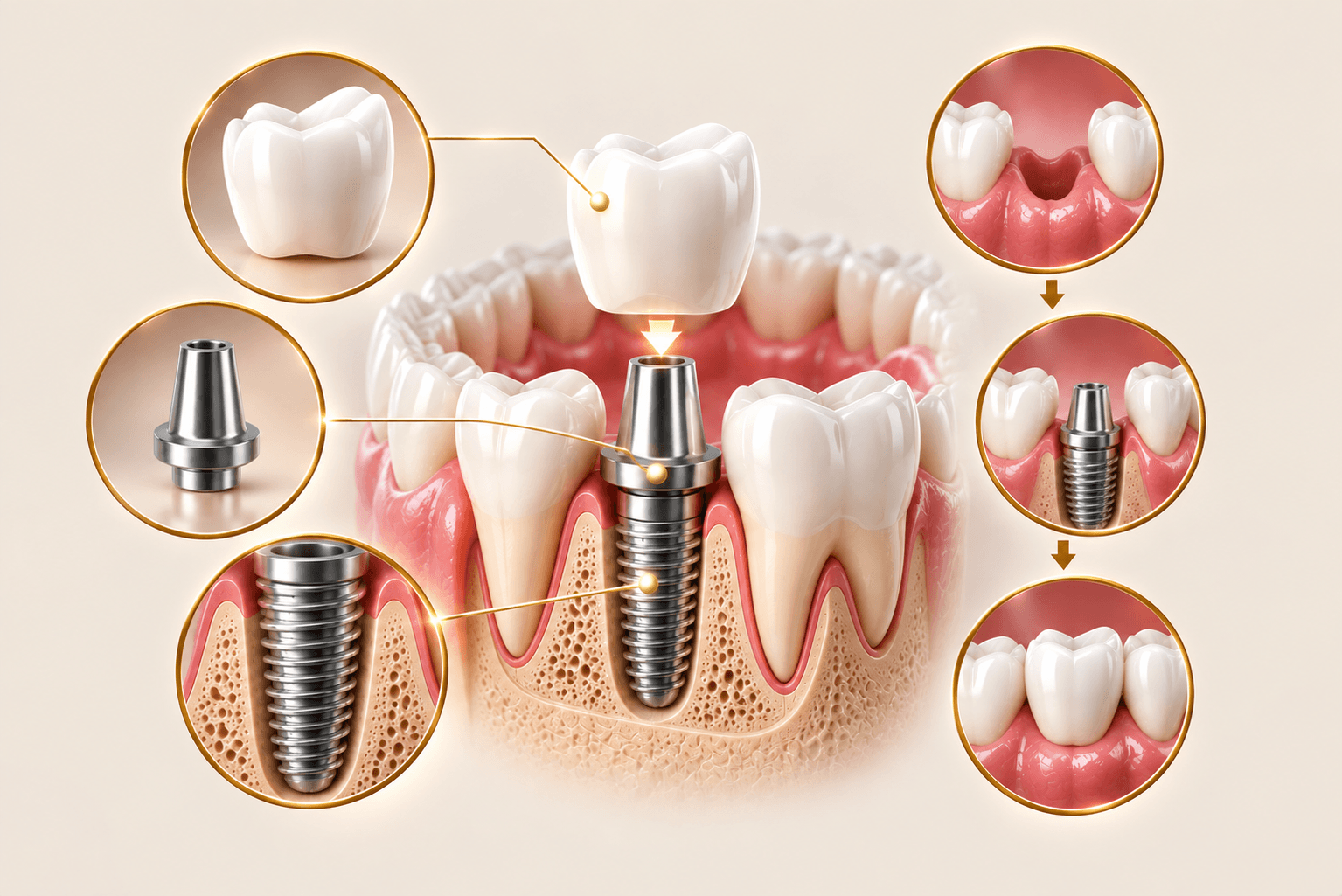
Dental implants
Dental implants replace missing teeth with a post placed in the jawbone that holds a crown, bridge or denture. The result is a fixed, natural-looking replacement.
Verified clinics: 1
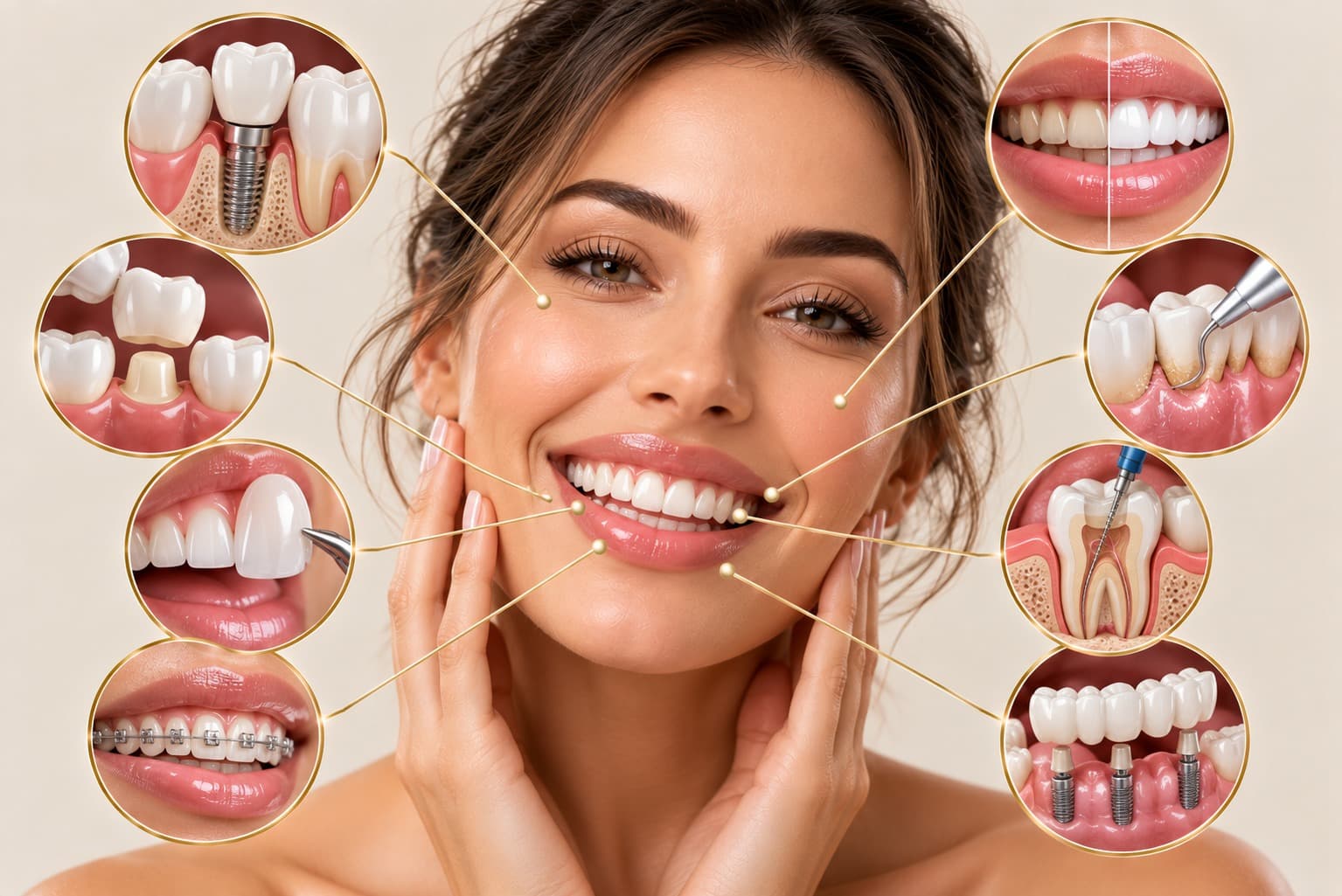
Full-mouth restoration
A full-mouth restoration rebuilds or replaces most or all teeth in both jaws, combining crowns, bridges, implants or veneers to restore chewing, comfort and appearance.
Verified clinics: 1
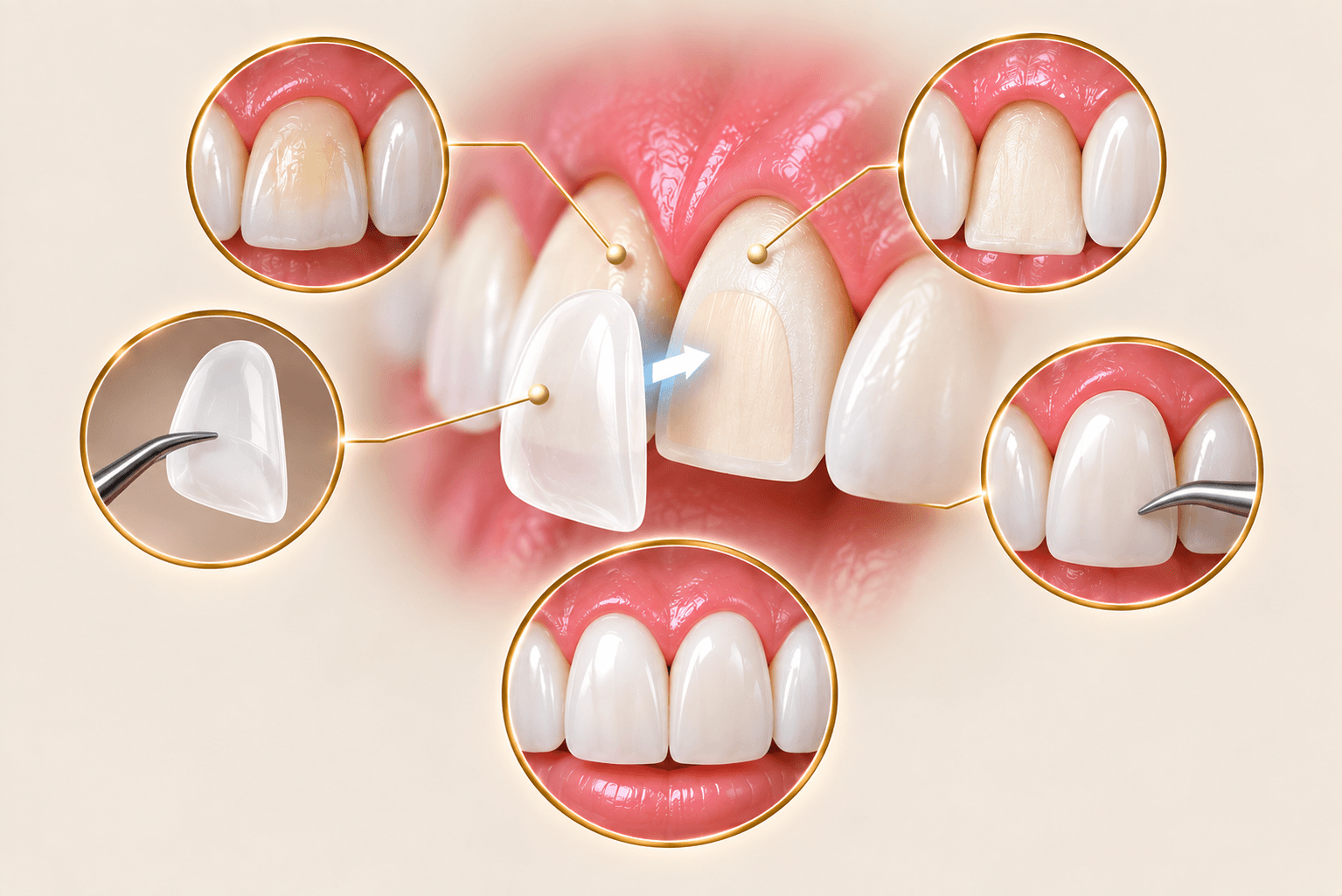
Veneers
Veneers are thin porcelain or composite shells bonded to the front of teeth to improve their colour, shape or size. Learn how veneers work, who they may suit and what to ask clinics abroad.
Verified clinics: 0
Zirconium Crowns
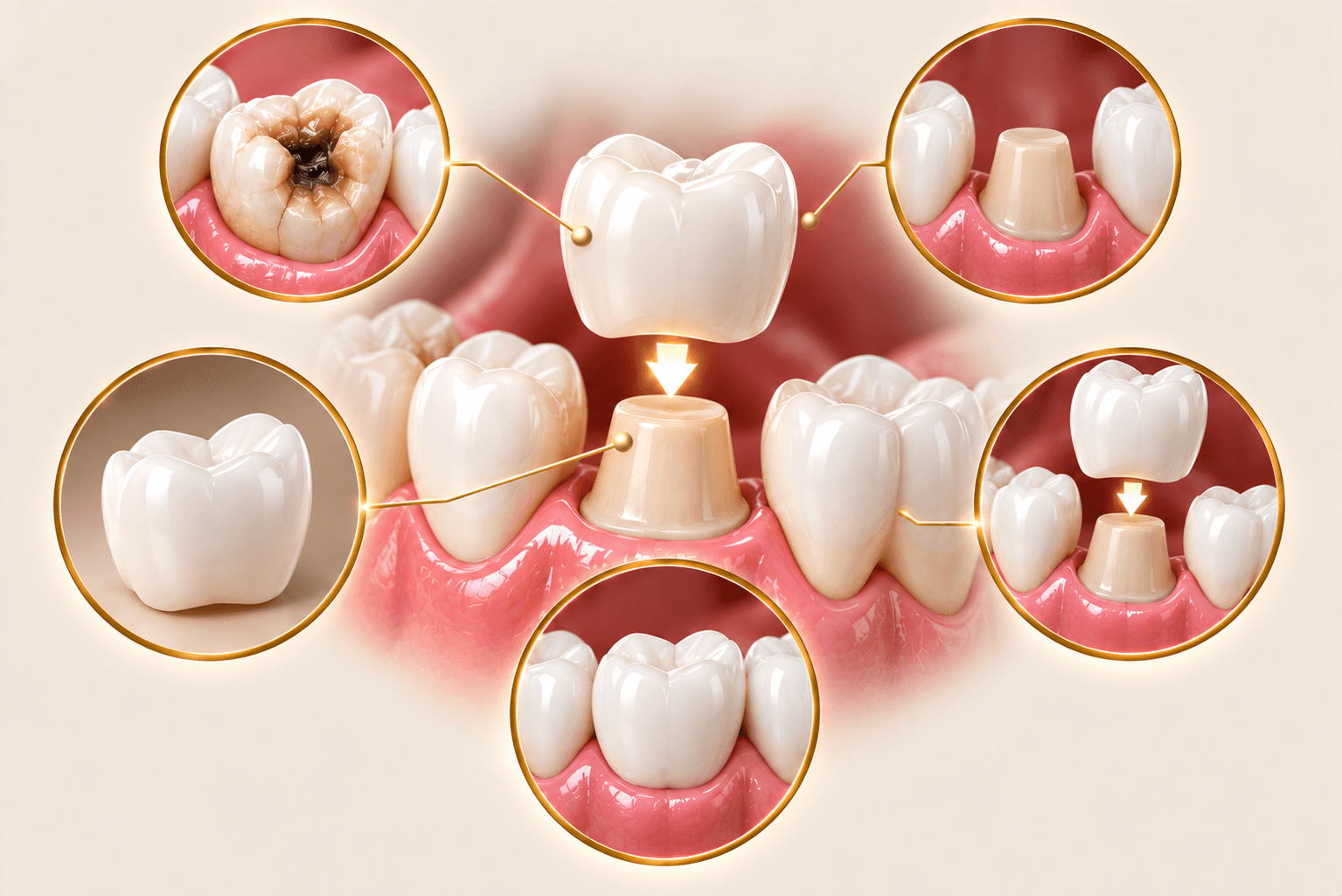
Zirconium crowns are metal-free, tooth-coloured caps that restore damaged, weakened or discoloured teeth or cover dental implants. Learn how they are made and fitted, what recovery involves and what to consider when planning treatment abroad.
Verified clinics: 1