
All-on-6 dental implants: fixed full-arch teeth on six implants
All-on-6 dental implants replace a full arch of missing or failing teeth with a fixed bridge supported by six implants. The bridge is screwed in place, so it is not taken out at home like a removable denture.
About All-on-6 dental implants
All-on-6 dental implants are a way to replace a full arch of missing or failing teeth with a fixed bridge supported by six implants placed in the jaw. The bridge is screwed onto the implants, so it stays in place and is not removed at home like a conventional denture.
Key facts
- Treats: a full upper or lower arch of missing, badly damaged or failing teeth, or replaces an uncomfortable removable denture.
- How it is done: six implants are placed in the jawbone and a full-arch bridge is attached to them, often with a temporary bridge first and a final bridge later.
- Anaesthesia: usually local anaesthesia, sometimes combined with sedation or, in some cases, general anaesthesia.
- Hospital stay: normally an outpatient procedure at the dental clinic, with no overnight hospital stay in most cases.
- Recovery phases: a first healing period with swelling and a soft diet, then a longer phase while the implants bond with the bone, followed by fitting of the final bridge.
Who is suitable for All-on-6 dental implants?
Many adults who have lost most or all teeth in one jaw, or whose remaining teeth cannot be saved, may be candidates. Suitability depends on your bone, gums and general health, and only a dentist or oral surgeon can confirm it after an examination and imaging.
Factors your dentist will usually look at include:
- The amount and quality of bone in your jaw
- Gum health and any active infection
- General health conditions, such as diabetes or conditions affecting healing
- Medications, especially those affecting bone or blood clotting
- Smoking, which can affect healing and implant stability
- Your expectations and ability to keep up with oral hygiene
Some people with limited bone may need a bone graft or a different approach, such as fewer or angled implants, or zygomatic implants. Your dentist will explain which options fit your situation.
How is the All-on-6 procedure done?
The treatment usually takes place over two or more stages. First the implants are placed and often a temporary bridge is fitted; later, once healing has progressed, the final bridge is made and attached.
A typical process looks like this:
- Consultation and planning: examination, X-rays and usually a 3D scan (CBCT) to assess bone and plan implant positions.
- Preparation: any remaining teeth that cannot be saved are removed, and infections are treated.
- Implant placement: six implants are placed in the jawbone under anaesthesia. Spreading the load across six implants can give the bridge extra support.
- Temporary bridge: in many cases a fixed temporary bridge is attached soon after surgery, if the implants are stable enough. Your dentist will decide whether this is possible for you.
- Healing period: the implants gradually bond with the bone.
- Final bridge: impressions or scans are taken and a permanent bridge is made and fitted.
For patients travelling abroad, this means at least two trips are often needed. Ask the clinic how they plan the stages and what happens between visits.
What is recovery like after All-on-6?
Most people experience some swelling, tenderness and possibly bruising in the first days after surgery. Recovery is gradual and differs from person to person, so your dentist will give you instructions that fit your treatment.
In general, recovery may involve:
- Pain relief and, if prescribed, other medication as directed
- Cold compresses to help with swelling in the first days
- A soft or liquid diet at first, then slowly returning to firmer foods when your dentist advises
- Careful cleaning around the implants and bridge as instructed
- Avoiding smoking and alcohol during healing
- Follow-up checks to monitor healing and the fit of the bridge
Long-term care matters too. Implant bridges need daily cleaning, including under the bridge, and regular professional check-ups.
What are the risks and side effects?
Like any surgery, All-on-6 treatment carries risks, although many patients heal without serious problems. Your dentist should explain the risks that apply to you before you decide.
Possible risks and side effects include:
- Pain, swelling and bruising after surgery
- Bleeding or infection
- Implants that do not bond properly with the bone and may need replacing
- Nerve irritation or damage, which can cause numbness or tingling
- Sinus problems with implants in the upper jaw
- Inflammation around implants (peri-implantitis), often linked to hygiene or smoking
- Mechanical issues such as loose screws or a chipped or broken bridge
- Changes in speech or bite while you adapt
Tell your dentist about all health conditions and medications, and contact the clinic if you notice anything unusual during recovery.
What affects the cost of All-on-6 dental implants?
The cost varies widely between countries, clinics and individual treatment plans. A clinic can only give a reliable quote after reviewing your scans or examining you.
Common cost factors include:
- Whether one or both jaws are treated
- The implant system and brand used
- The material of the final bridge, for example acrylic or zirconia, with or without a metal framework
- Extractions, bone grafting or sinus lift procedures
- Type of anaesthesia or sedation
- Temporary bridge, follow-up visits and aftercare
- Travel, accommodation and the number of trips needed
When comparing offers, ask what is included in the price and what may be charged separately.
How do I choose a clinic abroad for All-on-6?
Choose a clinic based on qualifications, transparency and aftercare, not on price alone. A good clinic will answer your questions clearly and explain the plan, the stages and what happens if problems arise after you return home.
Questions worth asking:
- Who will plan and perform the surgery, and what are their qualifications?
- Which implant system is used, and is it widely available in your home country for future maintenance?
- What does the treatment plan include, step by step?
- How many visits are needed, and how long should you plan to stay each time?
- What aftercare and follow-up is offered, and who do you contact if you have a problem at home?
- Is there a written warranty, and what does it cover?
It can also help to arrange a check-up with a local dentist after you return, so someone close to home can monitor your implants over time.
Next steps
On our platform you can compare verified clinics offering All-on-6 dental implants and send one free request. The clinics then contact you to discuss your situation. Your treating dentist will decide, after an examination, whether All-on-6 is suitable for you and which approach is safest.
This page gives general information and is not medical advice. A doctor at the clinic will assess whether a treatment is right for you.
Clinics offering All-on-6 dental implants
 Hayaat Clinic Verified
Istanbul, Türkiye
- All-on-6 dental implants
- Zirconium Crowns
- Dental implants
- Rhinoplasty
English, Arabic, Turkish, French
- Hotel
- Airport transfer
- Interpreter
- Aftercare
Frequently asked questions
What is the difference between All-on-4 and All-on-6?
Both methods attach a fixed full-arch bridge to implants. All-on-4 uses four implants, often with the back ones angled, while All-on-6 uses six. More implants can spread chewing forces across more support points, but they also need enough bone in the right places. Neither is right for everyone. Your dentist will recommend an option after looking at your scans, bone volume and general health.
Can I get teeth on the same day as implant surgery?
Many clinics fit a temporary fixed bridge soon after the implants are placed, sometimes on the same day or within a few days. This depends on how stable the implants are at surgery and on your bone quality. If stability is not good enough, your dentist may advise waiting. The final, permanent bridge is usually fitted later, after the implants have healed.
Is All-on-6 treatment painful?
The surgery itself is done under anaesthesia, so you should not feel pain during it. Afterwards, soreness, swelling and some bruising are common, and how much you feel varies from person to person. Your dentist will usually suggest or prescribe pain relief and give advice on cold compresses, diet and cleaning to help you stay comfortable while healing.
How many trips abroad will I need?
Often at least two trips are needed: one for the consultation, extractions and implant placement with a temporary bridge, and another for the final bridge once healing has progressed. The exact plan depends on your case, for example whether bone grafting is needed. Ask the clinic for a written schedule before you book travel, and plan some flexibility in case extra checks are needed.
How do I look after All-on-6 implants long term?
Clean the bridge and the area around the implants every day, following your dentist's advice. Tools such as water flossers, interdental brushes or special floss can help reach under the bridge. Regular professional check-ups and cleanings are important, and the bridge may need to be removed occasionally by a dentist for maintenance. Not smoking also supports the health of the gums and bone around implants.
Related treatments
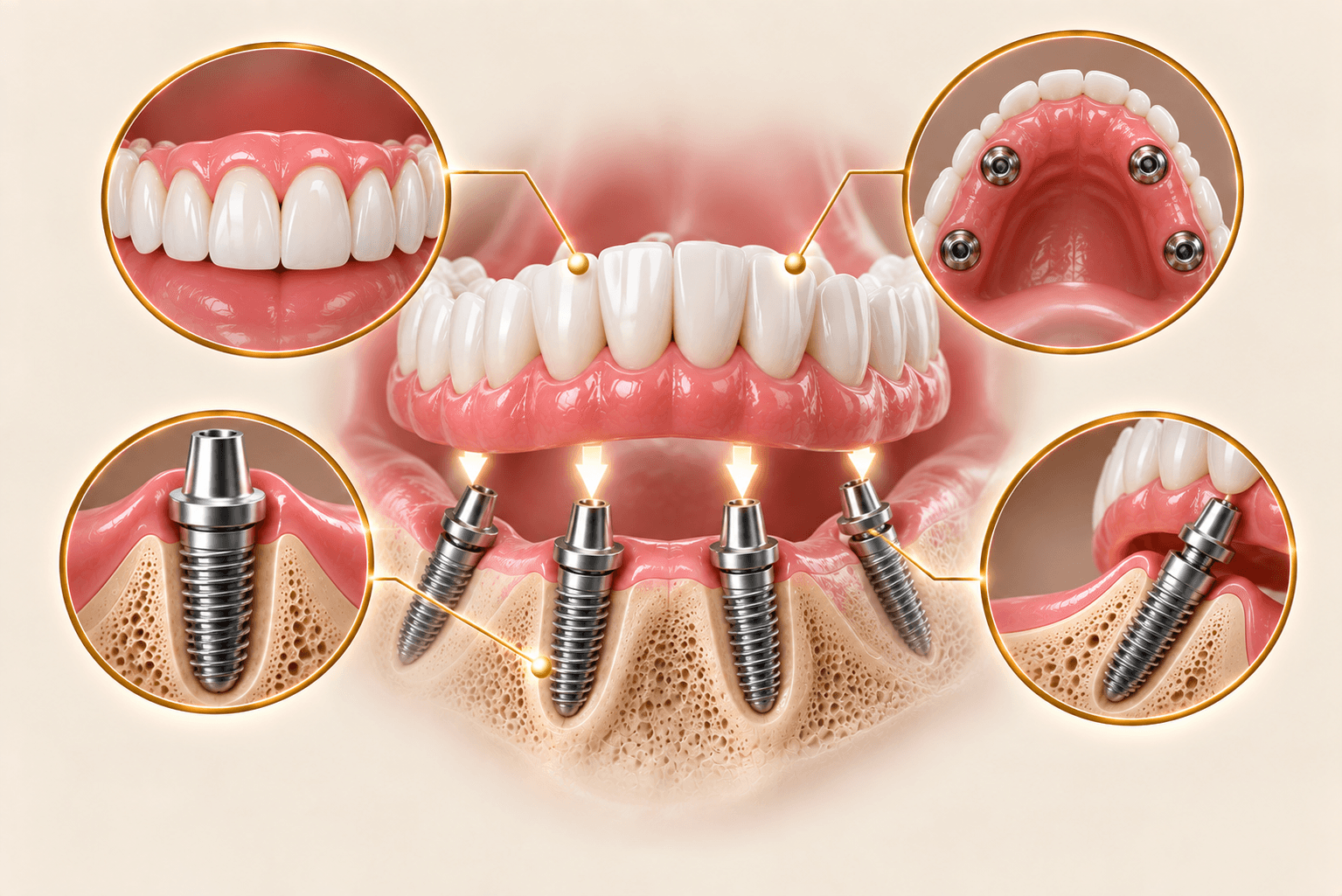
All-on-4 dental implants
All-on-4 dental implants replace a full arch of missing or failing teeth with a fixed bridge held by four implants. This guide covers who may be suitable, the treatment steps, recovery, risks and what affects the cost.
Verified clinics: 1
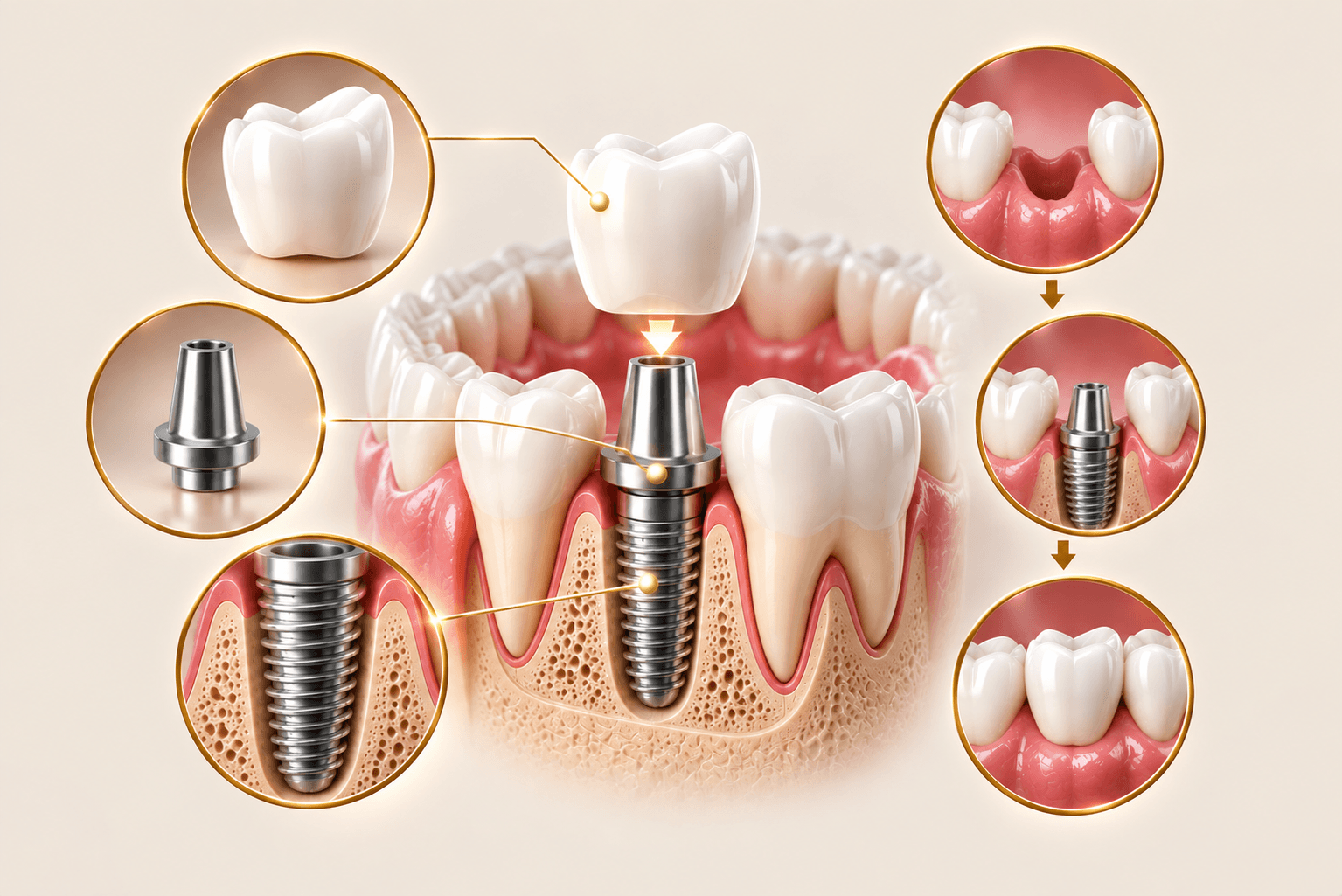
Dental implants
Dental implants replace missing teeth with a post placed in the jawbone that holds a crown, bridge or denture. The result is a fixed, natural-looking replacement.
Verified clinics: 1
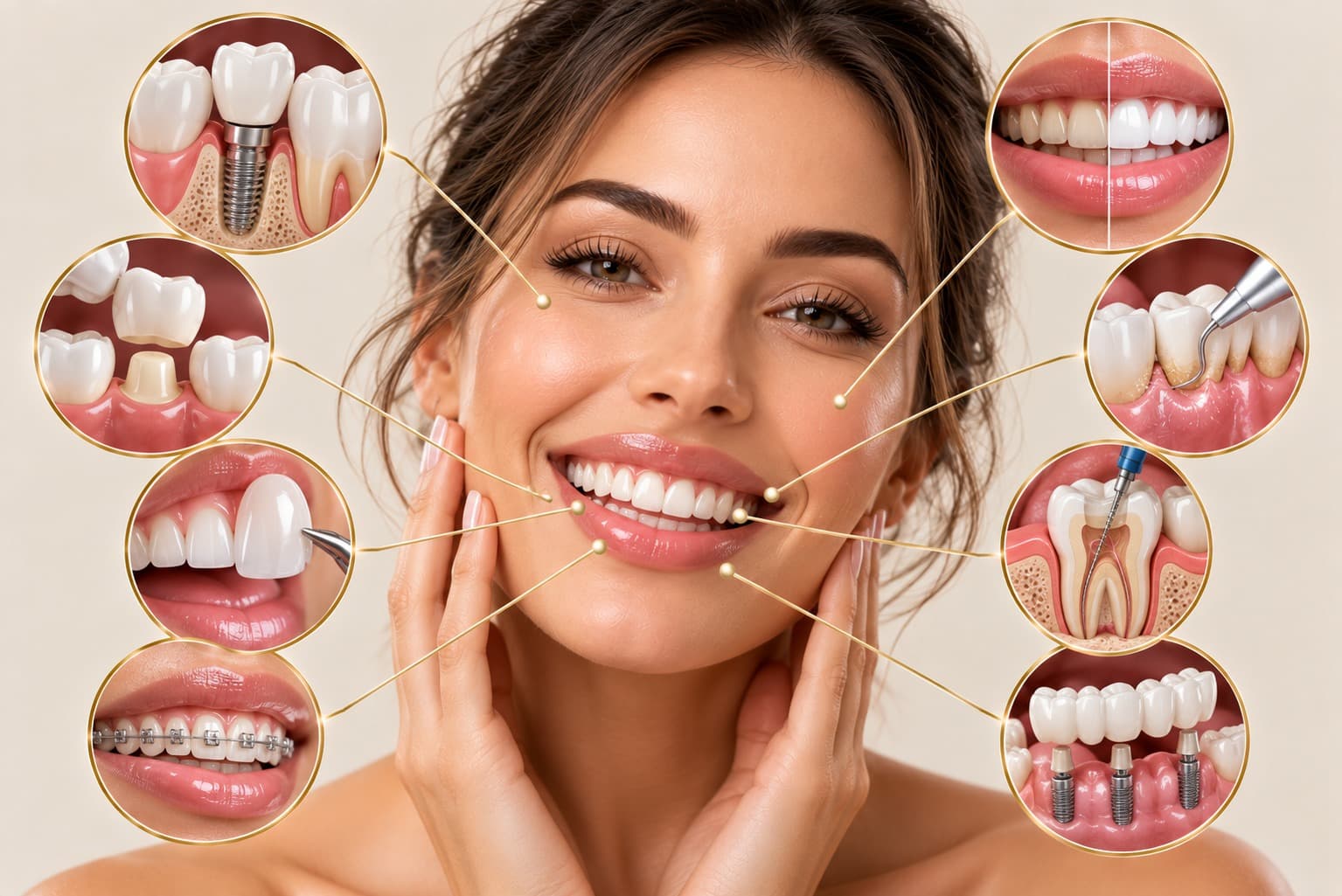
Full-mouth restoration
A full-mouth restoration rebuilds or replaces most or all teeth in both jaws, combining crowns, bridges, implants or veneers to restore chewing, comfort and appearance.
Verified clinics: 1
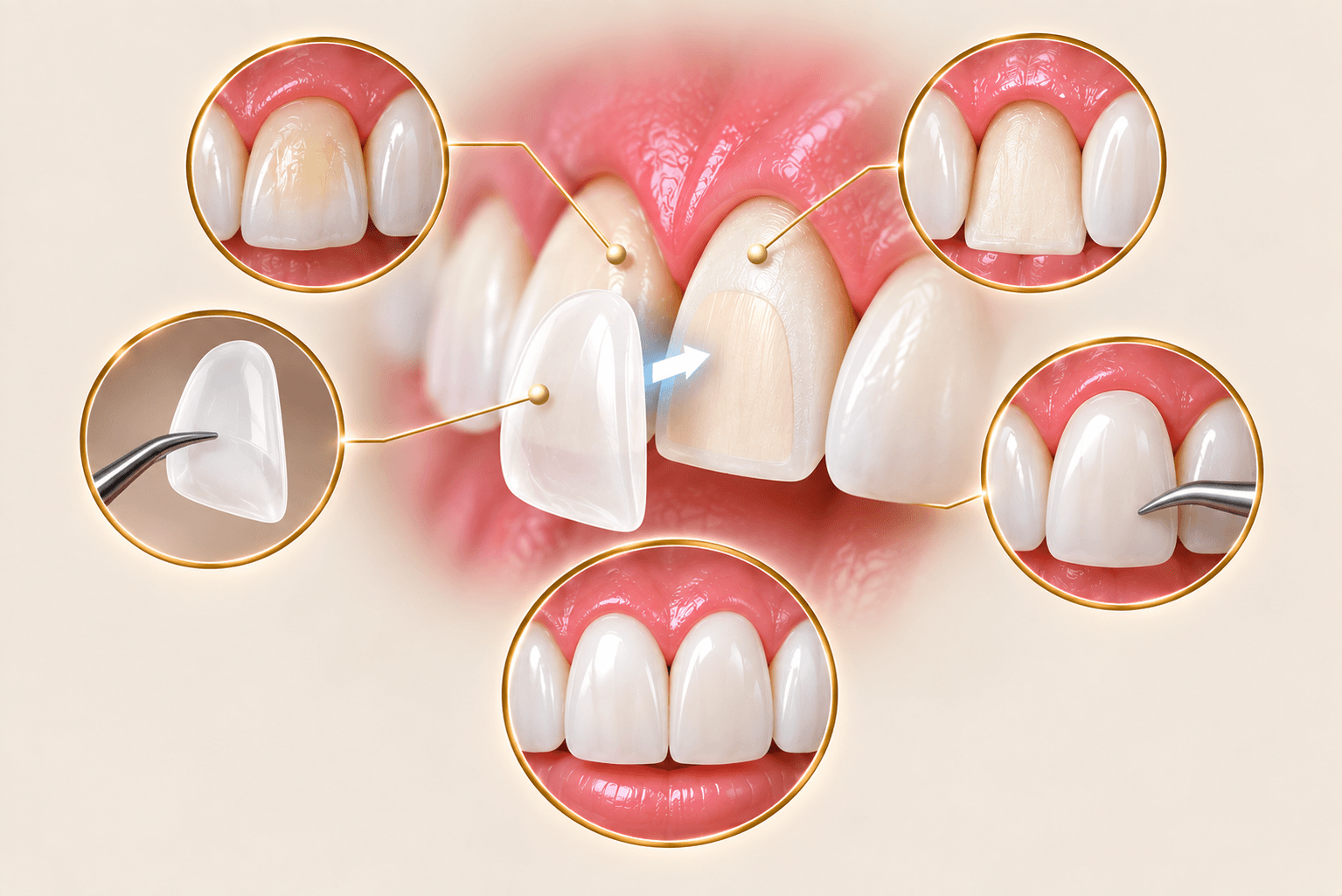
Veneers
Veneers are thin porcelain or composite shells bonded to the front of teeth to improve their colour, shape or size. Learn how veneers work, who they may suit and what to ask clinics abroad.
Verified clinics: 0
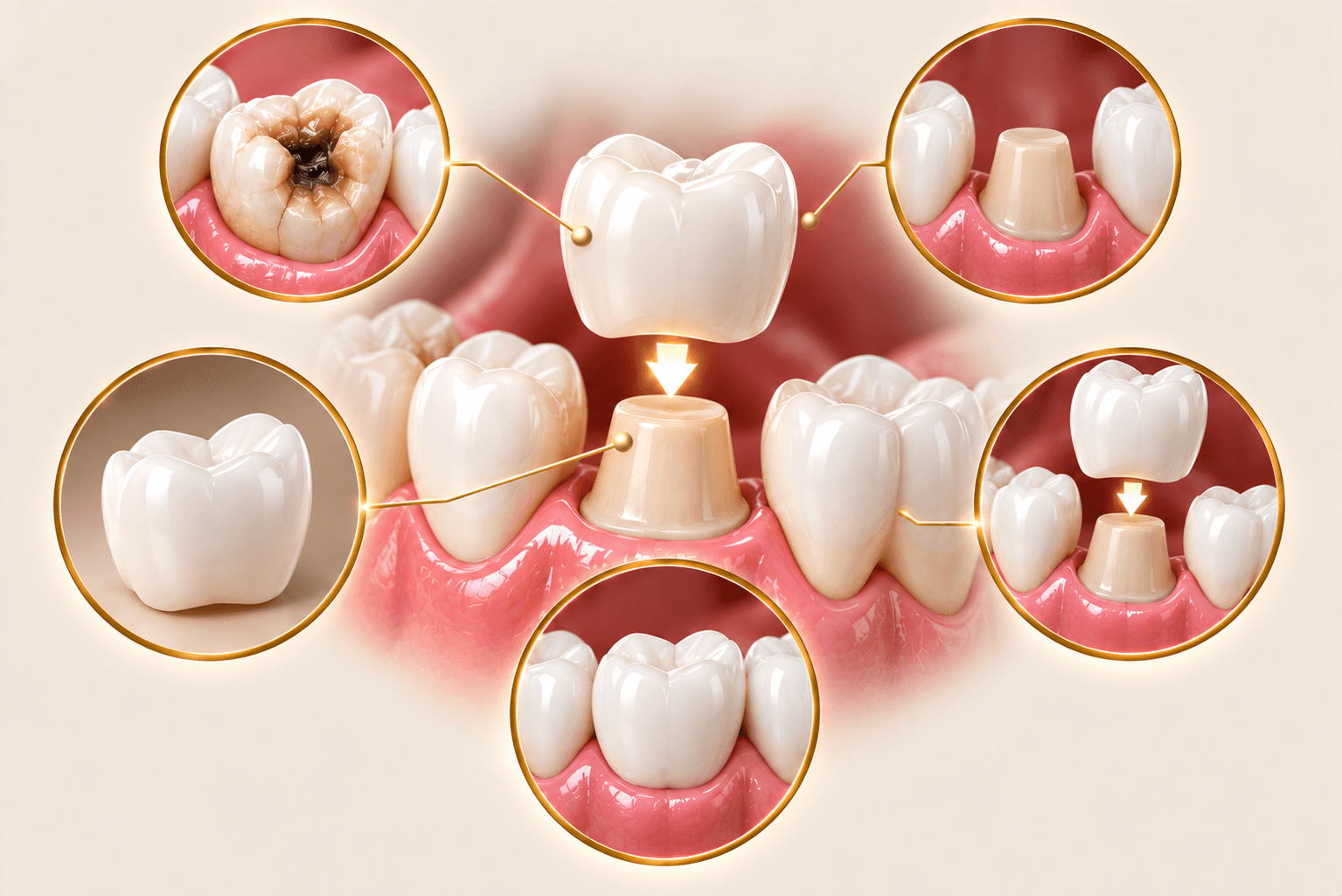
Zirconium Crowns
Zirconium crowns are metal-free, tooth-coloured caps that restore damaged, weakened or discoloured teeth or cover dental implants. Learn how they are made and fitted, what recovery involves and what to consider when planning treatment abroad.
Verified clinics: 1