
Your beard transplant recovery: from crusts to new growth
What happens after a beard transplant? This guide covers the usual stages: redness and crusts, the shedding phase and gradual new growth. It also includes aftercare tips and signs that mean you should contact your doctor.
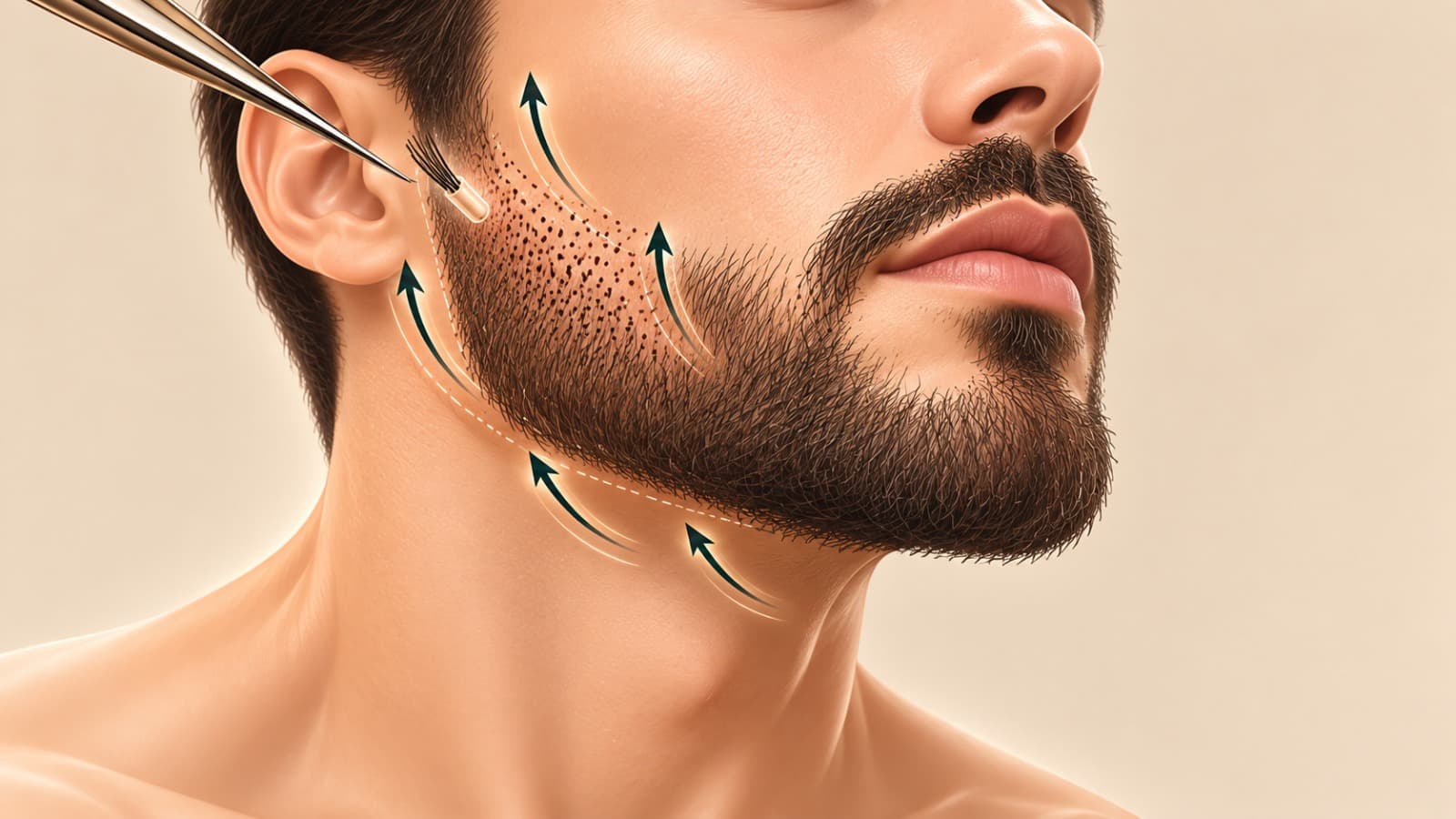
If you're planning a beard transplant, it helps to know what the weeks and months afterwards usually look like. Beard transplant recovery happens in stages. First come redness and small crusts. Next is a shedding phase that surprises many people. Last comes gradual new growth. This guide walks through each stage in general terms. Everyone heals differently, so treat the timings below as a rough guide only. Your treating doctor will give you aftercare instructions that fit your situation.
The treatment day and the first night
A beard transplant is usually done under local anaesthesia, sometimes with light sedation. It's normally a day procedure, so most patients go home the same day. Follicles are usually taken from the back of the scalp with the FUE method and placed one by one into the beard, moustache or sideburn area.
When the anaesthetic wears off, your face may feel tender, tight or slightly numb. The donor area at the back of your head may also feel sore. If you had sedation, it's sensible to have someone take you back to your accommodation. Clinics often advise sleeping with your head slightly raised and on your back, so the new grafts don't rub against the pillow. Follow the advice you're given, as instructions can differ from clinic to clinic.
Days 1 to 7: redness, swelling and small crusts
The first week is when your face looks most "fresh". It's common to notice:
- redness around the treated area
- mild swelling, sometimes spreading slightly to the cheeks or around the eyes
- tiny crusts or scabs around each graft
- some itching as the skin begins to heal
- soreness or tightness in the donor area
All of this is part of normal healing. The grafts are still settling into place, so be gentle with them. Your clinic will explain how and when to clean the area. Often this means careful washing without rubbing, using the products they recommend.
During this period, patients are usually advised to avoid:
- touching, scratching or rubbing the face
- shaving or trimming the treated area
- heavy exercise and anything that makes you sweat a lot
- saunas, steam rooms and swimming
- strong sun on the face
Weeks 1 to 3: the crusts fall away
For many people, the crusts start to loosen and fall off sometime in the second week, though this varies. Don't pick at them, however tempting it is. Pulling a crust off early can disturb a graft. Gentle washing, as your clinic instructs, usually helps them come away on their own.
Once the crusts are gone, the beard area often looks like short, even stubble, and the redness gradually fades. Some people find the redness lasts longer, especially with fair or sensitive skin. The donor area usually heals during this time too, and the short hair there starts to grow back. Many patients feel ready for light daily activities and desk work fairly soon. When you can go back to exercise, sport or shaving is something to confirm with your doctor.
Weeks 2 to 8: the shedding phase
This is the stage that worries people most. A few weeks after the procedure, many of the transplanted hairs fall out. Your beard may look much like it did before treatment, or even thinner for a while.
Shedding is a normal part of the hair growth cycle and doesn't mean the procedure has failed. The hair shafts fall out, but the follicles stay under the skin. They rest for a while before starting to produce new hair. Some people call this the "ugly duckling" phase, and patience really helps here.
During this period:
- carry on with the aftercare routine your clinic gave you
- ask your doctor when it's safe to trim or shave the area
- try not to judge the result yet, as it's far too early
- get in touch with your clinic if you feel unsure about what you're seeing
Months 3 to 12: new growth during beard transplant recovery
New hair usually starts to grow gradually in the months after shedding. At first, the hairs may be fine, sparse or uneven, and they may not all appear at the same time. Over the following months, many of them tend to thicken and fill in, and the beard starts to look more natural and even.
The final look usually takes many months to show, and the pace differs from person to person. Once the hair has grown, it can be trimmed, styled and shaved like normal facial hair. Some grafts may not grow, and density may be patchier than hoped. Some patients choose a second session to add density. This is worth discussing with your doctor before treatment and again at your follow-up.
Aftercare habits that support healing
Good aftercare can't guarantee a result, but it can support healing and lower some risks. Helpful habits include:
- following the clinic's cleaning instructions carefully
- taking any prescribed medicines exactly as directed
- keeping your hands away from your face
- protecting the area from strong sun until your doctor says otherwise
- wearing loose tops that don't rub the face or the back of the head
- asking your doctor before you use any skincare products, beard oils or shaving products
- going to your follow-up checks, including remote ones if you travelled abroad
Tell your doctor about your full medical history and any medicines you take, because some can affect healing. If you're travelling for treatment, ask how follow-up care works once you're home.
When to talk to your doctor
Some discomfort, redness and crusting is expected, but certain signs should be checked promptly. Contact your clinic or a local doctor if you notice:
- pain that gets worse instead of better
- redness or swelling that spreads or increases after the first few days
- pus, warmth or an unpleasant smell from the treated or donor area
- fever or feeling generally unwell
- bleeding that doesn't stop with gentle pressure
- painful red bumps or spots, which can be inflamed follicles or ingrown hairs
- numbness or scarring that worries you
- little or no new growth after the time your doctor said to expect
If you're ever unsure, ask. A good clinic would rather hear from you early than have you worry alone.
Planning your beard transplant with confidence
Knowing what recovery usually looks like makes it easier to plan time off, travel and expectations. It also helps you choose a team that explains the process honestly. Look for a clinic where a qualified doctor assesses your donor hair, skin and goals. They should also be clear about risks, aftercare and follow-up. On our site, you can compare verified clinics and send one free request, and the clinics will then contact you to discuss your options. Learn more about the procedure on our beard transplant treatment page.