
Beard Transplant Shedding: Why New Hairs Fall Out and What Happens Next
Seeing your new beard hairs fall out weeks after surgery can be worrying. Learn why beard transplant shedding happens, how to care for your skin during this phase and what usually comes next.
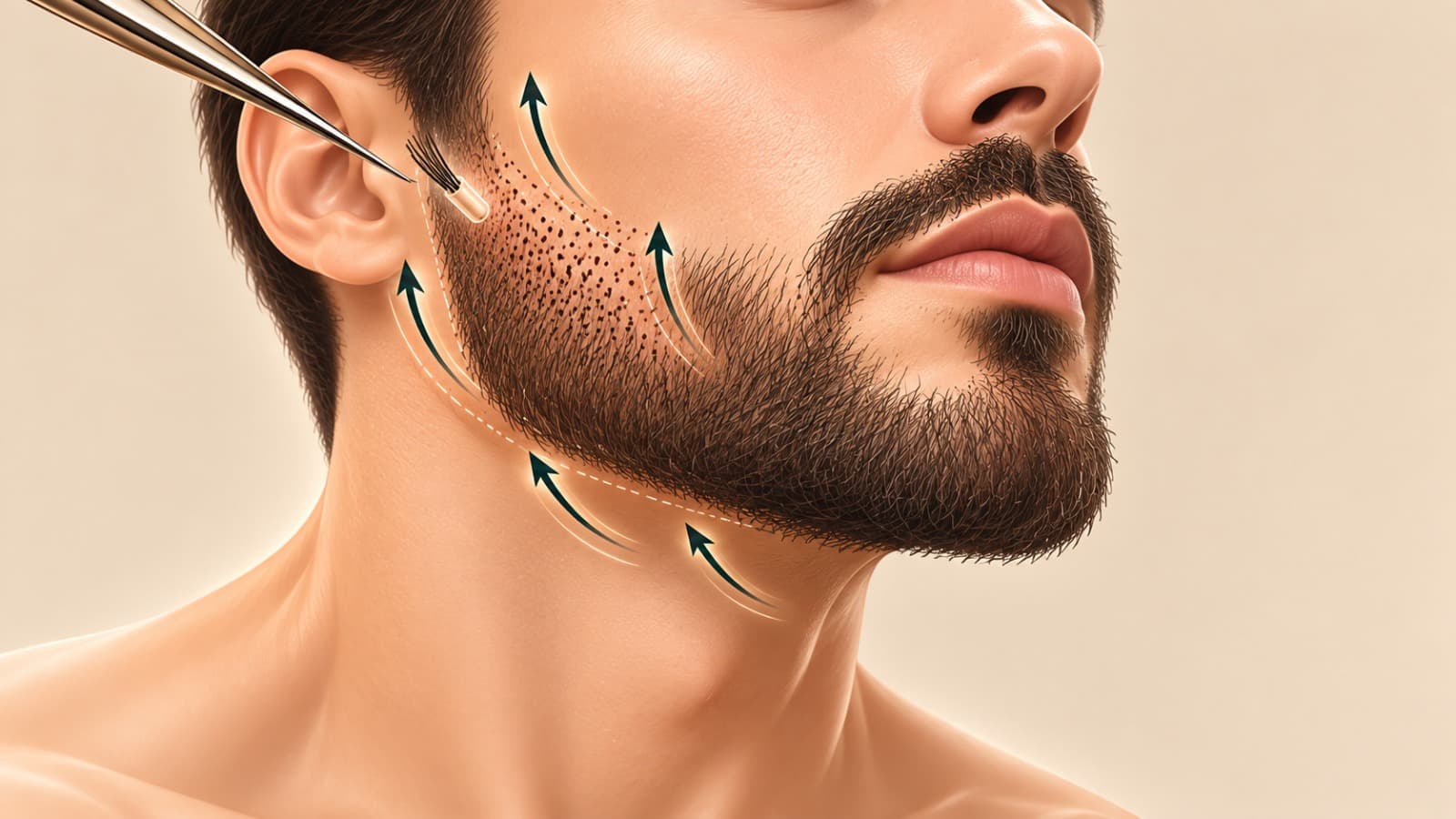
A few weeks after a beard transplant, many people look in the mirror and see that the new hairs they were so pleased with are starting to fall out. That can be alarming, especially after you have put so much time and money into the procedure. In most cases, though, beard transplant shedding is an expected part of recovery. It does not mean something has gone wrong. This guide explains why shedding happens, what it usually looks like, how to care for your face during this phase and what tends to happen next.
Everyone heals differently, so treat this article as general background. For advice about your own recovery, always rely on your treating doctor.
What is beard transplant shedding?
In a beard transplant, hair follicles are usually taken from the back of the scalp, most often with the FUE method. They are then placed one by one into thin or patchy areas of the beard, moustache or sideburns. Each graft goes into its new spot with a short hair attached.
Beard transplant shedding is the stage when many of those visible hairs fall out. The key point is that the hair and the follicle are not the same thing. The hair (also called the hair shaft) is the part you can see. The follicle is the living structure under the skin that produces the hair. When the hair sheds, the follicle can stay in place and later start growing a new one.
Why do transplanted beard hairs fall out?
Being moved is a big change for a follicle. It is cut off from its blood supply, kept outside the body for a short time and then placed into new tissue, where it has to settle in. In response, many follicles go into a resting phase of the hair growth cycle and let go of their existing hair.
A few points help explain this:
- It is part of the natural hair cycle. Hair normally grows, rests and sheds in cycles. A transplant tends to push many follicles into the resting phase at around the same time.
- The follicle is what counts. Losing the visible hair does not mean you have lost the graft.
- Healing comes first. While the follicle settles and the skin heals, hair growth is paused.
Some people also notice their own beard hair thinning for a while near the treated area. This can happen after surgery on the skin and is often temporary, but your doctor should be the one to assess it.
What does the shedding phase usually look like?
Recovery after a beard transplant generally happens in stages, but the timing varies from person to person.
- First days: redness, mild swelling and small crusts around each graft are common. The donor area at the back of the head may feel sore or tight.
- Following weeks: the crusts fall off and the transplanted hairs often start to shed. You may see hairs come out when you wash your face as instructed, or find short hairs on your pillow.
- After shedding: the beard area may look much as it did before the procedure, or even a little patchier. This in-between stage is common and can be frustrating, but it is usually temporary.
Shedding does not always happen all at once. Some grafts may lose their hair quickly and others more slowly, and some hairs may not shed at all. Any of these patterns can be part of normal healing, and your clinic can tell you what to expect in your case.
How to care for your beard during shedding
The shedding phase mostly calls for patience, but good aftercare still matters. Always follow your clinic's own instructions, because they know the details of your procedure. Patients are often given general advice like this:
- Keep cleaning as instructed. Be gentle, and use the products and method your clinic recommends.
- Avoid picking or pulling. Let crusts and hairs come away on their own rather than tugging at them.
- Don't rub or scratch your face. Itching is common during healing, but rubbing can irritate the skin. Ask your clinic what you can use to ease it.
- Wait before shaving. Don't shave or trim the treated area until your doctor says it is fine.
- Protect your skin. Strong sun, saunas, swimming and heavy exercise are usually avoided at first, until your doctor approves them.
- Keep follow-up appointments. Check-ins, in person or online, help your doctor see how you are healing.
It can also help to take photos in similar lighting from time to time. Comparing photos over several months is often more reassuring than checking the mirror every day.
What happens after beard transplant shedding?
After the shedding phase, new hair gradually starts to grow from the transplanted follicles over the following months. Early regrowth is often uneven. Some hairs appear sooner than others, and new hairs may look fine or thin at first before they fill out.
A beard transplant usually takes many months to show its final look, and how quickly that happens differs from person to person. Not every graft will grow, and some areas may end up less dense than you hoped. Some patients then choose a second session to add density. It is worth discussing this with your doctor before treatment, so you know from the start what may be possible for you.
Once the new hairs have grown in, they can usually be trimmed and shaved like normal facial hair. Your doctor will tell you when it is safe to start.
When to talk to a doctor
Shedding on its own is usually expected, but some signs should be checked. Contact your clinic or treating doctor if you notice:
- pain, swelling or redness that gets worse instead of slowly improving
- warmth, pus, discharge or a bad smell around the grafts or donor area
- fever or feeling generally unwell
- painful red bumps or spots, which can be signs of inflamed hair follicles (folliculitis) or ingrown hairs
- bleeding that does not stop with gentle pressure
- little or no new growth after the timeframe your doctor described
- anything else that worries you
Recovery, risks and suitability differ from person to person. Only your treating doctor can judge whether what you see is part of normal healing or needs treatment. If you are having the procedure abroad, ask before you travel how follow-up care and questions will be handled once you are home.
If you are thinking about a beard transplant, it helps to understand the whole recovery, including the shedding phase, before you decide. On our site you can compare verified clinics and send one free request. The clinics will then contact you to talk through your options. You can learn more about the procedure on our beard transplant treatment page.