
Breast Lift Scars: Incision Types Explained and How Scars Change Over Time
Where do breast lift scars sit, and do they fade? Learn about the three main incision types, how scars usually change as they heal and how to look after them.
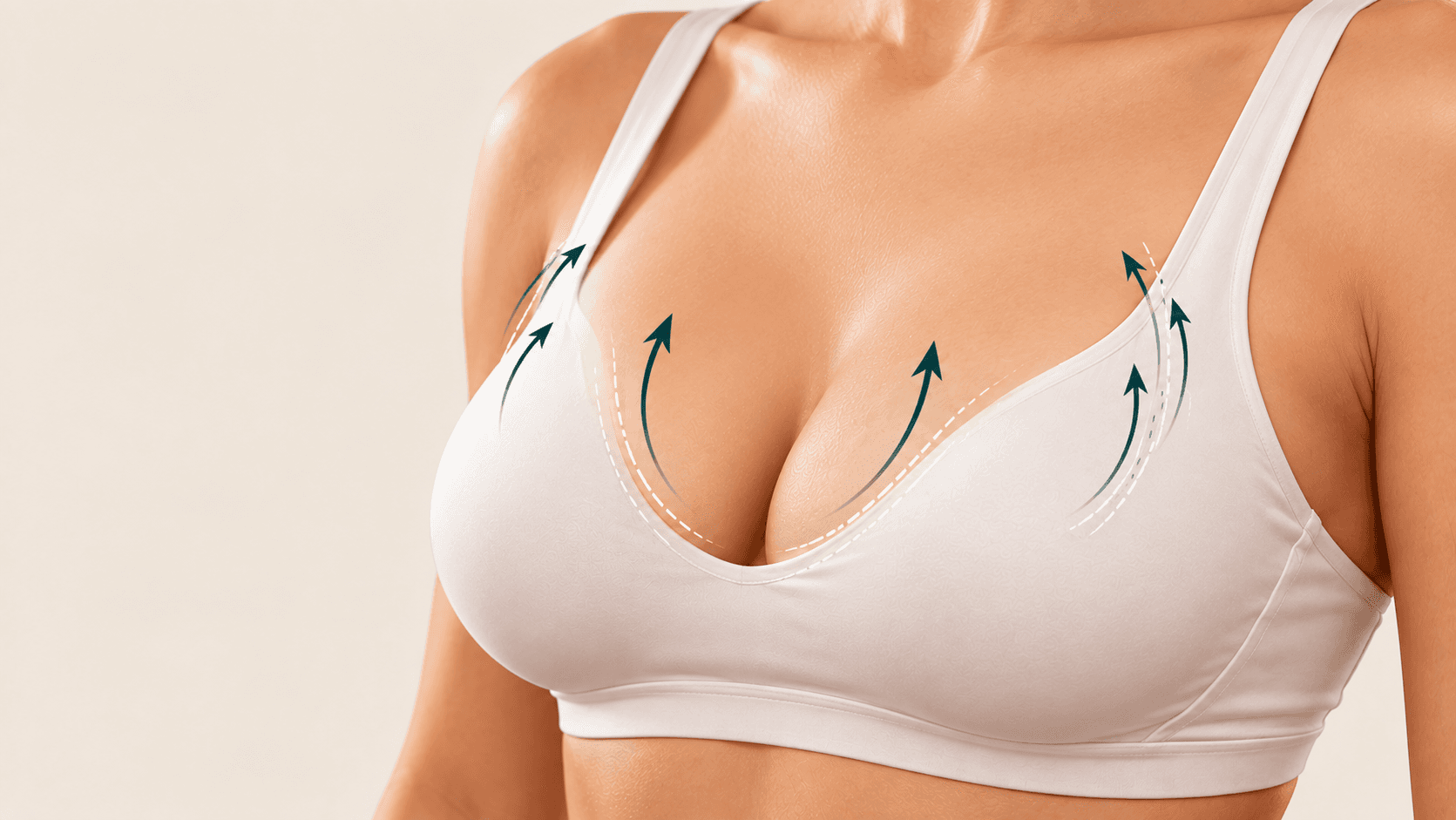
If you are thinking about a breast lift, scars are often one of the first questions. Where will they be? How visible will they look? Will they fade? Every mastopexy leaves scars. The surgeon needs incisions to remove excess skin and move the nipple and areola higher on the chest. Knowing the main incision types and how scars usually change over time can help you set realistic expectations and have a better conversation with your surgeon.
Breast lift incision types explained
The incision pattern mostly depends on how much lift you need and how much excess skin has to be removed. Surgeons may use different names, but most patterns fall into three broad groups:
- Around the areola (periareolar or "donut" lift): a single incision circles the edge of the areola. It is generally used for a mild lift. The scar sits where the darker skin of the areola meets the lighter breast skin, which can help it blend in.
- Lollipop or vertical lift: an incision around the areola plus a vertical line running down to the breast fold. This is usually considered for moderate sagging, and it lets the surgeon reshape the lower part of the breast more.
- Anchor or inverted-T lift: incisions around the areola, straight down, and along the crease under the breast. This is typically used for more significant sagging or a lot of excess skin. The horizontal scar lies in the breast fold, so it is often partly hidden when you stand.
In general, more lift means longer incisions. A shorter scar isn't automatically the better choice, though. The pattern also has to suit the amount of correction you need.
How your surgeon chooses the right incision
Your surgeon can only recommend an approach after examining you. Things they usually consider include:
- How much the breasts have sagged
- Where the nipple sits compared with the breast fold
- Skin quality and elasticity
- How much excess skin there is
- Breast size, and whether implants or a reduction will be added
- Your goals and what matters most to you
Ask your surgeon to show you where each scar would sit, either on a diagram or on your own body during the examination. It's also reasonable to ask why they recommend one pattern over another. Ask about the trade-offs between scar length and the shape that can be achieved.
How breast lift scars change over time
Scars are permanent, but they usually don't stay the way they look in the first weeks. Scars mature gradually and the timeline varies a lot from person to person, so treat the phases below as a general guide only.
- Early phase: right after surgery the incisions are closed and covered with dressings or tape. The area is often swollen, bruised and tender, and the scar lines may look red or pink.
- Middle phase: over the following months, scars often become firmer, raised or darker for a while as the body builds new tissue. Itching is common. This stage can be worrying, but it is often a normal part of healing.
- Later phase: as the scar matures, it usually softens, flattens and fades to a paler colour closer to your skin tone. For many people this takes many months, and sometimes a year or longer.
Even when fully mature, a scar stays visible to some degree. Your surgeon can tell you what is realistic for your skin.
What affects how your scars look
Some factors are within your control and some are not:
- Genetics and a personal tendency to form thick or raised scars, such as hypertrophic scars or keloids
- Skin tone, as different skin types can show different colour changes in scars
- Tension on the wound, for example from heavy lifting or stretching too early
- Smoking and nicotine, which reduce blood flow and can slow wound healing
- Wound healing problems, such as infection or a small opening in the wound
- Sun on fresh scars, which can make them darker
- Large weight changes or a future pregnancy, which can stretch the skin
If you have had thick or raised scars before, mention it at your consultation. This can affect planning and aftercare.
Caring for your breast lift scars
Good aftercare won't erase a scar, but it can support healing. Techniques and advice differ between clinics, so always follow your own clinic's instructions.
- Keep the wounds clean and dry as instructed, and go to all follow-up checks
- Wear your supportive surgical bra as advised to reduce strain on the incisions
- Avoid heavy lifting and strenuous exercise until your surgeon says it is safe
- Don't pick at scabs or remove tapes and stitches yourself
- Once your doctor allows it, protect healing scars from the sun with clothing or sunscreen
- Ask before using any scar products, such as silicone sheets or gels, or starting scar massage
- Avoid smoking before and after surgery, as your surgeon advises
If you travel abroad for surgery, ask how scar checks and follow-up will work once you are home. Also ask whether you can send photos to the clinic if you have questions.
When to talk to a doctor
Some redness and itching are normal while scars heal. Contact your surgeon or a local doctor promptly if you notice:
- Increasing redness, warmth or swelling around an incision
- Pus, unusual discharge or an unpleasant smell
- Fever or feeling generally unwell
- A wound that opens or doesn't seem to be healing
- Pain that gets worse instead of better
- A scar that keeps getting thicker, becomes very itchy or painful, or spreads beyond the original incision line
Also talk to your surgeon if you're unhappy with how a scar looks after it has had time to mature. There are ways to improve scars, but whether they suit you depends on your situation. If you have chest pain, sudden shortness of breath, or pain and swelling in one leg, get emergency care right away.
Find a clinic for your breast lift
Understanding breast lift scars is one part of making a confident decision. On our marketplace you can compare verified clinics, read about how they work and send one free request describing your goals. Clinics then contact you, so you can ask about incision types, scar care and follow-up in your own time. Start by exploring breast lift clinics and treatment details.