
Am I a good dental implant candidate? Health, gums and jawbone explained
Wondering if implants could work for you? Learn how your general health, gums and jawbone affect whether you can have them, what can often be done about common problems, and what to ask your dentist.
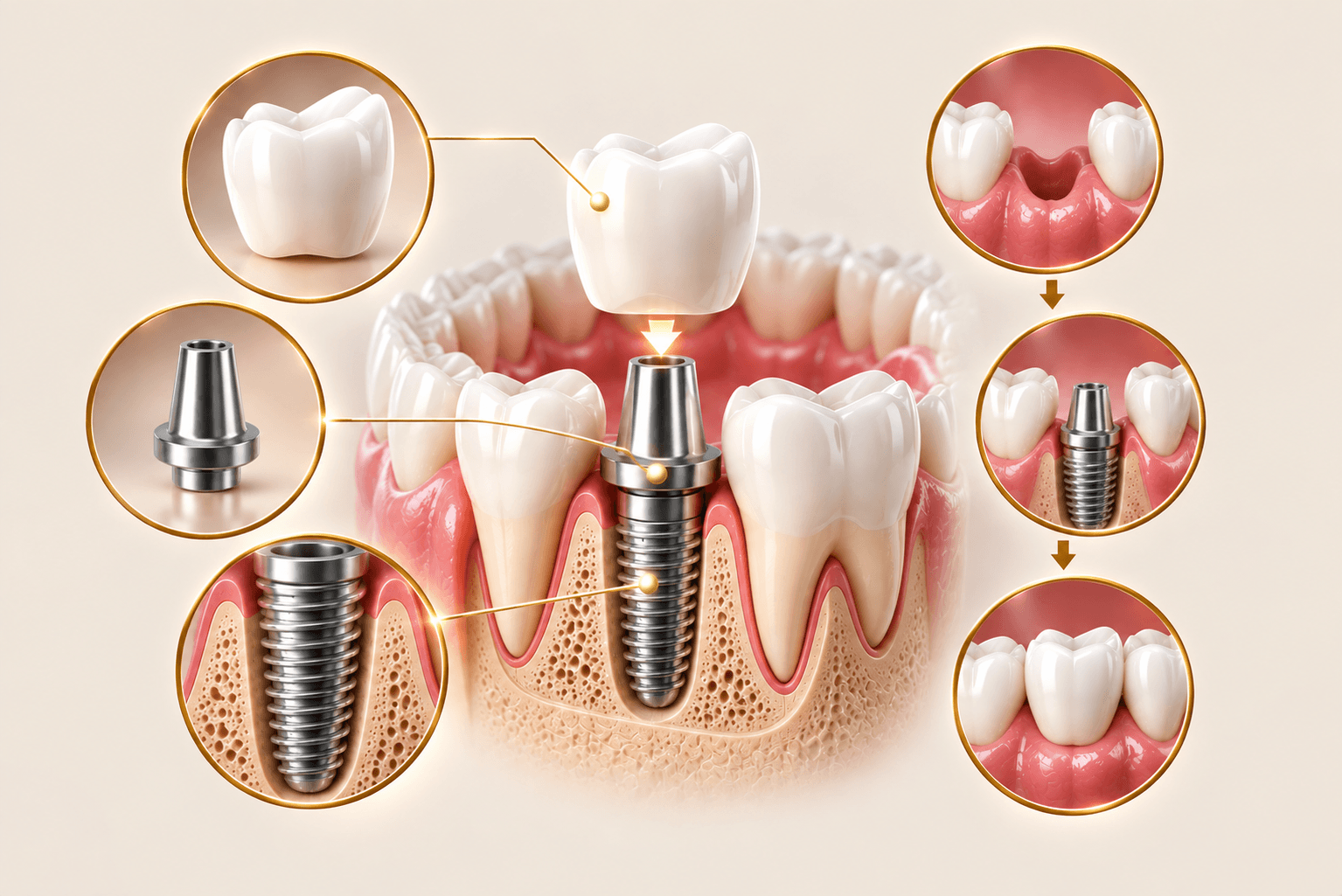
Losing a tooth can change how you eat, how you speak and how you feel about your smile. Dental implants are one way to replace missing teeth with a fixed replacement that looks natural, but they are not right for everyone. If you are wondering whether you are a dental implant candidate, it mostly comes down to three things: your general health, the state of your gums and how much jawbone you have to hold the implant.
This guide explains each of these in plain language. It covers what can make implants more difficult and what can often be done about it. It can't replace a personal examination, but it can help you get ready to talk to a dentist.
What makes someone a good dental implant candidate?
A dental implant is a small titanium or ceramic post placed into the jawbone, where it does the job of a tooth root. Once the bone has grown around it, a crown, bridge or denture is attached on top. The implant relies on the bone and gum around it to stay stable, so the health of your mouth and body matters a lot.
Many adults with one or more missing teeth can have implants. They can be used for:
- A single missing tooth
- Several missing teeth, often holding a bridge
- A whole jaw with no teeth
- Giving loose dentures a firmer hold
In general, a good candidate is an adult whose jaw has stopped growing. They are in good general health and have healthy gums. They also have enough bone, or can have bone built up. Having one of the problems below doesn't automatically rule you out. Often it just means extra planning or some treatment first.
General health and medical conditions
Placing an implant is minor oral surgery. It is usually done under local anaesthesia, and you go home the same day. Afterwards, your body needs to heal and the bone needs to bond with the implant. This bonding is called osseointegration. So anything that affects healing or bone can matter.
Your dentist will want to know about:
- Diabetes: well-controlled diabetes doesn't have to stop you, but poorly controlled blood sugar can slow healing and raise the risk of problems.
- Other long-term conditions: illnesses that affect your immune system or how you heal may need to be discussed with your doctor.
- Medicines: some drugs that affect bone metabolism, such as certain osteoporosis treatments, and medicines that affect blood clotting can be relevant.
- Past radiotherapy: radiation to the head or neck can affect the jawbone and needs careful assessment.
Be open and complete when you fill in your medical history. Include supplements and any medicines you only take now and then. Never stop or change a prescribed medicine on your own before treatment. Your dentist and doctor can decide together what is safe for you.
Healthy gums: why they come first
Healthy gums form a seal around the implant that helps protect the bone underneath. Gum disease (periodontitis) is an inflammation caused by bacteria. It can damage the gum and bone around natural teeth. Similar problems can develop around implants, which is called peri-implantitis.
If you have active gum disease, it usually needs to be treated and under control before an implant is placed. Signs of gum problems include:
- Gums that bleed when you brush or floss
- Red, swollen or tender gums
- Bad breath that doesn't go away
- Gums pulling back from the teeth
- Teeth that feel loose
Having had gum disease in the past doesn't necessarily rule you out. It does make daily cleaning and regular check-ups even more important once your implant is in.
Jawbone: is there enough to hold an implant?
To be held firmly, an implant needs enough bone in both height and width. After a tooth is lost, the bone in that spot can slowly shrink because chewing no longer stimulates it. That's why people who have been missing teeth for a long time, or who have worn dentures for years, sometimes don't have enough bone.
Your dentist will check your bone with X-rays or a 3D scan. If there isn't enough, options may include:
- Bone grafting: adding bone or bone substitute material to build up the area
- Sinus lift: raising the floor of the sinus in the upper back jaw to make room for new bone
These procedures add steps and healing time to your treatment, and they aren't suitable for everyone. Only an examination can show whether you need them and which approach makes sense.
Lifestyle, oral hygiene and age
Some factors are within your control and can make a real difference.
- Smoking: smoking can slow healing and raise the risk of implant problems. Many dentists will advise you to stop or cut down, at least around the time of surgery.
- Oral hygiene: implants can't decay, but the gum and bone around them can become inflamed. Brushing, cleaning between your teeth and regular check-ups are essential.
- Teeth grinding: if you clench or grind your teeth, your dentist may talk to you about ways to protect the implant and crown.
- Alcohol: dentists usually advise avoiding it while you heal.
When it comes to age, the main limit is at the young end. Implants are usually placed only once the jaw has stopped growing, so they are generally not an option for children or young teenagers. For older adults, general health and bone condition usually matter more than age.
How your dentist checks if implants suit you
Only the treating dentist can decide whether implants are right for you. An assessment usually includes:
- A conversation about your medical history, medicines and lifestyle
- An examination of your teeth, gums and bite
- X-rays or a 3D scan to measure the bone and find the nerves and sinuses
- A treatment plan showing how many implants you need, where they go, any treatment needed first and what goes on top
Treatment needed first might include taking out damaged teeth, treating gum disease or bone grafting. If you are planning treatment abroad, keep in mind that the healing phase often means two or more trips. Ask the clinic to explain the timeline for your own case. Also ask for a written, itemised plan so you can see what is included.
Useful questions for your consultation:
- Am I suitable now, or do I need other treatment first?
- Will I need bone grafting or a sinus lift?
- What are my personal risks, given my health and habits?
- How many visits will the treatment take?
- What aftercare will I need, both at the clinic and back home?
When to talk to a doctor
It's a good idea to speak to your dentist or doctor before you commit to implants if you:
- Have diabetes, a heart condition or another long-term illness
- Take medicines that affect bone or blood clotting
- Have had radiotherapy to the head or neck
- Have bleeding, swollen or receding gums, or loose teeth
- Smoke and aren't sure how this affects your options
After surgery, contact your treating dentist quickly if pain or swelling gets worse instead of better. Do the same if you have bleeding that won't stop, a fever, numbness that doesn't go away, or an implant that feels loose. Recovery, risks and suitability are different for everyone, so your own dentist is always the right person to advise you.
If you'd like to know whether you are a dental implant candidate, a consultation is the natural next step. On our site you can compare verified clinics, see how they work and send one free request. The clinics then contact you to talk about your situation. Read more on our dental implants treatment page and take the time you need to decide.