
Understanding porcelain vs composite veneers before you decide
Thinking about veneers but unsure which material to choose? Learn how porcelain and composite veneers differ in how they are made, how they look, and how they are cared for, so you can talk to a dentist with confidence.
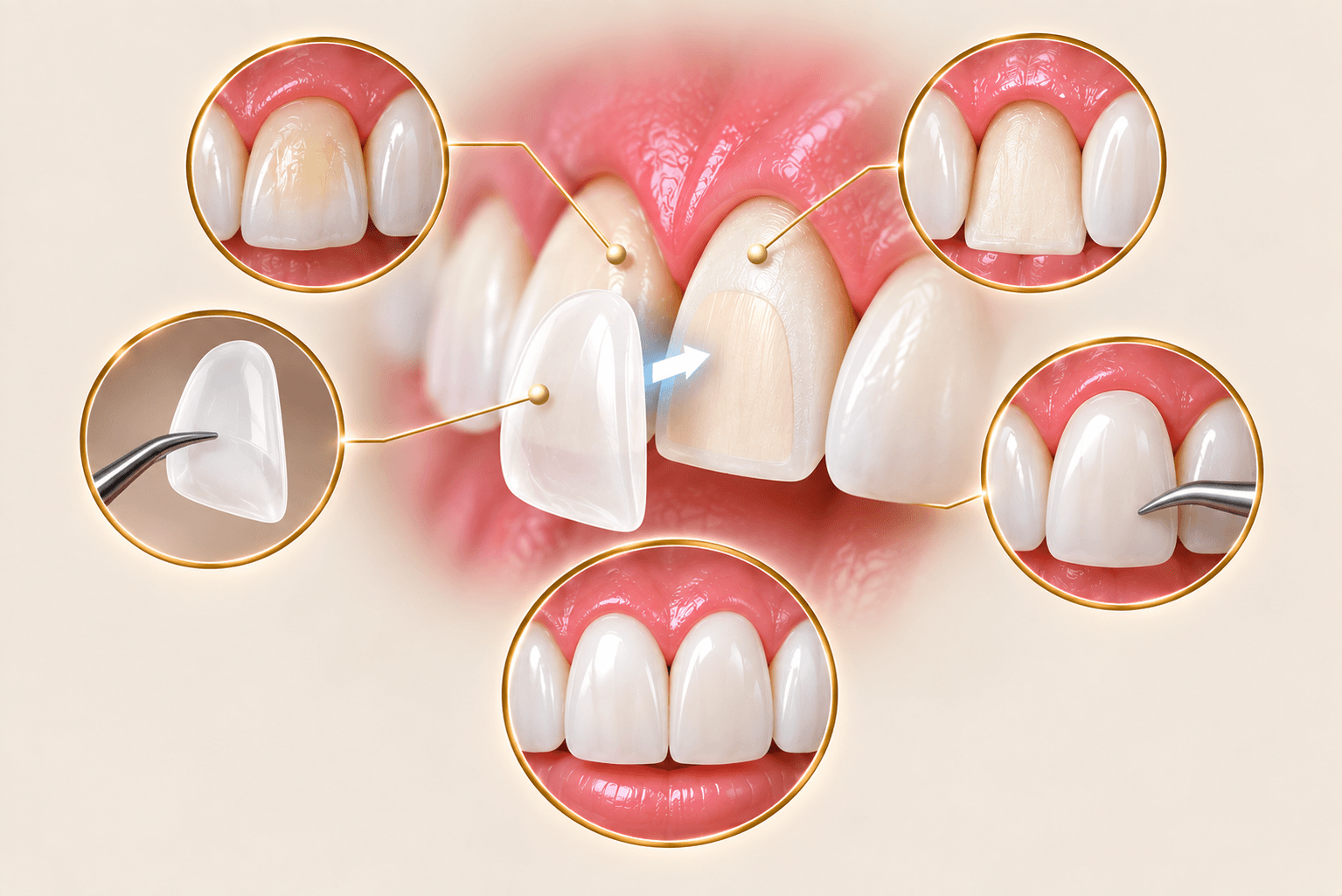
If you are thinking about improving your smile, you have probably come across the question of porcelain vs composite veneers. Both can change the colour, shape, size or length of your teeth, and both are bonded to the front surface of the tooth. They are made and fitted differently, though, and they behave differently over time. This guide explains those differences in plain language. It won't tell you which one is right for you, because only a dentist who has examined your teeth can do that, but it should help you have a better conversation with them.
What veneers are and why the material matters
Veneers are thin, custom-made shells bonded to the front of the teeth. People often choose them for stained, chipped, worn or slightly uneven teeth, small gaps, or minor irregularities in shape. Each treatment is planned individually by a dentist.
The two main materials are porcelain (a type of ceramic) and composite resin. The material affects:
- How the veneer is made and how many visits you may need
- How much of the natural tooth may need to be prepared
- How the veneer looks and how it holds its colour
- How easy it is to repair if something goes wrong
There is no single right answer. The better choice depends on your teeth, your bite, your habits and what you hope to achieve.
Porcelain vs composite veneers: how they are made and fitted
Porcelain veneers are made in a dental laboratory. The process usually goes like this:
- A consultation and examination, sometimes with X-rays
- Smile design, which in some clinics includes photos, digital planning or a trial mock-up
- Tooth preparation, where a thin layer of enamel is often removed
- Impressions or digital scans, which are sent to the laboratory
- Temporary veneers in some cases, while the final ones are being made
- Bonding with a special dental adhesive that is hardened with a curing light, followed by bite adjustments
Because a laboratory is involved, porcelain veneers usually need more than one visit.
Composite veneers are often built up directly on the tooth in the clinic. The dentist applies tooth-coloured resin in layers, then shapes it, hardens it and polishes it. They usually need less tooth preparation, and depending on the case and the clinic's workflow, the work may be finished in fewer visits.
If you plan to travel for treatment, ask each clinic in advance how many visits they expect and how long you may need to stay. This can differ a lot depending on the material and the number of teeth.
Appearance, staining and wear
Porcelain veneers are generally known for a natural, translucent look that resembles tooth enamel. They resist staining well and are considered durable.
Composite veneers can also look very natural when they are carefully shaped and polished. However, composite resin may stain or wear more over time, especially with frequent coffee, tea, red wine or tobacco. It may need polishing or touch-ups along the way.
Whatever the material, veneers do not change colour with whitening. If you are thinking about whitening your natural teeth, discuss when to do it with your dentist, because neighbouring teeth may otherwise look different from the veneers over time.
Tooth preparation and reversibility
This is one of the most important differences to understand.
- Porcelain veneers usually require some enamel to be removed so that the veneer sits naturally and does not look bulky.
- Composite veneers usually require less preparation, and sometimes very little.
- Minimal-preparation or no-preparation veneers are very thin options that may need little enamel removal, but they are not suitable for every case.
Once enamel has been removed, the step is usually not reversible. The tooth will then generally need some form of covering in the future. Before agreeing to treatment, ask your dentist exactly how much preparation is planned for each tooth and why.
Local anaesthesia is commonly used for tooth preparation. Some minimal-preparation veneers may need little or none.
Repairs, maintenance and long-term care
No veneer lasts forever, and both types may eventually need to be repaired or replaced. The difference lies mostly in how repairs are handled:
- Composite veneers can often be repaired directly in the mouth by adding and reshaping resin.
- Porcelain veneers that crack, chip or come loose may need to be replaced rather than patched.
Aftercare is similar for both types. Dentists commonly recommend:
- Brushing twice a day and cleaning between the teeth
- Not biting very hard objects such as ice, pens or fingernails
- Wearing a night guard if you grind your teeth
- Going to regular check-ups and professional cleanings
Right after treatment, some people notice temporary sensitivity to hot or cold, mild gum tenderness, or a different feeling when biting or speaking. Most people get back to their normal routines quickly, but everyone recovers differently. Your treating dentist will give you personal aftercare advice.
Questions to ask clinics when comparing porcelain and composite veneers
When you get treatment plans from clinics, these questions can help you compare them fairly:
- Which material do you recommend for my teeth, and why?
- How much enamel will be removed, if any?
- How many visits are needed, and over what period?
- Will I see a preview, such as a digital design or mock-up, before anything is done?
- What happens if a veneer chips, stains or comes loose after I return home?
- Which risks apply to my case, such as sensitivity, debonding, colour mismatch or gum irritation?
- Do I need other treatment first, such as fillings, gum care or orthodontics?
- Would an alternative, such as whitening, bonding, crowns or orthodontic treatment, suit me better?
A good clinic will answer clearly and explain the reasons behind its recommendation, without pressuring you.
When to talk to a dentist
Veneers may suit adults with healthy teeth and gums. Before you choose a material, talk to a dentist about your own situation, especially if you have:
- Active tooth decay or gum disease
- Teeth grinding or clenching (bruxism)
- Thin or worn enamel
- Major bite problems or crowding
- Stains that have not responded to whitening and you are unsure why
These conditions may make veneers less suitable, or mean that other treatment is needed first. After treatment, contact your treating dentist if you have ongoing pain, sensitivity that does not settle, a veneer that feels loose or rough, or gums that look irritated. Suitability, risks and recovery differ from person to person, so your dentist is the right person to guide your decision.
Understanding the difference between porcelain and composite is a good first step, but your final choice should come from a personal assessment. You can compare verified clinics offering veneers and send one free request. The clinics will then contact you, so you can review their treatment plans, ask your questions and decide at your own pace.