
Your rhinoplasty recovery timeline: what to expect as your nose heals
Thinking about a nose job? This gentle guide walks through each stage of healing, from the first days with a splint to the slow months while your final shape settles, so you know what to expect.
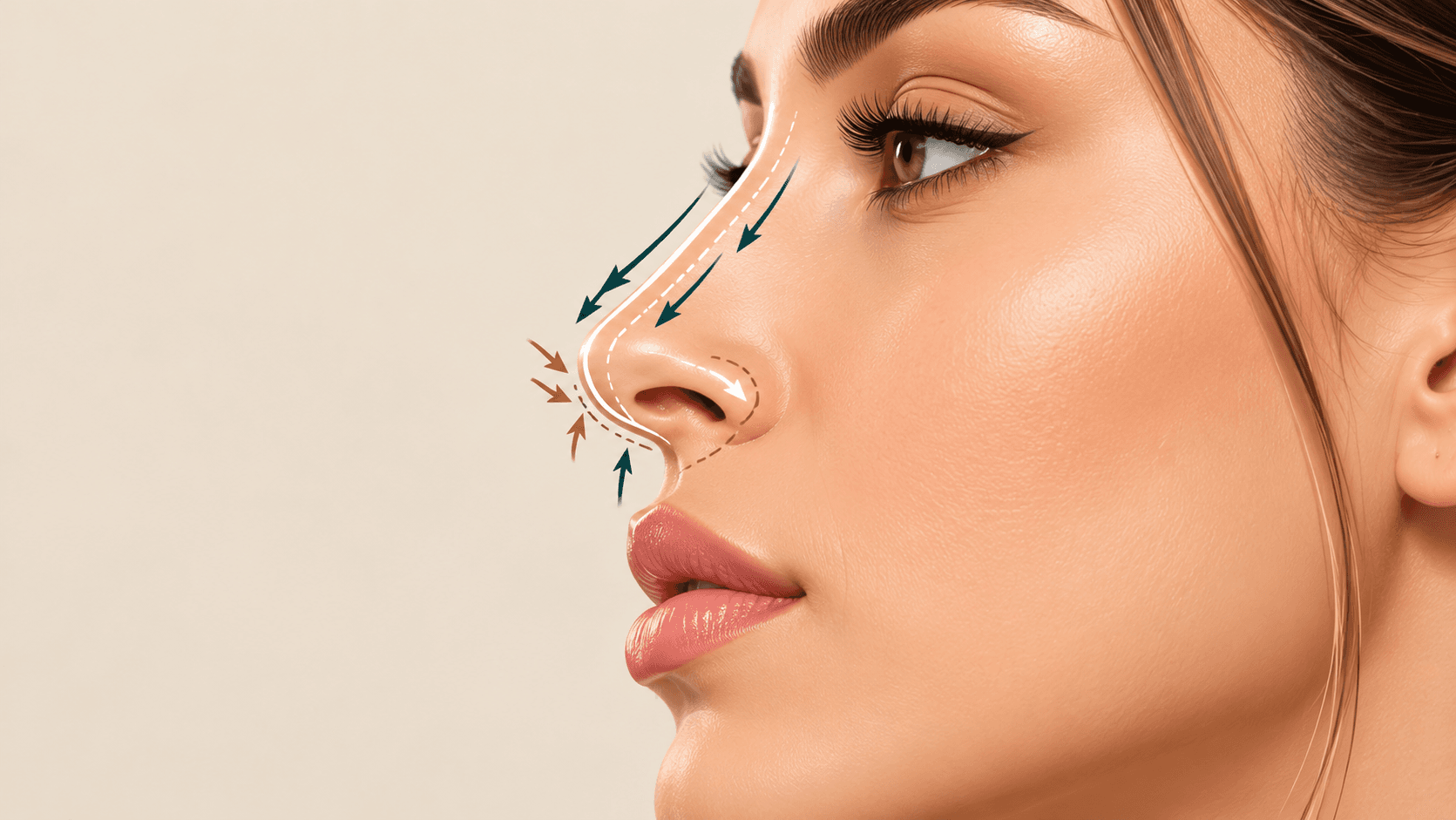
Deciding on nose surgery is a big step, and it helps to know what healing actually looks like. A clear sense of the rhinoplasty recovery timeline lets you plan time off work, arrange support at home and keep your expectations realistic. This guide covers the usual stages of healing in general terms. Please keep in mind that everyone heals at their own pace, and your surgeon will give you a plan that fits your surgery and your health.
Rhinoplasty reshapes the bone and cartilage of the nose, either to change how it looks, to help breathing, or both. Because the skin has to settle over a new framework, recovery happens in phases. There is an early phase with swelling and bruising, a middle phase when you go back to daily life, and a long later phase when the final shape slowly becomes clear.
The First Few Days: Rest and Early Swelling
Straight after surgery you will usually have a splint on your nose. Some people also have soft packing or internal splints. Depending on the clinic and your health, rhinoplasty is often done as a day procedure or with a short hospital stay.
In these first days, many patients notice:
- Swelling around the nose, cheeks and eyes
- Bruising that may look worse before it gets better
- A blocked, stuffy feeling, a bit like a heavy cold
- Mild to moderate discomfort, usually managed with the medicines your surgeon prescribes
- Tiredness from the anaesthesia and the surgery itself
This is the time to rest. Keeping your head raised, including while you sleep, can help with swelling. Try not to blow your nose, bend over a lot or do anything strenuous. Having someone with you for the first day or two can make things much easier.
Week One: The Splint Stage of Your Rhinoplasty Recovery Timeline
Much of the first week is spent with the splint on. Swelling and bruising often peak early on and then begin to ease. You may still breathe mostly through your mouth, especially if there is packing or if your septum was also straightened during a septorhinoplasty.
Typical aftercare advice during this stage includes:
- Keeping the splint dry and leaving it alone
- Sleeping with your head raised
- Avoiding blowing your nose, and sneezing with your mouth open if you can
- Eating soft foods if chewing feels uncomfortable
- Staying away from heat, steam and alcohol if your surgeon advises it
- Not smoking, as smoking can slow healing
At the end of this phase, many surgeons remove the splint and any stitches at a follow-up visit. The exact timing depends on your surgeon and on how you are healing. When the splint comes off, your nose will still look swollen. This is normal and is not your final result.
Weeks Two to Four: Getting Back to Daily Life
This middle phase is when many people start to feel like themselves again. Bruising usually fades, and the swelling that others can see often goes down enough for you to feel comfortable in public. Many patients go back to desk work and light daily tasks at around this stage, but your surgeon will tell you when it is right for you.
Things to keep in mind during these weeks:
- Your nose may still feel stiff, tender or partly numb, especially at the tip
- Breathing usually gets easier as the swelling inside the nose settles
- Protect your nose from knocks, crowded places and contact sports
- Use sun protection, as healing skin can be sensitive to the sun
- Avoid glasses that rest on the bridge of your nose until you are told it is safe
Light walking is often encouraged, but strenuous exercise, heavy lifting and activities with a risk of impact usually have to wait until your surgeon clears you.
Months One to Three: Gradual Refinement
Once the obvious signs of surgery have faded, the slower part of the rhinoplasty recovery timeline begins. Most of the swelling has gone, but some remains under the skin. It is often more noticeable in the morning and can come and go.
During this phase, you may notice:
- The bridge looks more defined before the tip does
- The nose feels firmer or less flexible than before
- Small changes in shape from week to week as tissues settle
- A gradual return of normal feeling in the skin
Many people return to a wider range of activities, including exercise, during these months. Always check with your surgeon first, because the right timing depends on what was done during your operation.
Long-Term Healing: How the Final Shape Settles
The final shape of the nose develops slowly. Swelling at the tip often takes the longest to go down, and for many people the result keeps refining for a year or longer. People with thicker skin, those who had revision surgery, and those who had cartilage grafts may notice that this phase takes longer.
Patience really matters here. It is natural to look closely in the mirror and worry about small asymmetries, but early judgements can be misleading while swelling is still settling. Go to your follow-up appointments, ask questions and share any concerns with your surgeon. They can tell you whether what you see is part of normal healing.
When to Talk to Your Doctor
Most swelling, bruising and stuffiness is expected. Still, some signs need prompt medical advice. Contact your surgeon or a doctor if you notice:
- Heavy or ongoing bleeding from the nose
- A fever, increasing redness, warmth or discharge that could point to infection
- Severe pain that does not improve with the medicine you were given
- Sudden or worsening difficulty breathing
- Swelling that suddenly gets much worse, especially on one side
- Any accidental knock to the nose that worries you
If you have travelled abroad for surgery, ask before your operation how follow-up care works once you are back home, and who to contact if something feels wrong. Recovery, risks and suitability are different for everyone, so your treating surgeon is always the best person to advise you.
Planning Your Rhinoplasty With Confidence
Knowing the stages of healing helps you plan time off, organise support and give your body the time it needs. If you are thinking about rhinoplasty, it can help to compare clinics, read about each surgeon's qualifications and ask how aftercare is handled before you decide.
You can learn more and compare verified clinics on our rhinoplasty treatment page. Send one free request, and clinics will contact you so you can talk through your goals, your recovery and any questions in your own time.