
What affects dental implant cost? Understanding your treatment plan
Why do quotes for dental implants vary so much? Learn what shapes dental implant cost, from the number of implants and materials to extra procedures, and how to read an itemised treatment plan.
If you are looking into replacing missing teeth, you have probably noticed that the dental implant cost quoted by different clinics can vary a lot. Two people who both "need implants" can end up with very different treatment plans, because every mouth is different. This guide explains what usually affects the price, what a good treatment plan should show, and which questions help you compare offers calmly and fairly.
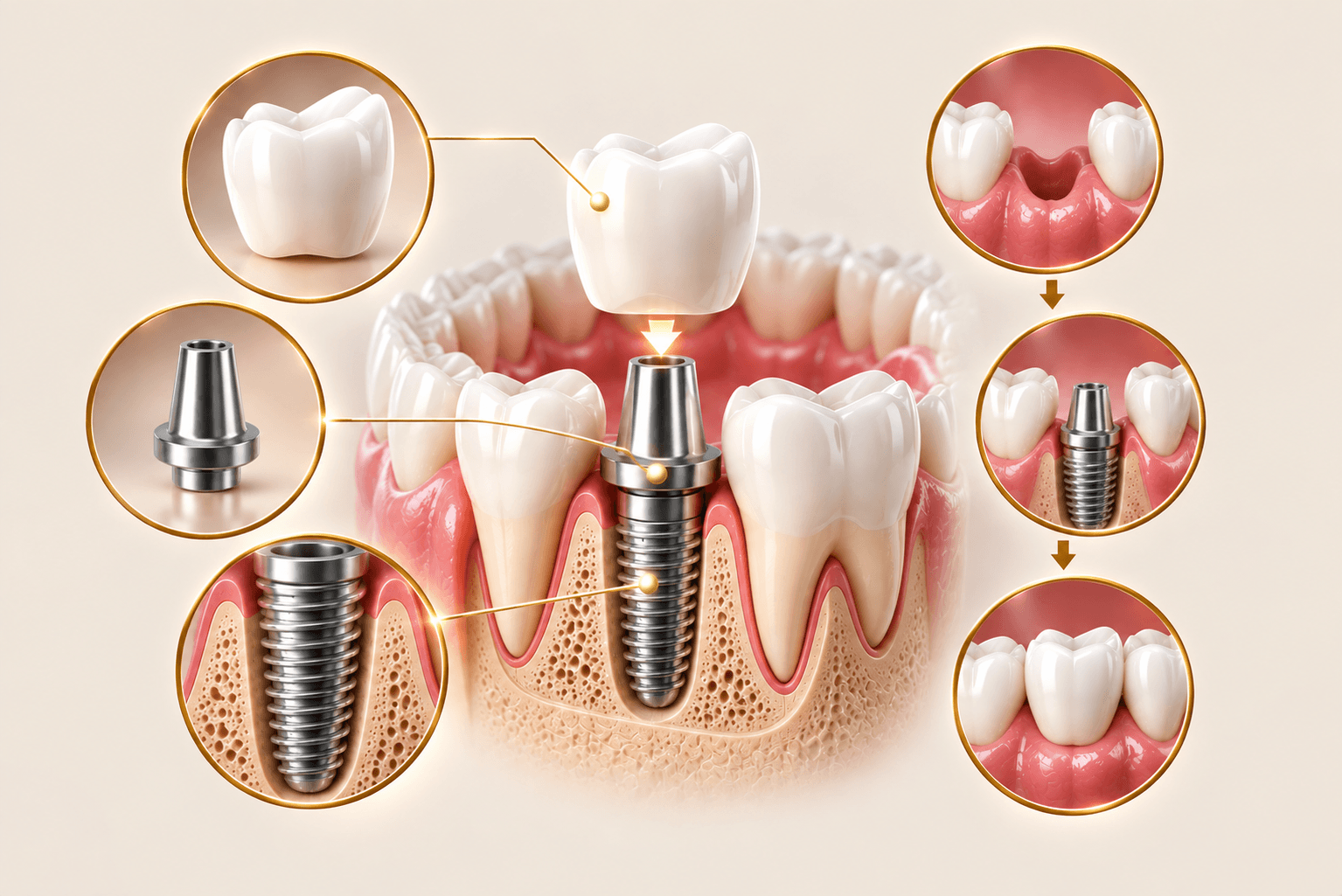
Dental implants are small titanium or ceramic posts placed in the jawbone to replace the roots of missing teeth. Once the implant has fused with the bone, a crown, bridge or denture is attached on top. Because the treatment happens in several stages and can include extra steps, the final price reflects your own needs rather than one standard fee.
Why dental implant cost differs from person to person
The biggest influence on cost is what your mouth actually needs. A dentist can only work this out after an examination and X-rays or a 3D scan. Until then, any figure you see is a rough guide at best.
Things that shape your individual plan include:
- How many teeth are missing: replacing one tooth is a different project from restoring several teeth or a whole jaw.
- The type of restoration: a single crown, an implant-supported bridge or a full-arch solution each need different numbers of implants and different lab work.
- The health of your gums and jawbone: active gum disease needs treating first, and not having enough bone may mean bone grafting or a sinus lift.
- Teeth that need removing: damaged teeth may have to be extracted before implants can be placed.
- Your general health: conditions such as poorly controlled diabetes, smoking or certain medicines can affect healing and may change how the dentist plans your treatment.
This is why it makes sense to treat early price estimates as a starting point, not a final figure.
The main parts of a dental implant treatment plan
A clear treatment plan breaks the work into stages. Understanding these stages helps you see where the costs come from.
- Consultation and planning: examination, X-rays or a 3D scan, and a plan setting out the number and position of the implants.
- Preparation: extractions, gum treatment or bone grafting if needed.
- Implant placement: minor oral surgery, usually under local anaesthesia. Some clinics also offer sedation or, in some cases, general anaesthesia.
- Healing (osseointegration): the bone slowly grows around the implant and anchors it.
- Abutment and impressions: a connector piece is attached and impressions or digital scans are taken.
- Final restoration: the crown, bridge or implant-supported denture is fitted and adjusted.
Some plans also include a temporary tooth, sometimes fitted on the same day as the implant. Whether this is possible depends on your bone and on the clinic's assessment.
Materials, brands and other factors that change the price
Even when two plans have the same number of implants, the details can differ. Common cost factors include:
- The implant system: clinics work with different implant brands, and this can affect the price.
- Implant material: most implants are titanium, while some clinics also offer ceramic implants.
- Crown materials: options such as zirconia or porcelain differ in cost and appearance.
- Scans and imaging: a 3D scan may be included or charged separately.
- Anaesthesia and sedation: local anaesthesia is usual, while sedation is often an extra.
- Temporary teeth: these may or may not be part of the quoted price.
- Follow-up and aftercare: check-ups, adjustments and how aftercare is arranged all matter.
Ask your dentist to explain why they recommend a particular implant or crown material for you. The right choice depends on where the tooth is, how you bite and what your dentist finds during the examination.
Implants, cosmetic work and the "Hollywood smile"
Some patients come to implant treatment hoping to improve the overall look of their smile too. The term "Hollywood smile" is often used for a cosmetic smile makeover, which usually involves veneers or crowns on existing teeth rather than implants. Implants, in contrast, replace teeth that are missing.
If you are considering both, your plan may combine several treatments, and the total price will reflect that. It is worth asking the clinic to list implant work and purely cosmetic work separately, so you can understand each part and decide what you actually need. A dentist should put the health of your teeth and gums first before any cosmetic changes.
Dental implant cost abroad: what to factor in
Many people compare clinics in other countries. Prices vary between countries and clinics, but the treatment fee is only part of the picture. When planning treatment abroad, think about:
- Number of trips: because of the healing phase, treatment often needs two or more visits.
- Travel and accommodation: flights, hotel stays and local transport for each trip.
- Time away from work or home: especially around the surgery and the fitting of the final teeth.
- Aftercare at home: who will see you for check-ups or if something needs attention after you return.
- Changes to the plan: what happens if the dentist finds you need extra work, such as bone grafting, once you arrive.
Ask the clinic to explain the planned timeline for your own case, as healing times vary from person to person.
How to read and compare quotes
The most useful thing you can ask for is a written, itemised treatment plan. It helps you see clearly what is and is not included. When comparing quotes, check:
- Is the price for the implant only, or does it include the abutment and the final crown, bridge or denture?
- Are consultation, X-rays and a 3D scan included?
- Are extractions, bone grafting or a sinus lift listed, or might they be added later?
- Are temporary teeth and sedation included?
- How many follow-up visits are covered?
- What happens if a problem appears during healing?
Comparing like with like matters more than looking at the lowest headline figure. A quote that seems higher may simply include more of the treatment.
When to talk to a doctor
Before making any decision based on price, have a proper examination with a qualified dentist. Only the treating dentist can decide whether you are a suitable candidate and what your plan should include. Talk to a dentist promptly if you have gum problems, loose dentures, pain or swelling, or if you smoke, have diabetes, take medicines that affect bone or blood clotting, or have had radiotherapy to the head or neck.
Recovery, risks and suitability differ for each person. Possible risks include infection, the implant not fusing with the bone, nerve irritation and, over time, peri-implantitis. Discuss these openly with your dentist so you understand your own situation.
Compare verified clinics at your own pace
Understanding what goes into your plan makes it much easier to compare offers with confidence. On our site you can explore verified clinics, review their information and send one free request. The clinics then contact you to discuss your case and treatment plan. To get started, visit our page on dental implants and verified clinics.