
Am I an All-on-4 candidate? Factors your dentist will check
Thinking about replacing a full arch of teeth? Learn what makes someone an all-on-4 candidate, from jawbone and gum health to smoking, medicines and bite, and what to ask at your consultation.
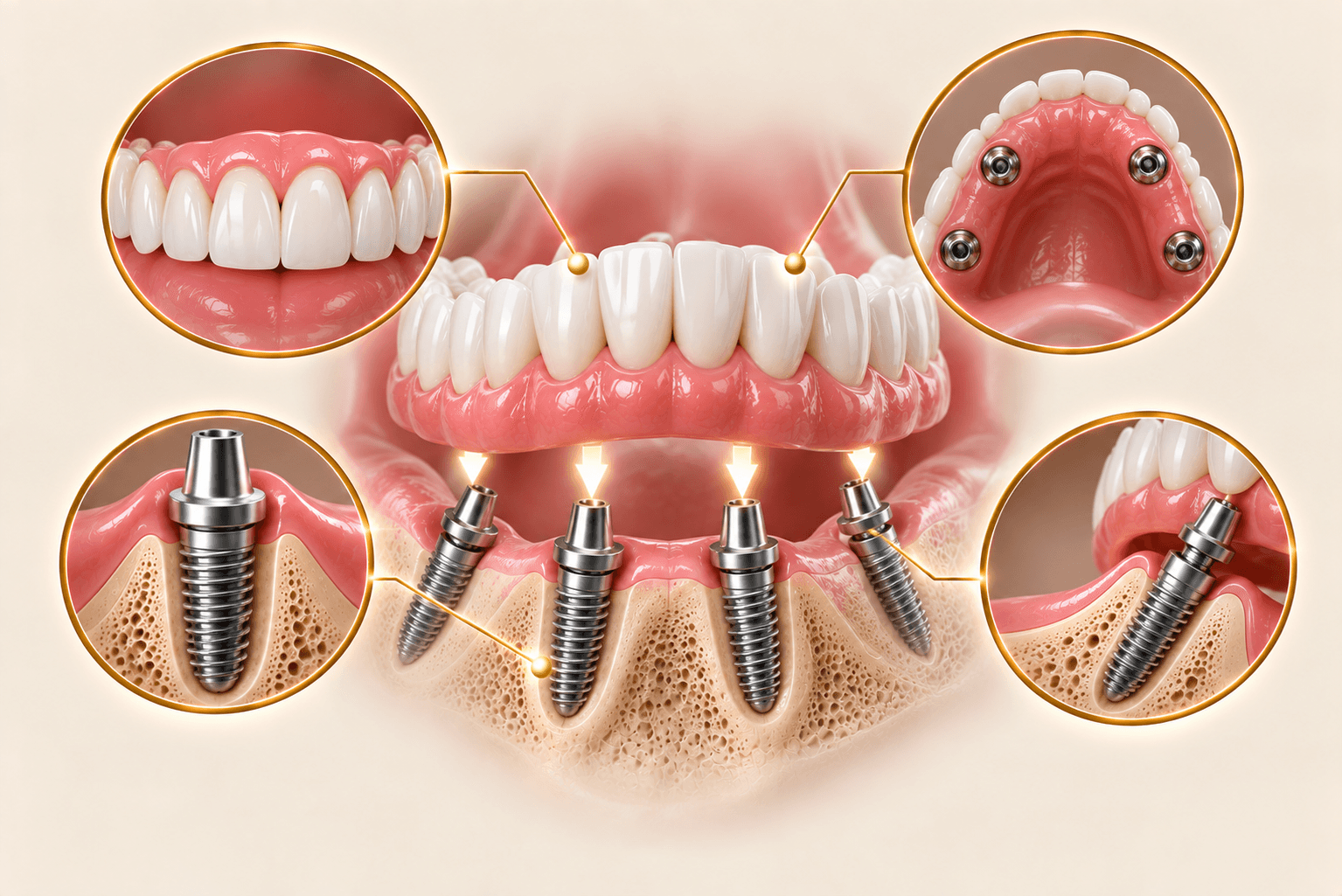
If you have lost most of your teeth in one jaw, or you're tired of loose dentures, you may be wondering whether you are an all-on-4 candidate. All-on-4 dental implants replace a full arch of missing or failing teeth with a fixed bridge held by four implants placed in the jawbone. It can make a real difference to daily life, but it doesn't suit everyone. Only a dentist can decide if it's right for you, and they'll need to examine you and take scans first.
This guide explains the main factors your dentist will look at, why each one matters and what might happen if the standard approach isn't a good fit. Knowing this before your consultation can help you ask better questions and feel more prepared.
What makes someone an All-on-4 candidate?
All-on-4 is usually considered for adults who:
- Have lost most or all of the teeth in their upper or lower jaw
- Have remaining teeth that are badly damaged and can't be saved
- Find removable dentures uncomfortable, loose or hard to live with
- Want fixed teeth rather than a denture they take out at night
Fitting this description is only a starting point, though. The real decision depends on a closer look at your mouth, your jaw and your general health. Two people with very similar-looking smiles can end up with quite different treatment plans.
Jawbone: the first thing your dentist checks
Implants need bone to anchor into, so the amount and quality of bone in your jaw is one of the most important factors. After teeth are lost, the jawbone can slowly shrink over time, especially if someone has worn dentures for many years.
In All-on-4, the back implants are often placed at an angle to make the most of the bone that's available. In some patients, this can reduce the need for bone grafting. To assess your bone, your dentist will usually take X-rays or a 3D scan (a CT scan) so they can see your bone's height, width and density, and plan where the implants could go.
If there isn't enough bone, you aren't automatically ruled out. Your dentist may suggest a different approach, such as:
- Bone grafting to build up the jaw before or during treatment
- A sinus lift for the upper jaw, if the sinus sits close to where implants would go
- Using more than four implants
- Another type of implant suited to your anatomy
Gum health and oral hygiene
Healthy gums matter for implants just as they do for natural teeth. If you have active gum disease, your dentist will usually want to treat it before placing implants, because inflammation can affect healing and long-term stability.
Your daily habits count too. Over the long term, an All-on-4 bridge needs careful daily cleaning and regular professional check-ups. If cleaning isn't thorough, gum inflammation around the implants (called peri-implantitis) can develop. Your dentist may ask how you look after your teeth now, and show you how to clean a fixed bridge.
General health, medicines and lifestyle
Your dentist will go through your medical history in detail, because some conditions and habits can affect how well your body heals and how the implants bond with the bone. They will usually ask about:
- Diabetes: uncontrolled diabetes can affect healing, so your dentist may want to know how well it is managed.
- Smoking: smoking is known to increase the risk of implant problems and can slow healing. You may be advised to stop or cut down, ideally before and after surgery.
- Medicines: some medicines, for example those that affect bone or blood clotting, can matter for implant surgery. Never stop or change a prescribed medicine without speaking to the doctor who prescribed it.
- Other conditions: your general health helps decide what type of anaesthesia or sedation is suitable, and whether any extra precautions are needed.
Be open and complete when you share this information. It isn't about judging you. It's about planning treatment that is as safe as possible for you.
Teeth grinding and your bite
How your jaws meet, and the forces you put on your teeth, also play a role. People who grind or clench their teeth (bruxism) put extra stress on implants and on the bridge itself. This can raise the risk of wear or breakage over time.
If you grind your teeth, your dentist may take this into account when choosing the bridge material, adjusting your bite or recommending a night guard. Mention it even if you're not sure, for instance if you wake up with jaw pain or someone has told you that you grind at night.
What the assessment usually involves
To find out whether you're an All-on-4 candidate, the process usually looks something like this:
- A clinical examination of your teeth, gums and jaw
- X-rays or a 3D CT scan to check bone levels and important structures such as nerves and sinuses
- A discussion of your medical history, medicines and lifestyle
- A conversation about your goals, worries and expectations
- A personal treatment plan explaining what is recommended and why
If you're thinking about treatment abroad, many clinics can look at existing scans or X-rays beforehand to give you an initial idea. Even so, the final decision is normally made only after an in-person examination. Bear in mind that treatment abroad often means two trips: one for surgery and temporary teeth, and a second one, after a healing period of several months, for the final bridge.
When to talk to a doctor
Speak to a dentist, or to your own doctor where relevant, before you plan anything if:
- You have diabetes, a heart condition, a bleeding disorder or any long-term illness
- You take medicines that affect bone, blood clotting or your immune system
- You have had radiotherapy to the head or neck
- You smoke and aren't sure how it might affect your treatment
- You have pain, swelling or infection in your mouth right now
Recovery, risks and suitability differ from person to person. Like any surgery, All-on-4 carries possible risks, such as infection, nerve irritation, sinus problems or implants that don't fuse with the bone. Your treating dentist should explain which of these apply to you personally and how they plan to lower them.
Take the next step at your own pace
Finding out whether you're an All-on-4 candidate starts with a proper examination and an honest conversation. If you'd like to explore your options, you can read more about All-on-4 dental implants, compare verified clinics and send one free request. Interested clinics will then contact you, so you can ask your questions, look at treatment plans and decide in your own time.