
Am I an All-on-6 candidate? Bone, gum health and other factors explained
Not sure if you are an All-on-6 candidate? This guide explains how dentists look at your bone, gums, general health and habits, and what options may exist if your bone is limited.
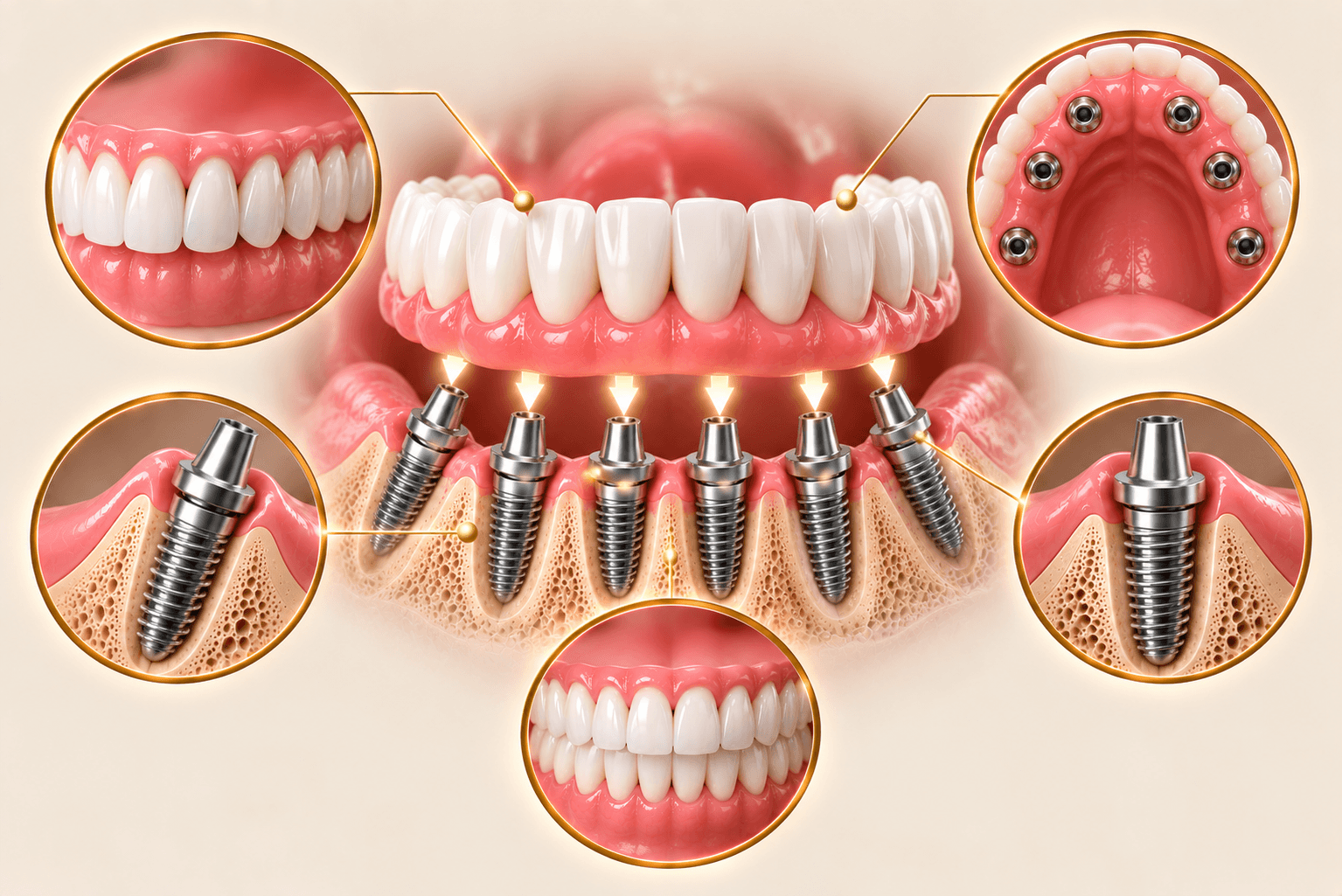
If you have lost most of your teeth in one jaw, or your remaining teeth are failing, you may have come across All-on-6 dental implants. This treatment replaces a full arch of teeth with a fixed bridge supported by six implants. The bridge is screwed in place, so you don't take it out at home like a removable denture. But who is actually an All-on-6 candidate? The honest answer is that it depends on you: your jawbone, your gums, your general health and your daily habits. This guide explains the factors dentists usually look at, so you can go into your consultation feeling better prepared.
Please keep in mind that this article is general information. Only a dentist or oral surgeon can confirm whether the treatment suits you, and they will do that after examining you and looking at your scans.
Who is usually considered an All-on-6 candidate?
Many adults may be suitable for All-on-6, especially people who:
- Have lost most or all of their teeth in the upper or lower jaw
- Have teeth that are badly damaged or failing and can't be saved
- Wear a removable denture that feels uncomfortable or loose
- Would like a fixed solution rather than teeth they take out every day
Wanting a fixed bridge is a good starting point, but it isn't the whole story. Your dentist will look at several factors together, and no single one decides everything.
Jawbone: the foundation of All-on-6
The implants are placed in your jawbone, so the amount and quality of bone matter a great deal. After teeth are lost, the bone in that area can slowly shrink. Some people have plenty of bone left, while others have lost quite a lot, particularly if they have been without teeth or wearing a denture for many years.
To assess your bone, your dentist will normally take X-rays and often a 3D scan (CBCT). This shows how much bone there is and where, and helps plan the position of each implant.
If your bone is limited, that doesn't automatically mean the end of the road. Depending on your situation, your dentist may discuss options such as:
- A bone graft to build up the area before or during treatment
- A sinus lift if there isn't enough bone in the upper back jaw
- A different approach, such as fewer or angled implants
- Zygomatic implants, which are anchored in the cheekbone, in some cases
Each option has its own considerations, and your dentist will explain which ones may fit your case.
Gum health and infection
Healthy gums give implants a better environment to heal in. If you have gum disease or an active infection, your dentist will usually want to treat it before placing implants. Any teeth that can't be saved are generally removed as part of the preparation stage.
Gum health also matters in the long run. Inflammation around implants, known as peri-implantitis, is one of the possible risks of implant treatment, and it is often linked to oral hygiene and smoking. Being able to keep the area clean is part of being a good All-on-6 candidate.
General health and medications
Your overall health affects how well you heal after surgery. Your dentist will ask about your medical history, so it helps to be open and thorough. Things they will usually want to know about include:
- Diabetes: especially how well it is controlled, as it can affect healing
- Conditions affecting healing or the immune system
- Medications that affect bone: for example certain drugs used for osteoporosis or some cancer treatments
- Blood thinners or medications affecting clotting
- Previous radiotherapy to the head or neck
Having one of these conditions doesn't necessarily rule you out. It may mean extra planning, a conversation with your GP or specialist, or a different treatment approach. Bring a list of all your medications, including supplements, to your consultation.
Smoking, hygiene and expectations
Some factors are in your hands, and they can make a real difference.
Smoking can affect healing and how well implants bond with the bone. Your dentist will likely advise you to stop, or at least avoid smoking during healing. If you smoke, be honest about it so your dentist can give you suitable advice.
Oral hygiene is essential. An implant bridge needs daily cleaning, including underneath the bridge, and regular professional check-ups. Ask your dentist to show you which tools and techniques to use.
Realistic expectations matter too. The treatment usually happens in stages: implants are placed, a temporary bridge is often fitted if the implants are stable enough, and a final bridge is made later once the implants have bonded with the bone. If you are travelling abroad, this often means at least two trips. Recovery, results and comfort differ from person to person, so discuss what you can realistically expect with your treating dentist.
What happens at the assessment?
A typical assessment for All-on-6 includes:
- A conversation about your dental history, health and goals
- A clinical examination of your mouth, gums and any remaining teeth
- X-rays and usually a 3D scan to check your bone
- A discussion of the treatment plan, stages, anaesthesia options and aftercare
- An explanation of the risks that apply to you
All-on-6 is usually done under local anaesthesia, sometimes combined with sedation, or in some cases general anaesthesia. It is normally an outpatient procedure, with no overnight hospital stay in most cases. Ask the clinic which option they suggest for you and why.
Useful questions to ask include: Is my bone enough, or will I need grafting? Can I have a temporary bridge straight away? What happens between visits if I'm travelling? Who do I contact if I have a problem after I return home?
When to talk to a doctor
It is worth booking a consultation with a dentist or oral surgeon if:
- Several of your teeth are loose, painful or failing
- Your denture is uncomfortable or makes eating difficult
- You have signs of gum disease, such as bleeding, swelling or receding gums
- You have a health condition or take medication and aren't sure whether implants are possible
If you notice pain, swelling, fever or any sign of infection in your mouth, contact a dentist promptly rather than waiting for a planned consultation. And if you have a medical condition, talking to your GP or specialist before surgery can also help.
Take the next step at your own pace
Finding out whether you are an All-on-6 candidate starts with a proper examination, and there is no need to rush. If you are considering treatment, you can read more about All-on-6 dental implants, compare verified clinics, and send one free request. Clinics will then contact you, so you can ask your questions, share your scans if you have them, and decide in your own time which option feels right for you.