
Choosing an all-on-6 clinic abroad: questions to ask and how to plan your trips
Thinking about an all-on-6 clinic abroad? Here are the questions worth asking, how the treatment stages shape your travel, and how to plan aftercare once you are back home.
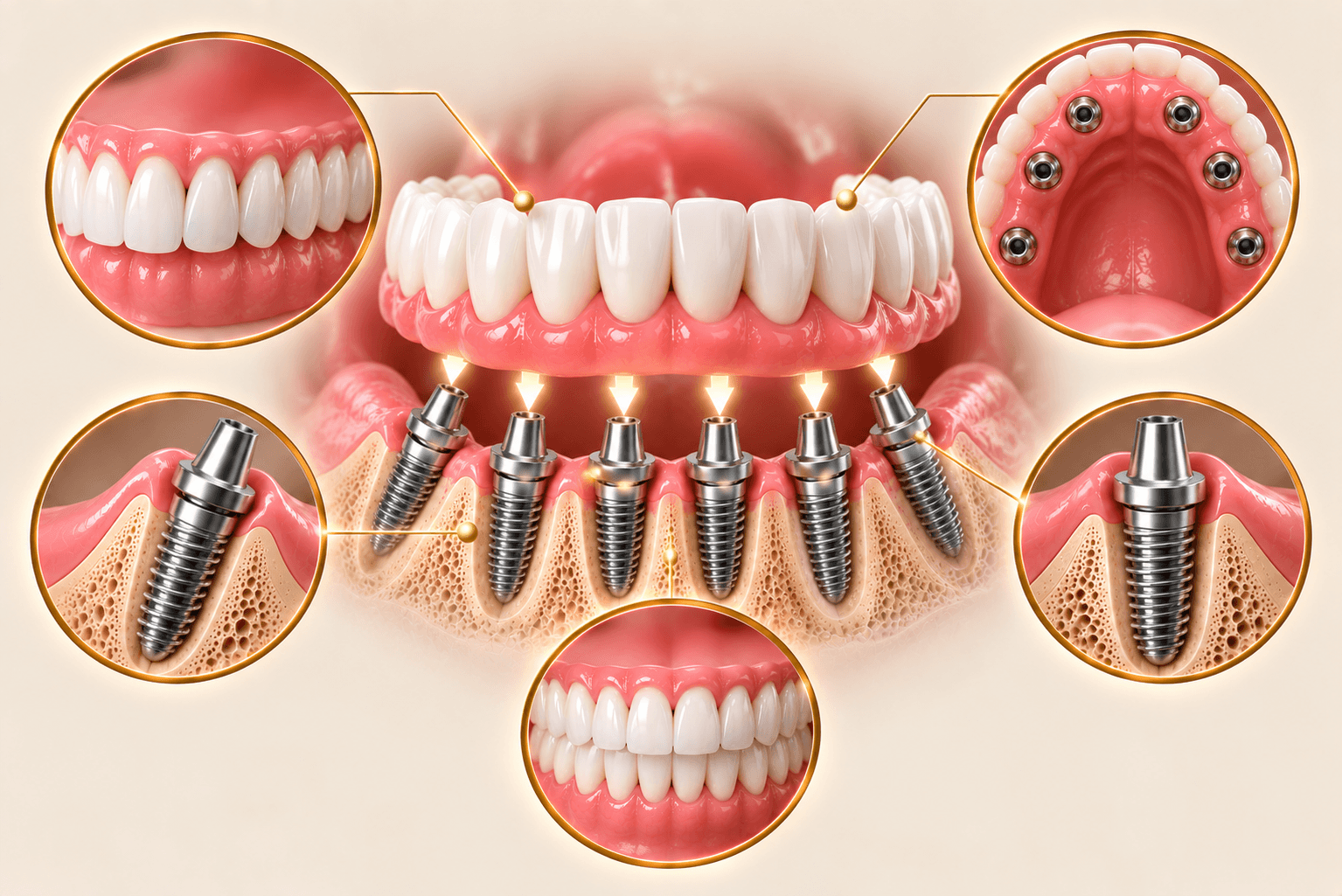
Replacing a full arch of teeth is a big decision. Choosing an all-on-6 clinic abroad adds a few more things to think about: travel, time off work, and what happens once you are back home. With All-on-6, six implants are placed in the jaw and support a fixed bridge. The bridge is screwed in place, so you don't take it out at home like a removable denture. Because the treatment usually happens in stages, good planning matters as much as choosing the right clinic.
This guide covers what to ask clinics, how to compare their answers and how to plan your trips calmly and realistically.
What All-on-6 involves and why it shapes your travel
All-on-6 is usually done in two or more stages. First, the clinic examines you and plans the treatment, often with X-rays and a 3D scan (CBCT) to check your bone. Any teeth that can't be saved are removed and infections are treated. Then the six implants are placed, usually under local anaesthesia. Some patients also have sedation, and a few have general anaesthesia.
In many cases a fixed temporary bridge is attached soon after surgery, but only if the implants are stable enough. Your dentist decides this. Next comes a healing period while the implants bond with the bone. After that, the final bridge is made and fitted.
For most patients travelling abroad, this means at least two trips are often needed: one for implant placement and one for the final bridge. Most people don't need to stay in hospital overnight, because the treatment normally happens at the dental clinic as an outpatient procedure. You still need time to rest and attend check-ups before you fly home.
Questions to ask any all-on-6 clinic abroad
A trustworthy clinic answers clearly and in writing. Before you commit, it helps to ask:
- Who will plan the treatment and place the implants, and what are their qualifications and experience with full-arch implants?
- Which tests do you need before confirming that I am suitable? Will you review my existing X-rays or scans in advance?
- Which implant system will you use, and can you give me the details for my records?
- What is the final bridge made of, for example acrylic or zirconia, and why do you recommend it for me?
- Will I get a fixed temporary bridge, and what happens if my implants are not stable enough for one?
- Might I need a bone graft, sinus lift or a different approach, such as angled or zygomatic implants?
- What type of anaesthesia or sedation do you offer?
- What exactly is included in the quote, and what could be charged separately?
- How do you handle complications, both while I am there and after I return home?
Pay attention to how the clinic communicates as well as what it says. If answers are vague, you feel rushed or you are offered a fixed plan before anyone has seen your scans, it's worth looking further.
Comparing offers from clinics abroad
Prices vary widely between countries, clinics and treatment plans, so it can be hard to compare quotes side by side. A reliable quote is only possible once the clinic has seen your scans or examined you. To compare offers fairly, check whether each one includes:
- One jaw or both
- Extractions, bone grafting or sinus lift if needed
- The temporary bridge and the final bridge, and their materials
- Anaesthesia or sedation
- Follow-up visits, adjustments and aftercare
- Any help with accommodation or local transfers
Remember to add travel, accommodation and the number of trips to your own budget. A lower headline price can look different once these costs are included.
How to plan your trips for All-on-6 abroad
Your clinic should give you a treatment timeline that fits your situation. Treat any dates as a plan rather than a guarantee, because healing differs from person to person. Some practical tips:
- First trip: allow time for the examination, any extractions, implant placement and early check-ups. Don't book a return flight for the day after surgery. Ask the clinic how long it recommends you stay.
- Between trips: the implants need time to bond with the bone. Ask what care you will need during this phase and who to contact if you have questions.
- Second trip: this is for scans or impressions, fitting the final bridge and adjusting your bite. Ask whether more than one appointment is needed.
- Flexibility: choose changeable tickets if you can, in case your dentist advises a later fitting date.
- Comfort: expect swelling, tenderness and maybe bruising in the first days. Plan a quiet stay close to the clinic, with access to soft foods.
It also helps to bring a list of your medications and health conditions, plus copies of any recent dental records.
Aftercare and long-term follow-up at home
Recovery doesn't end when you fly home. In the first period you may need to stick to a soft diet, clean carefully around the implants and avoid smoking and alcohol. Over the long term, implant bridges need daily cleaning, including underneath the bridge, and regular professional check-ups.
Before you travel, ask the clinic:
- What written aftercare instructions will I get?
- How can I reach the clinic after I return, and how quickly will they respond?
- What happens if a screw loosens or the bridge chips?
- Can a local dentist do routine check-ups, and will you share my treatment records with them?
It's sensible to find a dentist at home who is willing to see you for check-ups before you travel.
When to talk to a doctor
Suitability, risks and recovery are different for everyone, and only a dentist or oral surgeon can assess them after an examination and imaging. Discuss your plans with a doctor or dentist before you book if you have diabetes, a condition that affects healing, or take medicines that affect bone or blood clotting. Do the same if you smoke or have active gum infection.
During recovery, contact your clinic or a local dentist if you notice anything unusual. This includes pain or swelling that gets worse instead of better, bleeding that won't stop, signs of infection, numbness or tingling that lasts, or a bridge that feels loose. Seek urgent medical help if you feel seriously unwell.
Compare verified clinics at your own pace
Choosing an all-on-6 clinic abroad is easier when you can compare qualifications, treatment plans and aftercare side by side. On our site you can look through verified clinics, read about the treatment and send one free request. The clinics then contact you with their questions and suggestions, and you are under no obligation. To get started, visit our page about All-on-6 dental implants and take the time you need to decide.