
All-on-6 Recovery: Swelling, Soft Foods and Caring for Your New Teeth
Wondering what all-on-6 recovery feels like? Learn how swelling is usually managed, which soft foods can help in the early weeks, and how to care for your new fixed bridge during healing and in the long term.
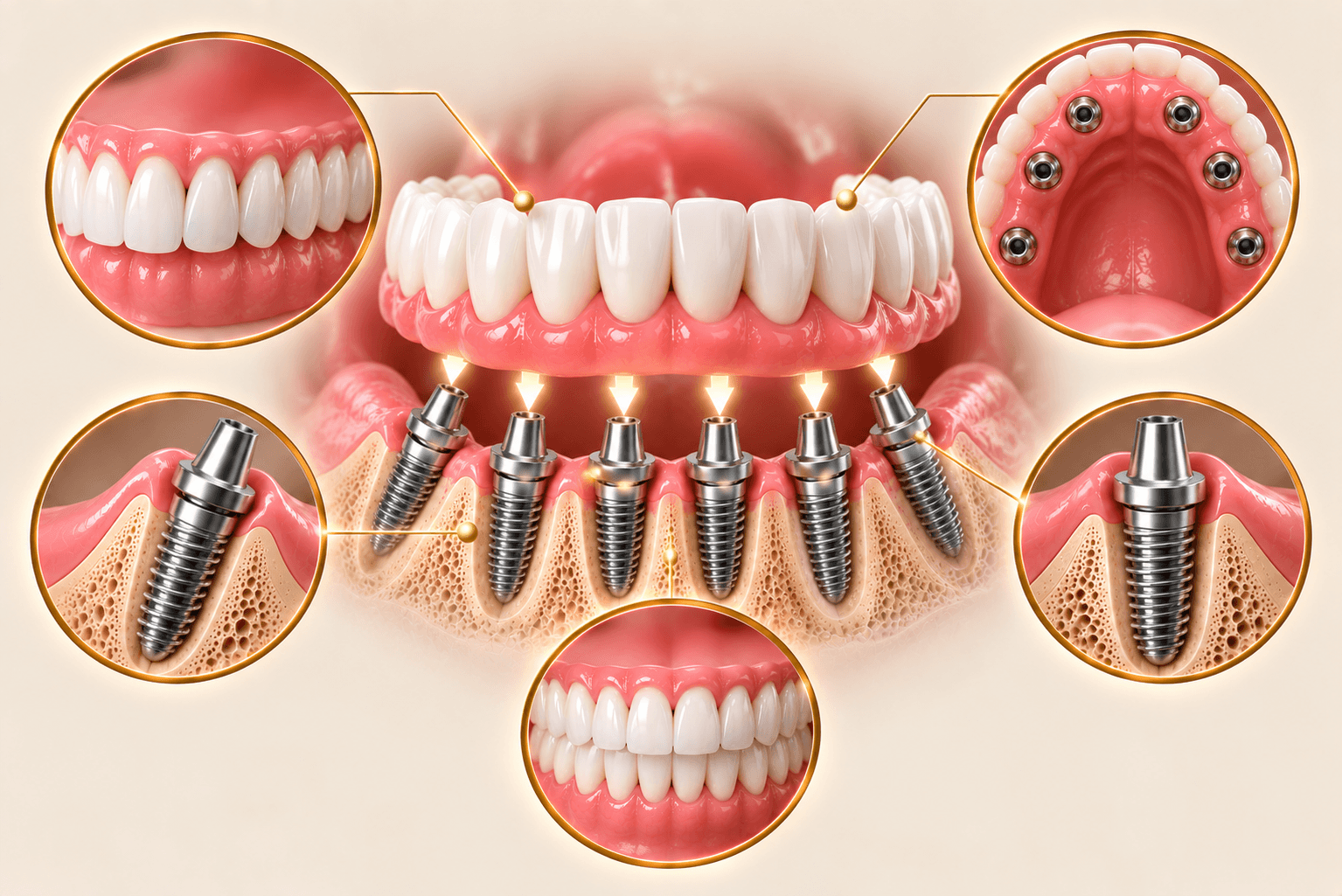
Getting a new set of fixed teeth is a big step, and it is natural to wonder what the days, weeks and months afterwards will feel like. This guide explains what all-on-6 recovery often involves, from the first days of swelling to choosing soft foods and looking after your new bridge in the long term. Everyone heals differently, so please treat this as general background. Your own dentist or oral surgeon will give you instructions that fit your treatment, and those always come first.
With All-on-6, six implants are placed in the jaw and a full-arch bridge is screwed onto them. You do not take this bridge out at home like a removable denture. In many cases a fixed temporary bridge is attached soon after surgery, and the final bridge is fitted later once the implants have had time to bond with the bone.
What to expect in the first days of All-on-6 recovery
The first stage of recovery is usually the most noticeable. Most people have some swelling and tenderness, and some get bruising on the cheeks or jaw. How much you feel depends on things like how many teeth were removed, whether bone grafting was needed, the type of anaesthesia and your general health.
In the first days you may notice:
- Swelling that builds up at first and then slowly goes down
- Tenderness or aching around the implant areas
- Slight oozing of blood from the gums
- Tiredness, especially if you had sedation or general anaesthesia
- A new feeling in your mouth as your tongue, lips and cheeks get used to the bridge
Plan to rest and keep your schedule light. If you have travelled abroad for treatment, it helps to stay near the clinic for the period your dentist recommends so they can check how you are healing.
Managing swelling, bruising and discomfort
Swelling is a normal part of the body's healing response. These general measures are often recommended, but your clinic will tell you exactly what applies to you:
- Cold compresses: placed on the outside of the face for short periods in the first days, which can help limit swelling.
- Medication as directed: take pain relief and any other prescribed medicine exactly as your dentist advises.
- Rest with your head raised: an extra pillow at night may make you more comfortable.
- Avoid smoking and alcohol: both can get in the way of healing and affect how stable the implants become.
- Go easy on exercise: heavy exertion soon after surgery can make swelling or bleeding worse, so ask when it is safe to start again.
Bruising may change colour as it fades, which is usually part of normal healing. If swelling or pain gets worse instead of slowly easing, contact your clinic.
Soft foods after All-on-6: what to eat and when
Diet is one of the most important parts of all-on-6 recovery. While the implants are bonding with the bone, they need protecting from heavy biting forces. That is why most patients start on a liquid or soft diet and only move to firmer foods when their dentist says so.
Foods that many patients find comfortable in the early stage include:
- Smoothies, yoghurt and soups that are warm rather than hot
- Mashed potatoes, mashed vegetables and pureed beans
- Scrambled eggs and omelettes
- Porridge and other soft cereals
- Soft fish that flakes easily
- Hummus, cottage cheese and similar soft dips
- Well-cooked pasta and rice
Foods to avoid until your dentist says otherwise usually include:
- Hard foods such as nuts, crusty bread, raw carrots and hard sweets
- Sticky or chewy foods like caramel, toffee and tough meat
- Very hot food and drinks, especially while your mouth still feels numb
- Small seeds and grains that can get stuck around the surgical sites
Try to eat a varied, nourishing diet even while it is soft. Protein, fruit and vegetables support healing. Taking small, frequent meals can be easier than a few large ones. Moving on to firmer textures is a gradual process, and the timing differs from person to person.
Keeping your new teeth clean while you heal
Good hygiene protects the gums and bone around your implants. At first, cleaning has to be gentle, because the tissues are still sore. Your clinic may suggest rinses, a soft toothbrush or other aids and will show you how to use them.
As healing goes on, daily cleaning becomes a long-term habit. Because the bridge is fixed, food and plaque can build up underneath it, and that area needs attention too. Depending on your dentist's advice, useful tools can include:
- A soft or electric toothbrush for the visible surfaces of the bridge
- A water flosser to rinse under the bridge
- Special floss or interdental brushes designed for implant bridges
- An antibacterial mouth rinse, if recommended
Poor hygiene and smoking are often linked to inflammation around implants, known as peri-implantitis. Keeping the area clean and going to regular professional check-ups are some of the best ways to look after your investment.
The longer healing phase and your final bridge
Once the first swelling has gone down, many people feel much more like themselves. Underneath, though, the implants are still slowly bonding with the jawbone. This phase takes longer than the first healing period, and how long it takes varies with your bone, your health and your treatment plan.
During this time you will usually wear the temporary bridge, keep to the diet your dentist recommends and go to follow-up checks. Once your dentist is happy with the healing, impressions or scans are taken and the final bridge is made and fitted. For patients treating abroad, this often means a second trip. Ask your clinic early on how the stages are planned and what happens between visits.
Getting used to new teeth can take some time. Speech and bite may feel a little different at first, and many patients adapt gradually. Mention any lasting difficulty at your check-ups, as small adjustments are sometimes possible.
When to contact your dentist or clinic
Some discomfort is expected, but certain signs should be checked. Contact your clinic promptly if you notice:
- Bleeding that does not ease with gentle pressure
- Pain or swelling that gets worse after the first days instead of improving
- Fever, a bad taste, pus or other signs of infection
- Numbness or tingling in the lips, chin or tongue that does not go away
- A bridge or implant that feels loose, or a bridge that chips or cracks
- Sinus symptoms after implants in the upper jaw
- Any reaction to medication
Recovery, risks and suitability differ for every patient. Always discuss your specific situation, health conditions and medications with your treating doctor, and follow their advice over general information like this.
Planning your treatment with confidence
A smoother recovery often starts with clear planning: knowing what aftercare is included, how follow-up works and who to contact if you have questions once you are home. If you are considering this treatment, you can learn more about All-on-6 dental implants, compare verified clinics and send one free request. Clinics will then get in touch so you can ask your questions and find the option that feels right for you.