
Am I a candidate for veneers? Signs they may suit you and when other treatments fit better
Wondering whether veneers are right for you? Learn the common signs that veneers may suit you, when they might not be the best first step, and which alternatives a dentist may suggest instead.
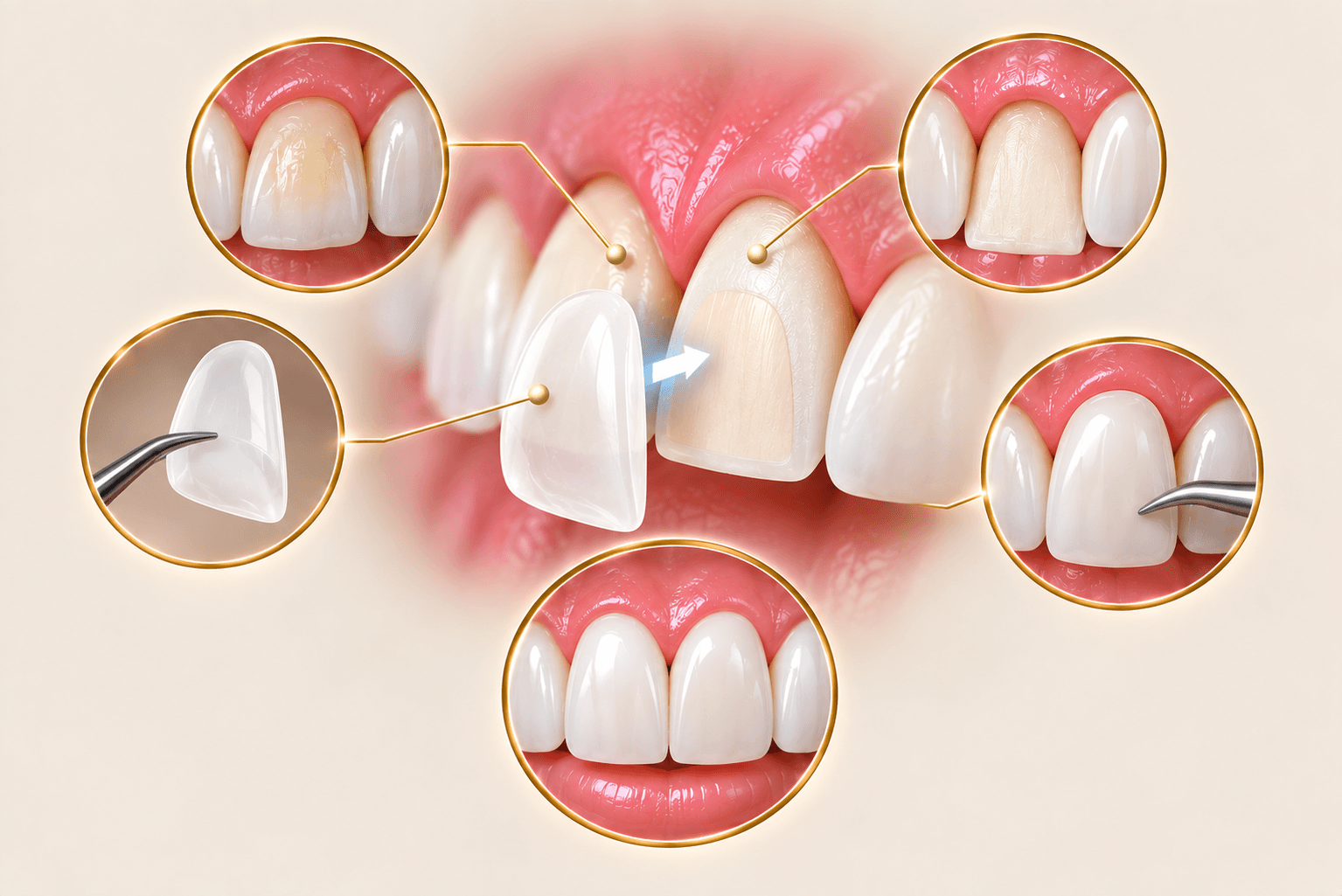
Veneers can change the colour, shape or size of teeth, so it's natural to look in the mirror and ask yourself, "am I a candidate for veneers?" The honest answer is that only a dentist can tell you, after examining your teeth, gums and bite. Still, it helps to know the common signs that veneers may suit someone and the situations where another treatment tends to fit better. That way you can go into a consultation with realistic expectations and good questions.
Veneers are thin, custom-made shells, usually made of porcelain or composite resin, that are bonded to the front surface of teeth. They're a cosmetic treatment planned for each person individually, and they work best when the teeth underneath are healthy. This guide covers what dentists usually look at, so you can decide whether the next step is worth taking.
Signs you may be a candidate for veneers
Veneers may suit adults with healthy teeth and gums who mainly want to improve how their smile looks. People who are often considered good candidates tend to have one or more of the following:
- Stubborn stains: discolouration that doesn't respond well to whitening.
- Small chips or cracks: minor damage to the edges of front teeth.
- Worn edges: teeth that look shorter or flatter than you would like.
- Small gaps: modest spaces between teeth that you would like to close.
- Slightly uneven teeth: teeth that look a little short, misshapen or out of line, where the issue is mostly about appearance.
Your expectations matter just as much as your teeth. Veneers can make a noticeable difference to how your smile looks, but they can't fix every dental problem. A good candidate understands that the result is planned together with the dentist, that preparing the tooth usually can't be undone, and that veneers need ongoing care and may eventually need replacing.
When veneers may not be the right first step
Some situations make veneers less suitable, or mean you need other treatment first. A dentist may advise caution if you have:
- Active tooth decay or gum disease: this usually needs to be treated and under control before any cosmetic work, because veneers rely on a healthy foundation.
- Significant grinding or clenching (bruxism): strong forces can chip or loosen veneers. This needs a careful discussion with your dentist, who may recommend a night guard.
- Too little healthy enamel: teeth that are heavily worn or already extensively restored may need a different approach.
- Major bite problems or crowding: when teeth are clearly out of position, orthodontic treatment might deal with the cause better than covering it up.
None of this means you're ruled out forever. Often the order of treatment matters most. Your gums might be treated first, a bite problem assessed or grinding managed, and then veneers can be looked at again.
Does the type of veneer change who is a good candidate?
The material can affect whether veneers are a reasonable option for you. The main types are:
- Porcelain veneers: made in a dental laboratory and generally known for a natural, translucent look, good stain resistance and durability. They usually need some enamel removed.
- Composite veneers: often built up directly on the tooth in the clinic. They usually need less preparation and can be easier to repair, but they may stain or wear more over time.
- Minimal-preparation or no-preparation veneers: very thin options that may need little enamel removed. They aren't suitable for every case.
If you want to keep as much of your natural tooth as possible, you might lean towards composite or minimal-preparation options. If lasting colour matters most to you, you might discuss porcelain. Your dentist will explain which material suits your teeth and goals, or whether veneers suit you at all.
Alternatives that sometimes fit better
Working out whether you're a candidate for veneers also means asking whether a simpler or better-suited treatment exists. Depending on your situation, a dentist may suggest:
- Teeth whitening: if your teeth are healthy and colour is your main concern, whitening may be worth trying first, as it doesn't involve removing enamel.
- Composite bonding: for a single small chip or a minor gap, adding a small amount of tooth-coloured material can sometimes be enough.
- Crowns: if a tooth is badly damaged or weakened, a crown that covers the whole tooth may be the more fitting option.
- Orthodontic treatment: for crowding, larger gaps or bite problems, moving the teeth into a better position can fix the underlying issue rather than hiding it.
Sometimes a combination works well, such as orthodontics or whitening first and then veneers on a few teeth. It's fine to ask any clinic why they recommend veneers over these options.
What happens at a veneer suitability assessment
The consultation is where you'll get a real answer to "am I a candidate for veneers?" A typical assessment may include:
- An examination of your teeth, gums and bite
- X-rays, if the dentist thinks they're needed
- A conversation about what bothers you about your smile and what you hope to change
- In some clinics, photos, digital smile design or a trial mock-up so you can preview the planned shape
Useful questions to ask include:
- Are my teeth and gums healthy enough for veneers right now?
- Which material do you recommend for me, and why?
- How much enamel would need to be removed?
- Could whitening, bonding, crowns or orthodontic treatment work instead?
- What are my personal risks, such as sensitivity, chipping or colour mismatch?
- How many visits are planned, and how long would I need to stay if I travel?
- What aftercare and follow-up do you provide?
If you're thinking about treatment abroad, sending recent photos or X-rays in advance can help a clinic give a first opinion. The final decision, though, should come after an in-person examination.
When to talk to a doctor
It's a good idea to have a dental check-up before planning veneers, especially if you notice bleeding gums, tooth pain, sensitivity, loose teeth or signs that you grind your teeth at night. These may need attention whatever cosmetic treatment you choose. Suitability, risks and recovery are different for everyone, so your treating dentist is the right person to weigh up your oral health, bite and expectations. If a dentist tells you veneers aren't suitable right now, ask what would need to change first, or which alternative they would suggest.
Take the next step at your own pace
If you think veneers may suit you, you can read more about the treatment and compare verified clinics on our veneers treatment page. You can send one free request with your questions, and clinics will then contact you. Take your time, compare their answers and choose what feels right for you.