
Life after veneers: recovery, sensitivity and everyday veneers aftercare tips
What does life look like after veneers? Read about the adjustment period, how to handle sensitivity and simple daily habits that help you look after your new smile.
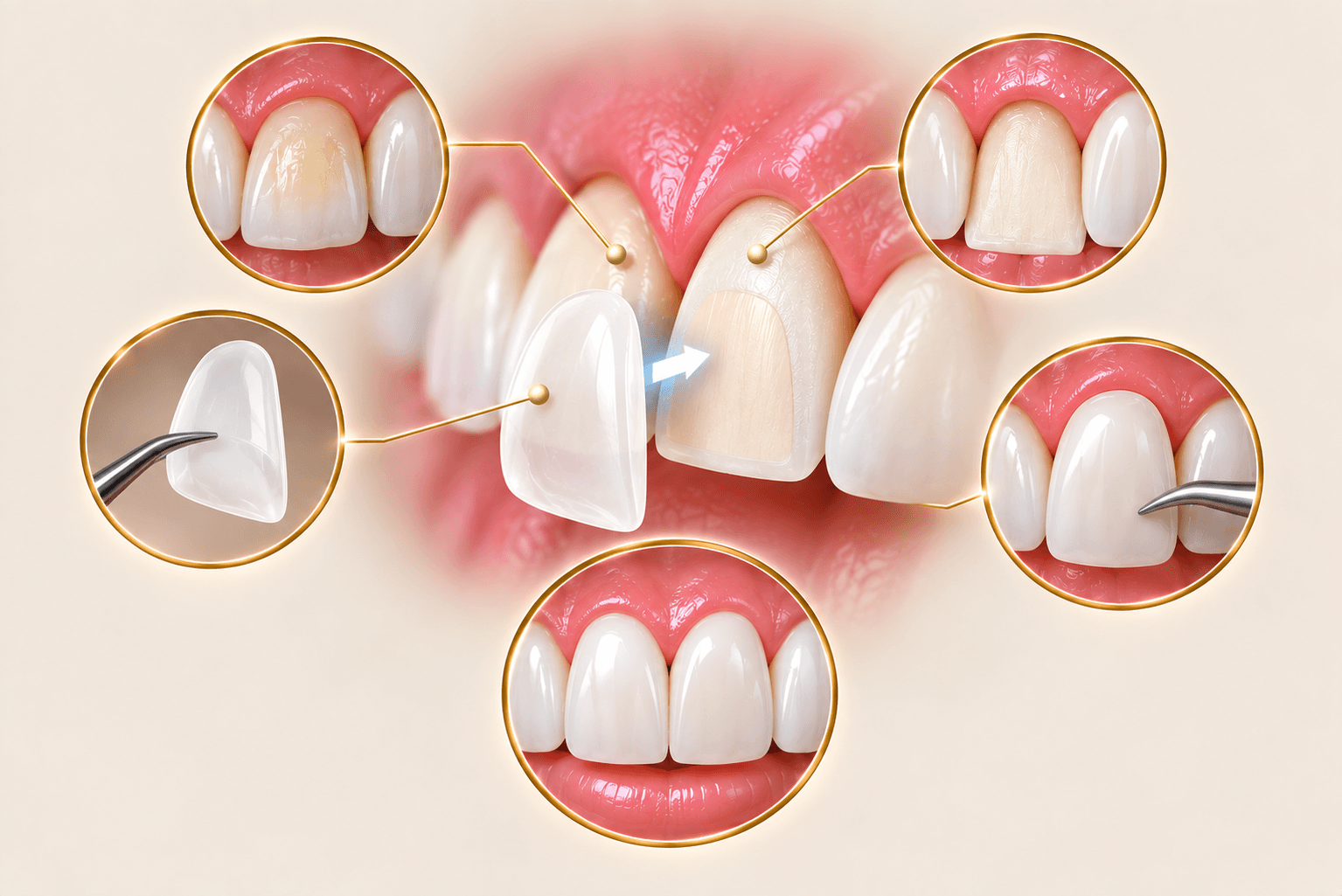
Getting veneers is often a big moment. You may have planned it for a long time, and you might even have travelled abroad for treatment. Once the veneers are bonded, though, a new question comes up: how do you look after them? This guide covers simple veneers aftercare tips for the first days and the years after. It explains what the adjustment period can feel like, how to deal with sensitivity and which everyday habits help protect your teeth and gums.
Please keep in mind that this article gives general information only. Recovery, risks and suitability differ from person to person. Your treating dentist knows your teeth, your bite and the type of veneers you have, so their personal advice always comes first.
What the first days after veneers can feel like
Veneers are an outpatient treatment done in the dental chair, so there is no hospital stay. Most people get back to their normal routines quickly. It is still common to need a short period to adjust while your mouth gets used to the new surfaces.
In the first days you may notice:
- Temporary sensitivity to hot or cold food and drinks
- Mild tenderness of the gums around the treated teeth
- A different feeling when biting, as your teeth may feel slightly bigger or smoother
- Small changes in speech at first, especially with certain sounds, while your tongue gets used to the new shape
If local anaesthesia was used for tooth preparation, wait until the numbness has fully worn off before eating, so you do not bite your cheek, lip or tongue by accident. If you had minimal-preparation veneers, you may have needed little or no anaesthesia, and the adjustment can feel different.
How long this phase lasts varies. For some people it passes quickly, while others need a little longer. If something does not settle, tell your dentist.
Managing sensitivity after veneers
Sensitivity is one of the most common things people notice after veneers, especially when enamel has been removed during preparation. It often shows up as a short, sharp feeling when you drink something cold or hot.
Things that many people find helpful include:
- Choosing lukewarm food and drinks for a while instead of very hot or ice-cold ones
- Using a soft-bristled toothbrush and brushing gently
- Asking your dentist whether a toothpaste for sensitive teeth is suitable for you
- Avoiding very acidic or sugary snacks if they seem to trigger discomfort
Your dentist may also have specific advice about pain relief. Follow their guidance rather than guessing, and check with them before taking any medication if you have health conditions or take other medicines.
Everyday veneers aftercare tips for cleaning
Veneers themselves cannot decay, but the natural tooth underneath and the gums around it still can. That is why good oral hygiene matters just as much after treatment as before it.
Here are some practical veneers aftercare tips for your daily routine:
- Brush twice a day with a soft brush and gentle, circular movements, paying attention to the gumline where the veneer meets the tooth.
- Clean between your teeth every day with floss or interdental brushes. Ask your dentist which tools fit the spaces between your teeth best.
- Choose a toothpaste your dentist recommends. Some very abrasive products may not be ideal for certain veneer materials, especially composite.
- Rinse with water after meals when you cannot brush, to help remove food particles.
Clean edges around the veneers help keep the gums healthy. Gum irritation can sometimes happen if plaque builds up or if an edge is hard to clean, so regular, careful cleaning is one of the most useful things you can do.
Eating and drinking with veneers
You do not have to give up your favourite foods, but a few sensible habits can lower the risk of chips and stains.
- Avoid biting very hard objects such as ice, hard sweets, nut shells, pens or fingernails.
- Cut firm foods like crusty bread, apples or raw carrots into smaller pieces and chew with your back teeth.
- Never use your teeth as tools, for example to open packaging or bottles.
- Be mindful of strongly coloured drinks and foods such as coffee, tea, red wine or curry, particularly with composite veneers, which may stain more over time than porcelain. Rinsing with water afterwards can help.
- Limit tobacco, which can discolour teeth and affect gum health.
Remember that veneers do not change colour with whitening. If you want to whiten your natural teeth at some point, talk to your dentist first, because neighbouring teeth may end up looking different from the veneers.
Protecting veneers from grinding and damage
Teeth grinding or clenching, also called bruxism, puts strong pressure on teeth and can lead to chipped or loose veneers. Many people grind at night without knowing it.
Signs that you might grind your teeth include:
- Waking up with a sore jaw or headache
- Worn or flattened tooth edges
- A partner noticing grinding sounds at night
If you grind your teeth, your dentist may recommend a custom night guard. If you play contact sports, ask about a sports mouthguard too. Both can help protect your veneers and your natural teeth.
Long-term care and check-ups
Veneers do not last forever, and at some point they may need repair or replacement. How long they last depends on the material, your habits and how well they are cared for.
To support your veneers over the years:
- Attend regular dental check-ups and professional cleanings, so your dentist can check the edges, the bonding and your gums.
- Tell any new dentist that you have veneers, so they can choose suitable cleaning and polishing methods.
- Keep a record of your treatment, such as the material used and the number of veneers, especially if you were treated abroad.
If you had your veneers done in another country, ask the clinic before you leave what follow-up they offer, how to reach them with questions and what to do if a veneer needs attention once you are home. It can also help to find a local dentist for routine check-ups.
When to talk to your dentist
Some changes are normal during the adjustment period, but others are worth checking. Contact your treating dentist if you notice:
- Sensitivity or pain that does not ease, or gets worse
- A veneer that feels loose, has chipped or has come off
- A bite that still feels uneven, or teeth that hit first when you close your mouth
- Swollen, bleeding or sore gums around the veneers that do not improve
- A dark line, roughness or a gap at the edge of a veneer
- Jaw pain, headaches or signs of grinding
If a veneer comes off, keep it safe and contact your dentist instead of trying to glue it back yourself. Anything that worries you is a good reason to ask, as your dentist can assess what is going on and advise you personally.
Planning your veneers treatment
Good aftercare starts with good planning, including clear information on follow-up care before treatment begins. If you are considering veneers, you can learn more about veneers treatment and verified clinics, compare options at your own pace and send one free request. Clinics will then contact you, so you can ask about materials, visits, aftercare and follow-up before you decide.