
Shedding After Hair Transplant: What to Expect With FUE and What Comes Next
Seeing new grafts fall out can be worrying, but shedding is a common part of FUE recovery. Learn why it happens, what usually comes next, and when to check in with your doctor.
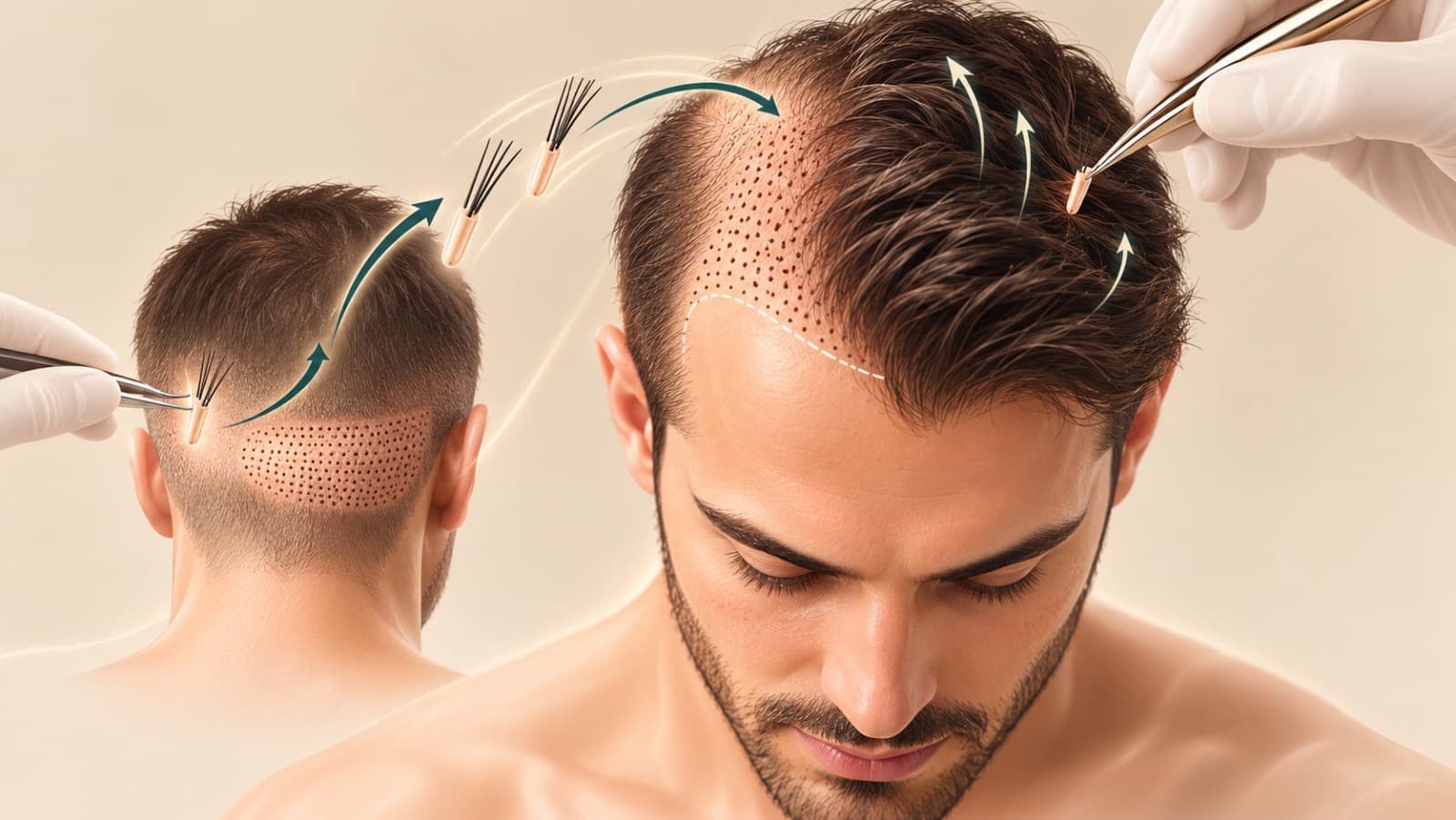
You have had your FUE hair transplant, the scabs have come away, and the new hairline is starting to look the way you hoped. Then, a few weeks later, the transplanted hairs start falling out. For many patients this is the most worrying part of recovery. The good news is that shedding after hair transplant is common and is usually an expected part of the hair growth cycle, not a sign that the procedure has failed.
This guide explains why shedding happens, what you might notice, what usually comes next, and when it makes sense to contact your doctor. Remember that every person heals differently, so your own timeline and experience should always be discussed with your treating doctor.
Why shedding after hair transplant happens
During an FUE hair transplant, individual hair follicles are taken from a donor area, usually the back and sides of the scalp, and placed into tiny openings where hair has thinned or been lost. Moving a follicle is a big change for it. It is taken out of its usual blood supply, handled, and placed into new tissue.
Because of this, many transplanted follicles go into a resting phase. While resting, the follicle lets go of the hair shaft it was carrying, so the visible hair falls out. The important part is that the follicle itself usually stays in place under the skin. Once it has settled into its new home, it can start a new growth cycle and produce a fresh hair.
In simple terms:
- The hair shaft you see is what sheds
- The follicle under the skin is what grows new hair
- Shedding the shaft is commonly part of the follicle resetting itself
What shedding usually looks like
Shedding often starts some weeks after the procedure, once the early healing phase with scabbing and redness has passed. The exact timing differs from person to person.
You might notice:
- Short hairs coming away when you wash or gently touch your scalp
- Small hairs on your pillow or in the shower
- The treated area looking thinner than it did straight after surgery
- A look that seems closer to how your scalp was before the transplant
Some people shed most of their transplanted hairs, others only some of them. Both can be normal. It is also possible to notice tiny white bulbs at the end of shed hairs; this does not necessarily mean the graft has been lost, but if it worries you, ask your clinic.
Shock loss: when existing hair sheds too
Sometimes it is not only the transplanted hairs that fall out. Native hair around the recipient area, or occasionally in the donor area, can also shed for a while. This is often called shock loss. It is thought to be a reaction of the scalp to the stress of surgery.
Shock loss is frequently temporary, but this varies. Hair that was already weak or miniaturised because of ongoing pattern hair loss may not always return. This is one reason why doctors look closely at whether your hair loss is still progressing before recommending a transplant, and why some people are advised about ways to protect their existing hair. Your doctor is the right person to explain what applies in your case.
What comes next: regrowth after shedding
After the shedding phase, there is usually a quieter period when the scalp may look much as it did before treatment. This can feel discouraging, but it is commonly part of the process. The follicles are resting before they start growing again.
Regrowth then tends to happen gradually:
- Early regrowth: fine, thin hairs begin to appear, sometimes unevenly
- Thickening: hairs gradually become stronger, longer and darker
- Maturing result: density and texture continue to develop over many months
New hairs can look patchy or wiry at first. Some people also notice small spots that look like pimples as hairs push through the skin. The final appearance develops slowly, so it is wise to be patient and avoid judging the result too early. Your doctor can tell you when it is realistic to assess how the transplant has turned out for you.
How to care for your scalp during the shedding phase
Shedding cannot usually be prevented, and trying to stop it is not necessary. What you can do is support healthy healing and protect both the grafts and your existing hair.
Helpful general steps include:
- Follow your clinic's washing instructions exactly, including which products to use
- Avoid scratching, picking or rubbing the treated area
- Wait for your doctor's approval before using hair dye, styling products or hats that press on the scalp
- Ask before returning to sport, swimming or saunas
- Protect your scalp from strong sun, as advised by your clinic
- Take any medication only as prescribed, and do not start new hair products without checking first
- Keep up with follow-up appointments or photo check-ins, even after returning home
If your clinic is abroad, ask before you travel how follow-up works during the shedding and regrowth months, and who you can contact if you have questions.
When to talk to a doctor
Shedding by itself is generally expected, but some signs should be checked by a medical professional. Contact your clinic or a local doctor if you notice:
- Increasing redness, warmth, swelling or pain rather than improvement
- Pus, a bad smell or spreading crusting
- Fever or feeling generally unwell
- Many painful, inflamed bumps, which may point to folliculitis
- Sudden or patchy hair loss well outside the treated areas
- Little or no sign of regrowth when your doctor expected to see it
It is also completely reasonable to get in touch simply because you are worried. Sending clear photos and describing what you see can help your clinic reassure you or advise on next steps. Risks, recovery and suitability are different for each person, so personal advice from your treating doctor matters more than any general timeline.
Compare clinics and plan your FUE journey
Understanding shedding before your procedure can make recovery much less stressful. When you speak to clinics, ask how they explain the shedding phase, what aftercare they provide and how they follow up with patients once they are home. You can learn more about the procedure and compare verified clinics on our FUE hair transplant page, then send one free request so that clinics can contact you with their advice and quotes. Take your time, ask questions and choose what feels right for you.