
Thigh Lift Scars: Where They Are and How They Fade
Thinking about a thigh lift but worried about scarring? Learn where thigh lift scars are usually placed, how they tend to change over the months after surgery, and how you can support healthy healing.
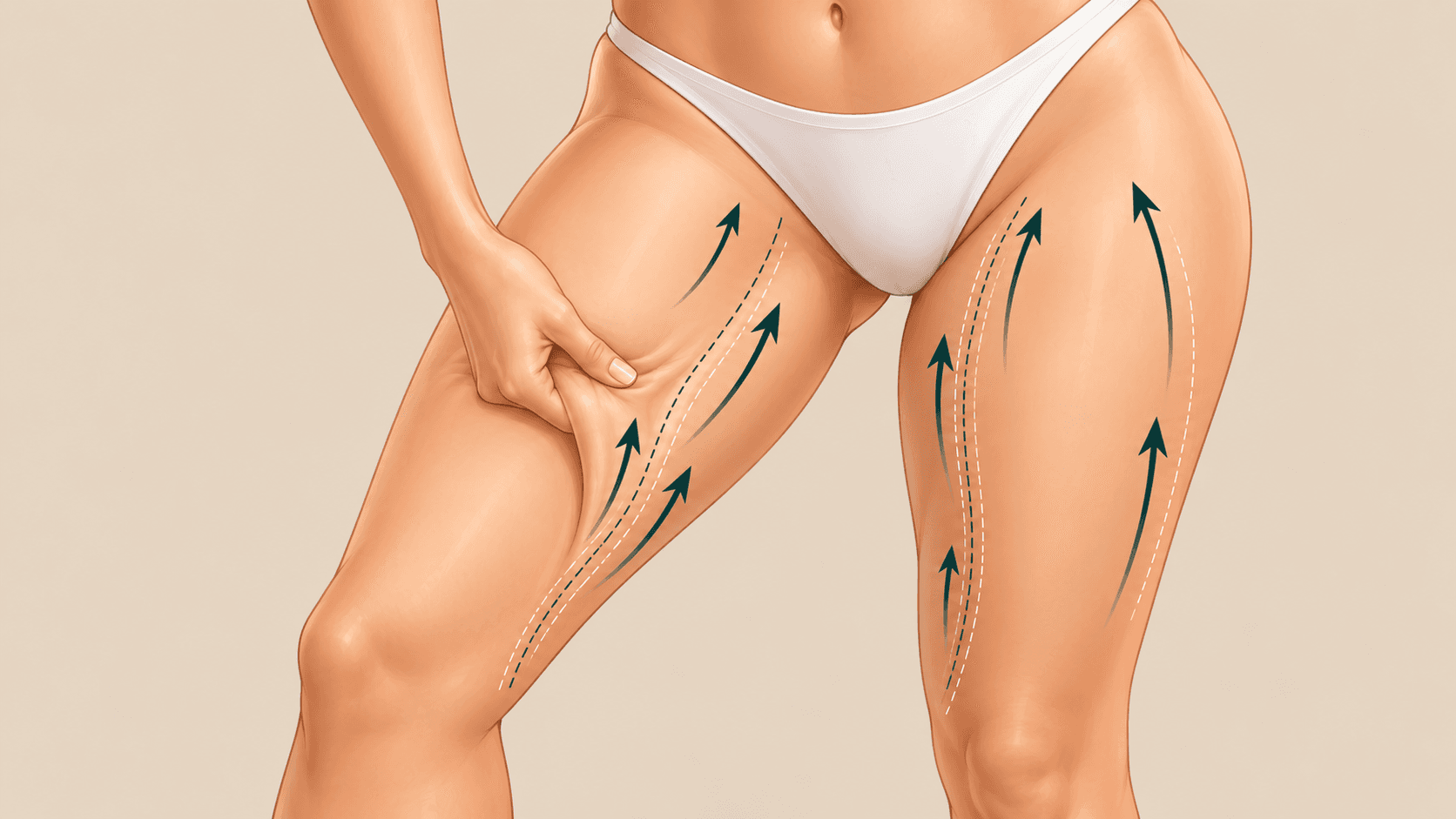
If you are thinking about a thigh lift, you have probably wondered about the scars. That's a sensible question. A thigh lift (thighplasty) removes loose skin and some fat from the thighs, and removing skin always leaves a scar. Knowing where thigh lift scars usually sit, how they tend to change and what affects healing can help you decide whether the trade-off is right for you, and help you ask your surgeon better questions.
This guide covers the basics in plain language. Everyone heals differently, though, so your own surgeon is the person who can tell you what to expect in your case.
Why thigh lift scars are part of the trade-off
A thigh lift is usually considered when diet and exercise can't tighten loose skin, often after major weight loss or because skin has lost elasticity with age. The surgeon removes the extra skin and closes the tissue that remains, so a scar along the incision can't be avoided.
Most people who choose this surgery feel that a scar in a discreet spot is worth smoother, firmer thighs. Others decide it isn't for them. Neither choice is wrong. What matters is having realistic expectations about scars before surgery, and surgeons often look for this when they assess whether someone is a good candidate.
Where thigh lift scars are usually placed
Surgeons try to put incisions where clothing or natural creases can hide them. The exact position depends on which part of the thigh is treated and how much skin has to come off.
- Inner (medial) thigh lift: the incision usually sits in the groin crease. If there is a lot of loose skin, it may also run down the inner thigh towards the knee. That vertical scar is easier to see when the legs are bare, but it lets the surgeon remove more skin.
- Outer (lateral) thigh lift: the incision usually starts in the groin and runs around the hip. It is sometimes done as part of a lower body lift, and the scar may continue around the body.
- Mini thigh lift: a shorter incision, mostly in the groin crease, for milder laxity in the upper inner thigh. The scar is smaller, but this approach only suits limited amounts of loose skin.
Liposuction is sometimes combined with the lift to refine the shape. It usually leaves only small marks where the thin instruments go in.
Your surgeon should show you exactly where your incisions will be before the day of surgery. Many people find it helpful to see the planned lines marked on their own body during the consultation, and to check how they line up with the underwear or swimwear they usually wear.
How thigh lift scars change over time
Scars mature slowly. A healing scar normally goes through several stages, and the timing differs a lot from person to person:
- Early weeks: the incision is closed with stitches or surgical glue. It may look red, raised or slightly puckered, and the area is often swollen, bruised and tight.
- The following months: the scar can look darker, pinker or firmer for a while. This is a normal part of healing, even if it feels discouraging.
- Longer term: over many months, and sometimes longer, most scars gradually flatten, soften and fade to a paler colour.
Scars rarely disappear completely. The aim is a mature scar that is as flat, thin and discreet as possible. Some people find their scars become hard to notice. For others, the scars stay more visible, widen or shift position slightly as the skin settles. Skin type, genetics and how the wound healed all play a part.
Caring for your incisions and scars
Good wound care in the early phase lays the foundation for how your scar will look later. Your surgeon will give you specific instructions, and you should always follow them over general advice. These are common points of aftercare:
- Keep the wounds clean and dry in the way you have been shown. Groin incisions need especially careful hygiene.
- Wear your compression garments as instructed. They help control swelling and support the tissue.
- Avoid strain on the incisions. Sitting, bending or stretching in certain ways can pull on the wounds, so move carefully and follow your surgeon's guidance.
- Take short walks if advised, to support circulation.
- Protect healing scars from the sun, because sun exposure can darken scars.
- Ask before using scar products. Your surgeon can tell you whether and when silicone gels, sheets or scar massage may suit you.
If you are travelling abroad for surgery, ask how long you should stay near the clinic before flying home, and how wound checks will be handled once you are back.
What can affect how scars heal
Some things are in your control and some are not. Factors that can influence thigh lift scars include:
- Smoking: it can slow wound healing, so surgeons usually ask patients to stop before and after surgery.
- Weight stability: big weight changes after surgery can stretch scars and affect results.
- Tension on the wound: the groin and inner thigh move a lot, which can put strain on incisions.
- Wound healing problems: delayed healing, infection or wound separation, which are among the more common concerns in this area, can lead to wider or more visible scars.
- Skin type and genetics: some people are more prone to raised or thickened scars.
- General health: conditions that affect healing can make a difference, so tell your surgeon about your full medical history.
Even with excellent care, no one can guarantee how a scar will look. Some people later need a scar revision or another procedure, and this is worth discussing in advance.
When to talk to your doctor
Contact your surgeon or a doctor promptly if you notice:
- Increasing redness, warmth or swelling around an incision
- Pus, an unpleasant smell or fluid leaking from the wound
- The wound edges opening or separating
- A fever or feeling generally unwell
- Pain, swelling or tenderness in the calf or leg, or sudden shortness of breath or chest pain, which need urgent medical attention
Talk to your surgeon later on, too, if a scar becomes thick, raised, itchy or painful, or doesn't seem to be settling. Scars that are healing differently from expected can often be assessed and treated, and only your doctor can advise what suits you.
Comparing clinics for a thigh lift
Scarring is one of the most personal parts of deciding on a thigh lift, so it helps to talk it through with surgeons who explain the incision plan, aftercare and possible risks clearly. On our marketplace you can read about thighplasty and compare verified clinics on the thigh lift treatment page. Then send one free request, and clinics will contact you so you can ask your questions and decide in your own time.