
How an unshaven DHI hair transplant works and who it may suit
Find out what an unshaven DHI hair transplant involves, how follicles are placed with a pen-like implanter, who it may suit, its limitations, and what to discuss with your doctor before you decide.
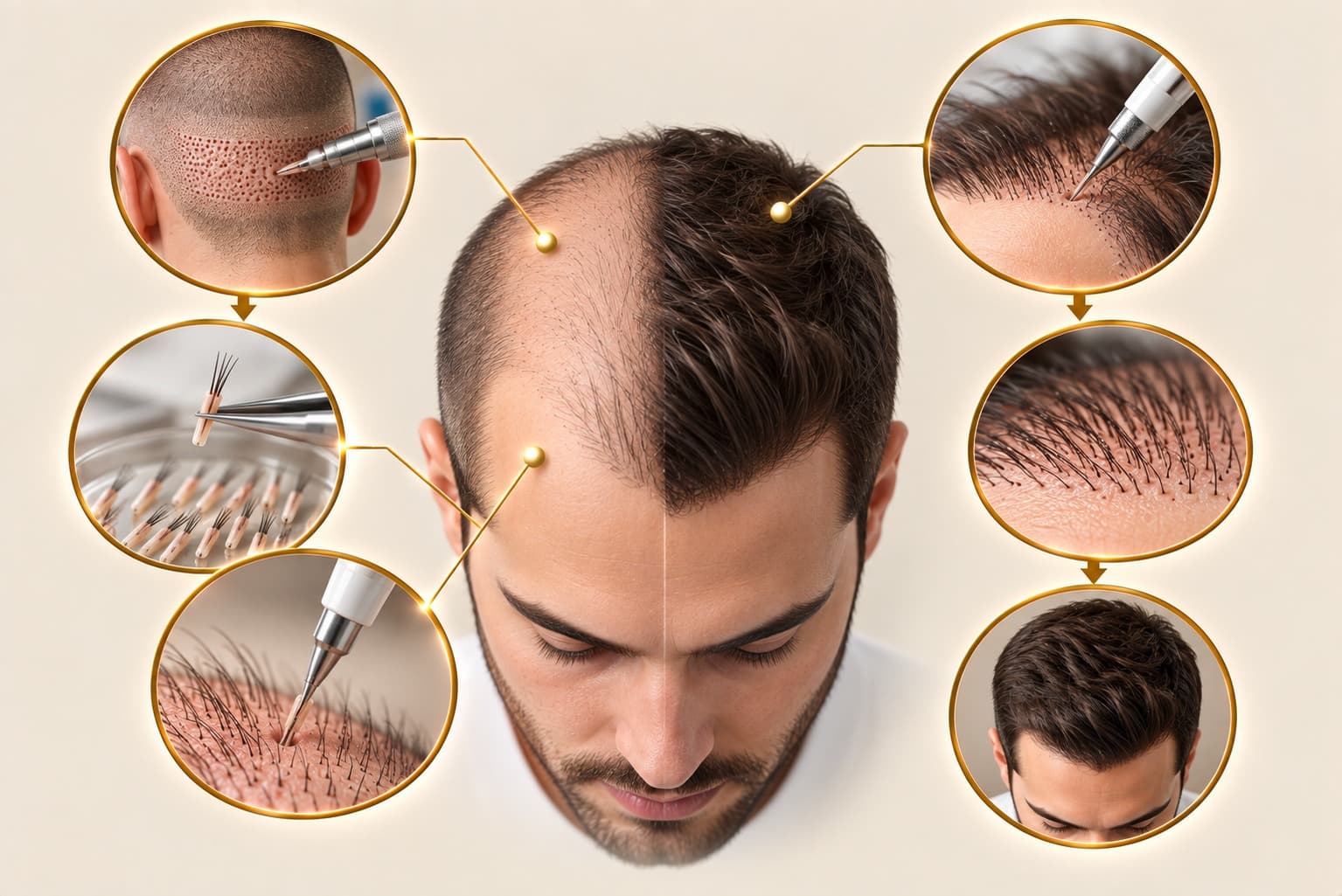
Many people think about a hair transplant but worry about the shaved head that often comes with it. They might have a job where they meet people, or they would just rather keep the procedure private. This is why many patients ask about an unshaven DHI hair transplant. In this guide we explain what it means, how it works, who it may suit and where its limits are, so you can go into a consultation with clear questions.
What does "unshaven" mean in a DHI hair transplant?
DHI stands for Direct Hair Implantation. Follicles are taken one by one from a donor area, usually the back of the head. Each one is then placed in a thinning area with a pen-like tool called a Choi implanter. DHI is a type of FUE. The difference is that the implanter makes the opening and places the graft in one movement.
Because the pen places each graft directly, the recipient area can sometimes be treated without shaving it. Your existing hair stays as it is, and the new grafts go in between those hairs.
It helps to know what "unshaven" usually does and doesn't mean:
- The recipient area (for example the hairline or a thinning patch) is often left unshaved
- The donor area usually still needs some trimming so the follicles can be removed
- Some clinics trim only small sections of the donor area that longer hair can cover, but approaches differ
- "Unshaven" rarely means nothing is cut at all, so ask the clinic exactly what they plan
How an unshaven DHI hair transplant works
An unshaven DHI procedure is normally done as a day procedure under local anaesthesia, sometimes with light sedation. You are awake, but the treated areas are numb. The steps are much the same as in a standard DHI session:
- Consultation and planning: the doctor talks through your goals, checks your hair loss pattern, designs the hairline and estimates how many grafts you need
- Preparation: the donor area is trimmed as needed and local anaesthesia is given
- Extraction: follicles are removed one at a time with a fine punch tool
- Implantation: each graft is loaded into the implanter and placed directly into the recipient area, between your existing hairs
- Aftercare instructions: you get guidance on washing, sleeping, medicines and protecting the grafts
The implanter lets the surgeon closely control the angle, depth and direction of each graft. This matters even more when working around existing hair, because the new hairs need to blend with the hair you already have. How long the session takes depends on the number of grafts and how the team works. Your clinic can give you a realistic estimate for your case.
Who an unshaven DHI hair transplant may suit
A doctor has to decide whether you are suitable, but some patients are more often considered for the unshaven approach:
- People with stable hair loss and a healthy donor area
- Those who need a smaller number of grafts, for example to refine the hairline or add density
- People who want to thicken thinning areas that still have a fair amount of existing hair
- Patients who would like to keep the procedure discreet, for personal or work reasons
- People with longer hair that can help cover a trimmed donor area during healing
Before recommending any transplant, your doctor will usually look at:
- The cause of your hair loss, because not every type responds to a transplant
- Whether your hair loss is still getting worse quickly
- The density and quality of your donor hair
- Your age and what you expect in the long term
- Any medical conditions and medicines that might affect healing
A transplant may not be suitable for some causes of hair loss, such as certain autoimmune or scarring conditions, or when the donor area is too thin. An honest consultation matters more than the technique.
Possible limitations of DHI without shaving
Unshaven DHI has advantages, but it is not the right choice for everyone, and it is not automatically better than other methods. Points to discuss with your surgeon:
- Larger areas: DHI can be slower and may cover a smaller area in one session. Extensive hair loss may need a different plan or more than one session
- Working around existing hair: placing grafts between longer hairs takes care and can make the session take longer
- Visibility during healing: you won't have a shaved head, but redness, small scabs or some swelling may still show in the first days
- Donor area: depending on how much is trimmed, the donor area may still be noticeable for a while
- Shock loss: existing hair near the treated area can shed for a time, which may affect how the area looks for a while
Your surgeon may suggest a partly shaved or fully shaved approach if that fits your goals better. It's worth asking why they recommend a particular option.
Recovery and possible risks
Most people go home the same day. Recovery after an unshaven DHI hair transplant usually follows the same stages as any DHI procedure:
- Early days: some redness, swelling, tenderness and small scabs are common
- First weeks: scabs fall off and the scalp settles, and many people go back to work, depending on their job
- Shedding phase: transplanted hairs often fall out, which is normally expected
- New growth: new hairs gradually appear and thicken over many months
DHI is generally considered a low-risk procedure, but like any surgery it has possible side effects. These include swelling of the forehead or around the eyes, pain, itching or numbness, small pimples or ingrown hairs, and less commonly infection or bleeding. Growth can sometimes be lower than hoped. If too many grafts are taken, the donor area can look thinner. How fast you heal, how your hair grows and your personal risks all differ from person to person. Discuss them with your treating doctor.
When to talk to a doctor
Talk to a doctor before deciding on any transplant, especially if:
- Your hair loss started suddenly, is patchy, or comes with itching, pain or scalp changes
- You have a medical condition, take regular medicines, or smoke
- You are unsure whether your hair loss is still progressing
After the procedure, contact your treating team if you have increasing pain, redness or swelling, discharge, a fever, or anything that worries you. Follow your doctor's advice on washing, exercise, swimming and wearing a hat.
Compare verified clinics for DHI
If you are thinking about DHI without shaving, it can help to talk to a few clinics and compare how they would plan your treatment. Ask who performs each step, how much of the donor area they would trim, how many grafts they suggest and why, and what aftercare they offer once you are home. Always ask for a written quote that clearly lists what is and is not included. You can read more and compare verified clinics on our DHI hair transplant page, then send one free request. The clinics will contact you, and you can take your time deciding.