
DHI hair transplant: technique, recovery and clinics
A DHI hair transplant moves individual follicles from a donor area and implants them directly with a pen-like tool, often without shaving the whole head. Compare verified clinics and send one free request.
About DHI hair transplant
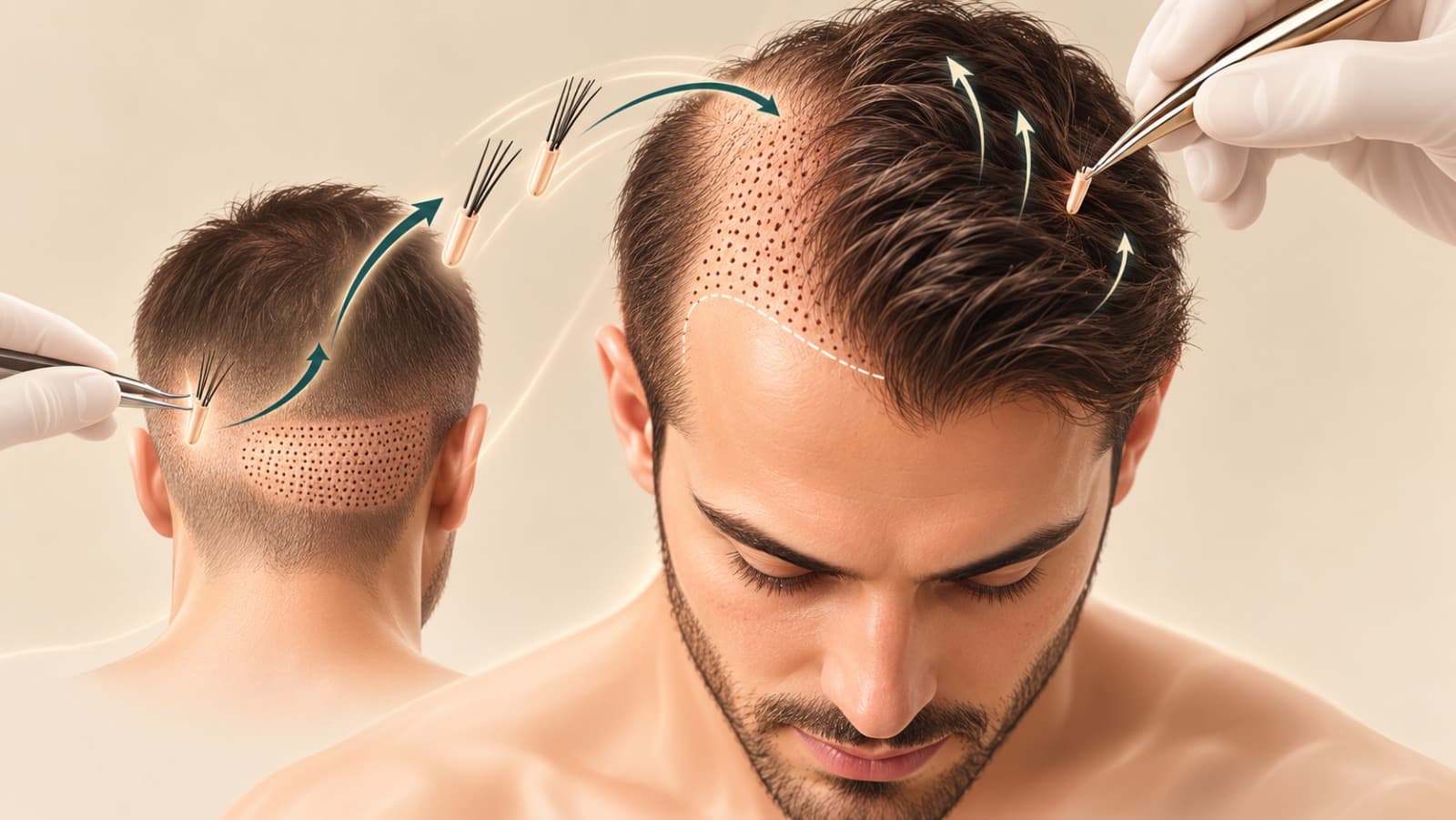
A DHI hair transplant (Direct Hair Implantation) is a technique where individual hair follicles are taken from a donor area, usually the back of the head, and implanted directly into thinning areas using a pen-like tool called a Choi implanter. It is a variation of FUE that combines channel creation and placement in one step.
Key facts
- Treats: pattern hair loss and thinning on the scalp, and sometimes the hairline, crown, beard or eyebrows
- How it is done: follicles are extracted one by one, then placed directly with an implanter pen
- Anaesthesia: usually local anaesthesia, sometimes with light sedation
- Hospital stay: normally done as a day procedure, without an overnight stay
- Recovery: early healing of the scalp first, then a shedding phase, then gradual new growth over many months
What is the difference between DHI and FUE?
Both methods remove follicles one at a time from the donor area. The main difference is in how they are placed: in classic FUE the surgeon first opens small channels and then inserts the grafts, while in DHI the implanter pen creates the opening and places the graft in a single movement.
Some patients and doctors prefer DHI because:
- It gives the surgeon close control over the angle, depth and direction of each graft
- The grafts may spend less time outside the body
- It can be done without shaving the recipient area in some cases
DHI is not automatically better than FUE. It can be slower and may cover a smaller area in one session. Which technique fits you is something to decide with your surgeon.
Who is suitable for a DHI hair transplant?
People with stable hair loss and a healthy donor area are often good candidates. Your doctor will look at your hair loss pattern, hair quality and general health before recommending it.
Things a doctor usually assesses:
- The cause of your hair loss, as not every type responds to a transplant
- Whether your hair loss is still progressing quickly
- The density and quality of your donor hair
- Your age and expectations for the future
- Medical conditions and medicines that might affect healing
A transplant may not be suitable for some causes of hair loss, such as certain autoimmune or scarring conditions, or if the donor area is too thin. An honest consultation matters more than the technique itself.
How is a DHI hair transplant done?
The procedure is normally carried out in one long session under local anaesthesia. You are awake but the treated areas are numbed.
A typical sequence looks like this:
- Consultation and planning: the doctor discusses goals, designs the hairline and estimates the number of grafts
- Preparation: the donor area is trimmed and local anaesthesia is given
- Extraction: follicles are removed one by one with a fine punch tool
- Implantation: each graft is loaded into a Choi implanter and placed directly into the recipient area
- Aftercare instructions: you receive guidance on washing, sleeping and medicines
How long the session takes depends on the number of grafts and the team's working method.
What is recovery like after DHI?
Most people go home the same day and return to light daily activities fairly soon. Results develop slowly, so patience is part of the process.
Recovery usually happens in stages:
- Early days: some redness, swelling, tenderness and small scabs are common
- First weeks: scabs fall off and the scalp settles; many patients go back to work, depending on their job
- Shedding phase: transplanted hairs often fall out, which is normally expected
- New growth: new hairs gradually appear and thicken over many months
Your doctor will tell you when you can wash your hair normally, exercise, swim or wear a hat. The pace of healing and growth differs from person to person.
What are the risks and side effects?
DHI is generally considered a low-risk procedure, but like any surgery it has possible side effects. Most are temporary, though some need medical attention.
Possible effects include:
- Swelling of the forehead or around the eyes
- Pain, itching or numbness in the donor or recipient area
- Small pimples or ingrown hairs (folliculitis)
- Infection or bleeding, which are less common
- Temporary shedding of existing hair nearby ("shock loss")
- Lower growth or density than hoped, or an unnatural look if poorly planned
- Visible thinning of the donor area if too many grafts are taken
Tell your doctor about your health, medicines and smoking habits. Your personal risks should be discussed with the surgeon who treats you.
What affects the cost of a DHI hair transplant?
The price varies widely between countries and clinics. It mainly depends on the scope of treatment and who carries it out.
Factors that often influence the cost:
- The number of grafts needed and the size of the area
- How much of the work is done by the surgeon versus the team
- Clinic location and facilities
- Whether pre-tests, medicines, aftercare products and follow-up are included
- Travel extras such as accommodation and transfers
Always ask for a written quote that clearly lists what is and is not included.
How do I choose a clinic abroad for DHI?
Look for a clinic that is open about who performs your procedure and how it plans your treatment. A careful consultation is a good sign; pressure to book quickly is not.
Useful questions to ask:
- Who designs the hairline, extracts and implants the grafts?
- What are the surgeon's qualifications and experience with DHI?
- How many grafts do they suggest for you, and why?
- How do they protect the donor area for the future?
- What aftercare and follow-up do they offer once you are home?
- How do they handle complications or questions after you travel?
Plan enough time for travel and rest, and avoid flying home while you still feel unwell.
Next steps
On our marketplace you can compare verified clinics offering DHI hair transplants and send one free request; the clinics then contact you. Share your goals and questions openly. The treating doctor will assess your situation and decide which approach, if any, suits you.
This page gives general information and is not medical advice. A doctor at the clinic will assess whether a treatment is right for you.
Clinics offering DHI hair transplant
 Hayaat Clinic Verified
Istanbul, Türkiye
- DHI hair transplant
- Zirconium Crowns
- Dental implants
- Rhinoplasty
English, Arabic, Turkish, French
- Hotel
- Airport transfer
- Interpreter
- Aftercare
from €1,400
View Profile
Frequently asked questions
Is a DHI hair transplant painful?
The treated areas are numbed with local anaesthesia, so most people feel pressure rather than sharp pain during the procedure. The injections themselves can sting briefly. Afterwards, tenderness, tightness or mild soreness is common for a short time, and your clinic will usually recommend suitable pain relief. How it feels differs between people, so ask your doctor what to expect and how discomfort will be managed.
Will I have to shave my head for DHI?
Not always. The donor area usually needs trimming so the follicles can be extracted, but the recipient area can sometimes be left longer, and with long-hair techniques some trimming may be hidden under existing hair. Whether an unshaven approach is possible depends on the number of grafts, your hair type and the surgeon's method. Discuss this at your consultation if keeping your hair length matters to you.
Are the results of a DHI hair transplant permanent?
Follicles are usually taken from areas that are less affected by pattern hair loss, so transplanted hair often keeps growing over the long term. However, your natural, non-transplanted hair may continue to thin with age. That is why many doctors plan with the future in mind and may suggest medical treatment alongside surgery. Long-term results vary, so talk this through with your surgeon.
When can I go back to work and exercise?
Many people return to office work fairly soon, once swelling and visible scabs feel acceptable to them. Jobs involving heavy physical work, dust or helmets may need a longer break. Strenuous exercise, swimming and saunas are usually paused for a period to protect the grafts. Your doctor will give you personal guidance based on your healing, so follow their instructions rather than fixed timelines.
Can women have a DHI hair transplant?
Yes, some women are suitable, for example with a stable thinning area, a high hairline or hair loss after an injury. Female hair loss often has different causes, such as hormonal or nutritional factors, and is often more diffuse, so a careful medical check comes first. A doctor will assess whether a transplant makes sense or whether another treatment may help more.
Related treatments
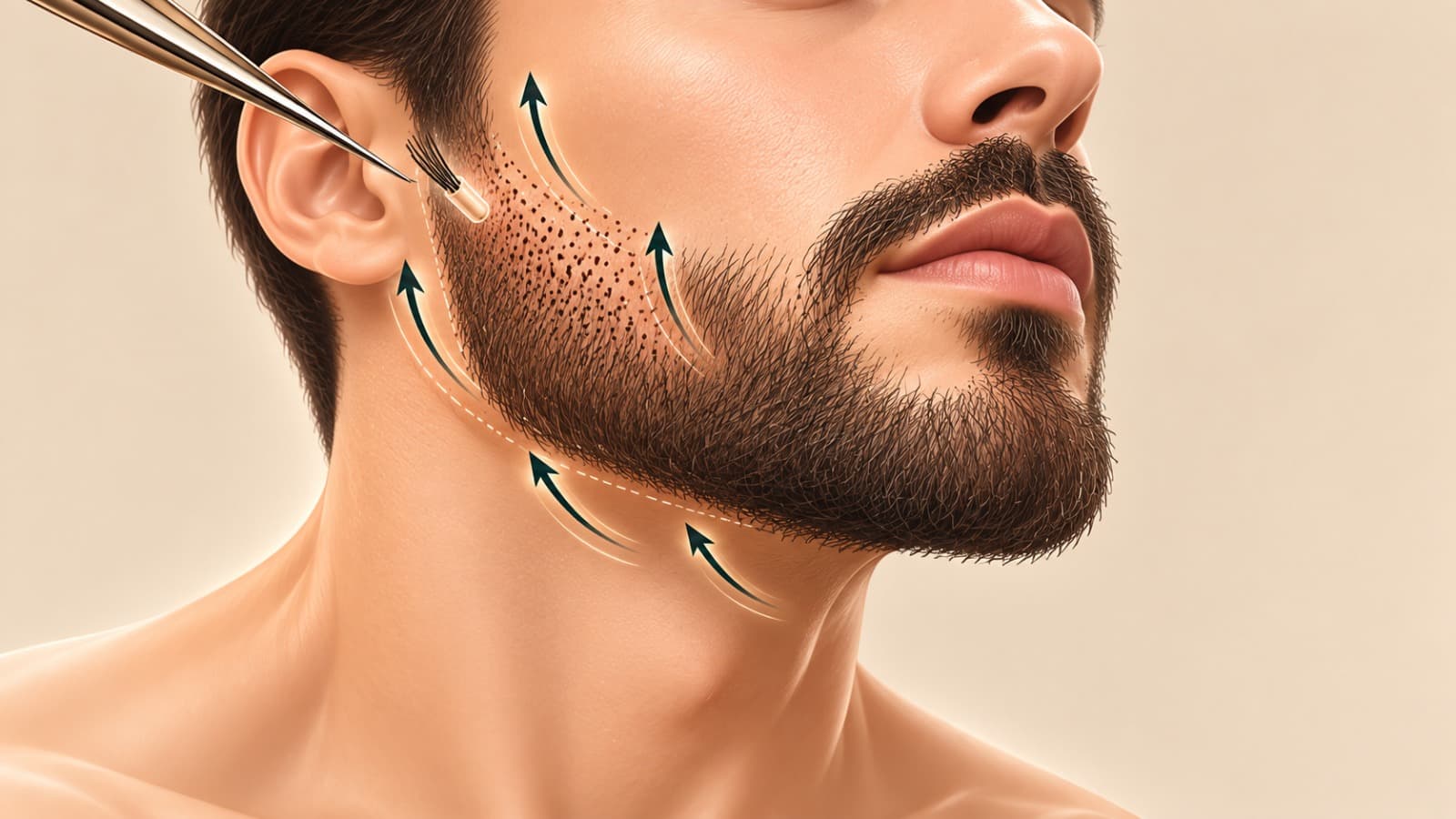
Beard transplant
A beard transplant moves your own hair follicles, usually from the back of the scalp, to thin or patchy areas of the beard, moustache or sideburns. It is usually done under local anaesthesia as a day procedure.
Verified clinics: 0
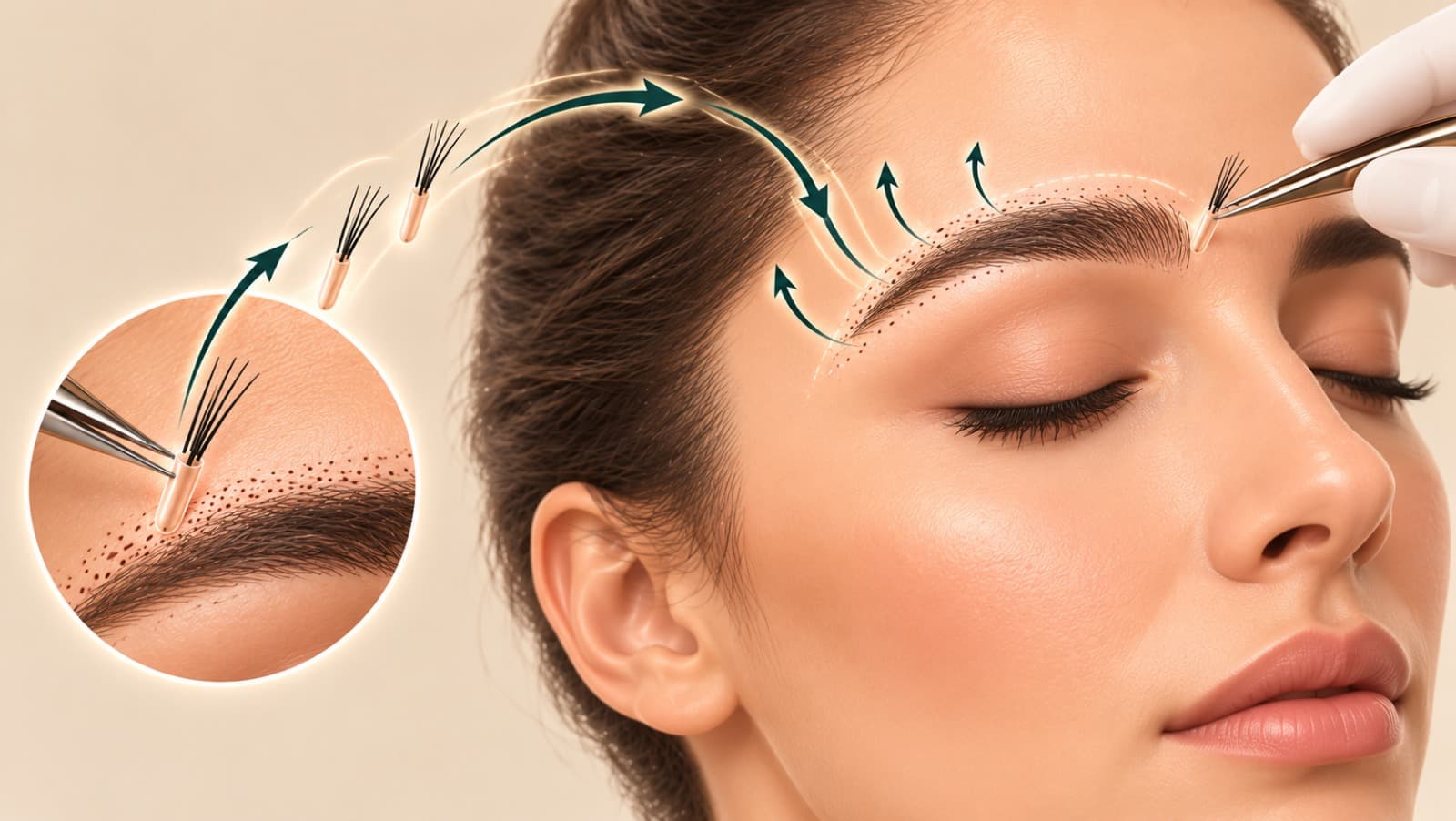
Eyebrow transplant
An eyebrow transplant moves your own hair follicles, usually from the back of the scalp, into thin, patchy or missing brows to create a fuller, natural-looking shape planned with your doctor.
Verified clinics: 1
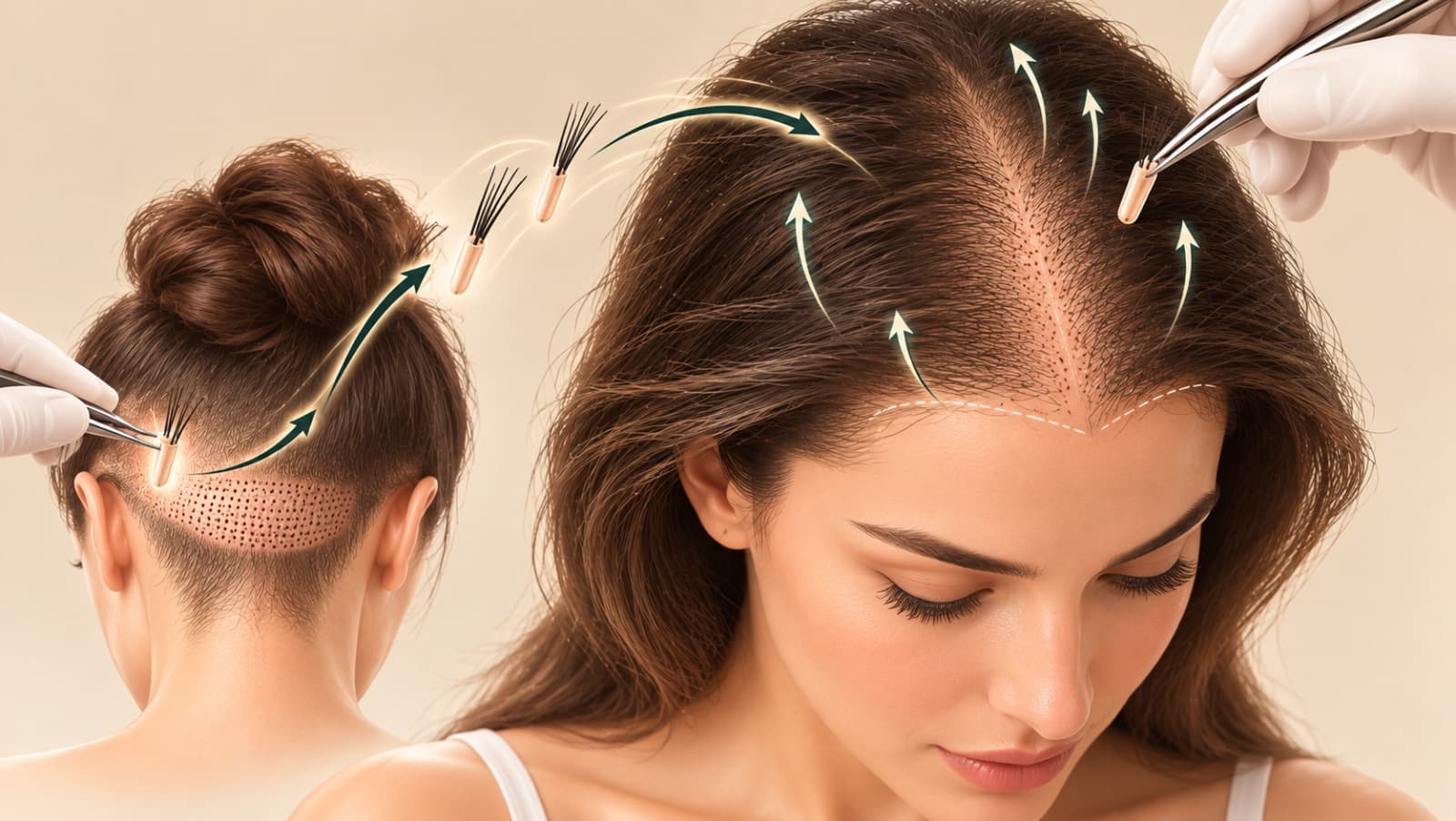
Female hair transplant
A female hair transplant moves healthy follicles from a donor area to thinning parts of the scalp or hairline. It may suit some women with stable, patterned hair loss after a doctor has checked the cause.
Verified clinics: 0
FUE hair transplant
An FUE hair transplant moves individual hair follicles from a donor area to thinning or bald areas, usually under local anaesthesia. Compare verified clinics abroad and send one free request.
Verified clinics: 0