
What happens during the zirconium crown procedure at each dental visit
Wondering what the zirconium crown procedure involves? Here is a calm, step-by-step look at each dental visit, from the first consultation and tooth preparation to fitting the final crown and caring for it afterwards.
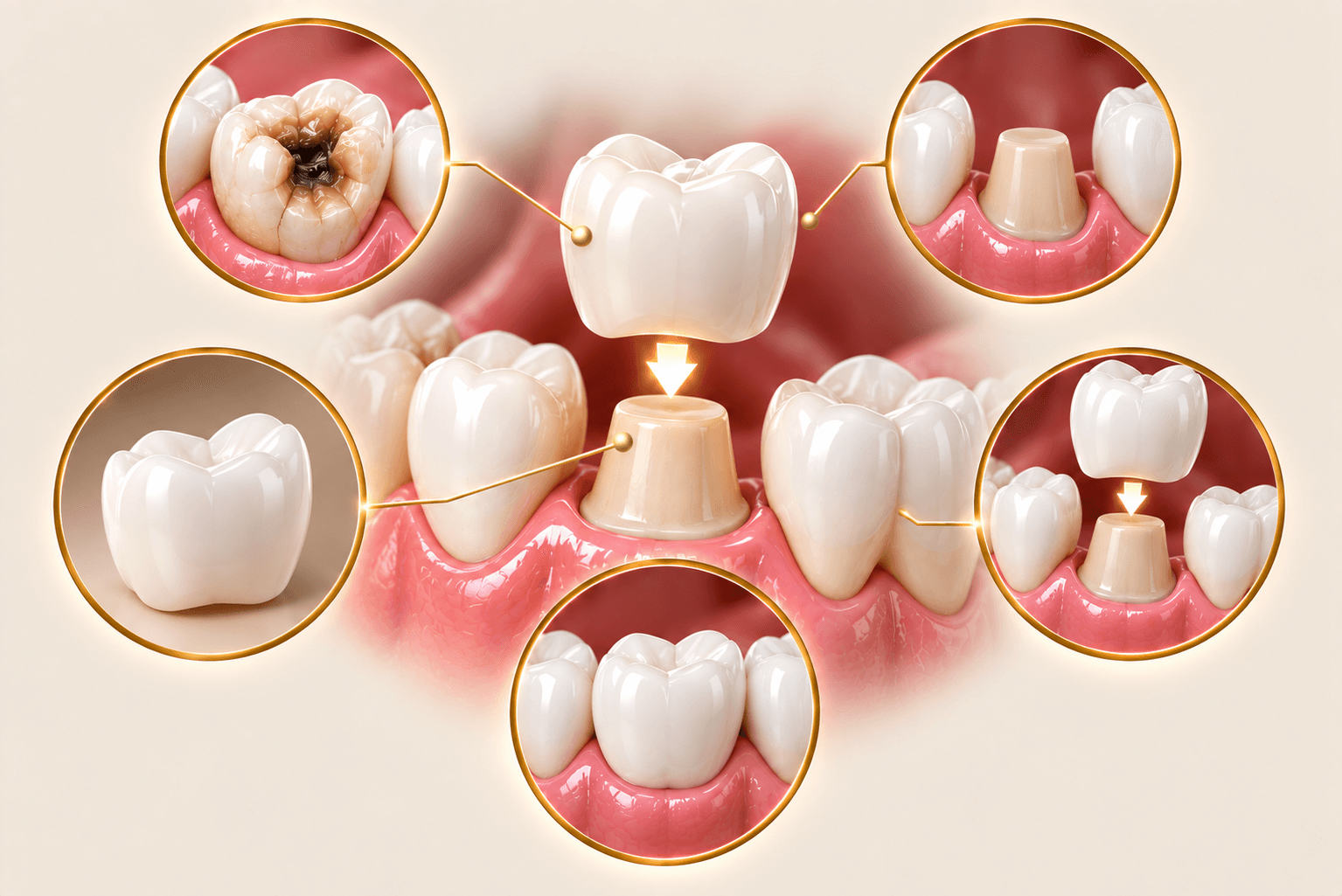
If your dentist has suggested a crown, it helps to know what to expect before you sit down in the chair. The zirconium crown procedure usually takes more than one visit, and each visit has its own purpose. This guide walks you through every step, from the first examination to the day your new crown is bonded in place.
Zirconium crowns are tooth-shaped caps made from zirconia, a strong, tooth-coloured ceramic. They cover a damaged, weakened or discoloured tooth, or sit on top of a dental implant. Many people choose them because they contain no metal and can look natural next to their own teeth. Every clinic works in its own way, so think of this as a general picture rather than a fixed plan.
Before you start: is a zirconium crown right for you?
A crown isn't the answer for every tooth. Only a dentist who has examined you can decide whether it suits your teeth, gums and bite. A dentist may suggest a crown when:
- A tooth is cracked, broken or badly decayed
- A large filling no longer gives the tooth enough support
- A tooth has had root canal treatment and needs protection
- A tooth is badly discoloured or misshapen
- A dental implant or bridge needs a visible replacement tooth
Some situations need extra care first. Active gum disease, untreated decay, heavy teeth grinding (bruxism) or too little healthy tooth structure may mean the dentist treats the underlying problem first or suggests a different option.
Visit one: consultation and planning
The first appointment is mostly about understanding your situation. You won't usually have any tooth preparation done at this stage, although this depends on the clinic.
During the consultation the dentist will typically:
- Examine your teeth, gums and bite
- Take X-rays, and sometimes a scan, to check the roots and surrounding bone
- Talk about your goals, such as strength, appearance or replacing a missing tooth
- Discuss the shade of the crown so it blends with your natural teeth
- Explain any treatment needed beforehand, such as fillings, a root canal or gum care
This is a good moment to ask questions. You might want to know whether the clinic makes crowns on site or works with an outside lab, which type of zirconia it plans to use (for example monolithic, which is solid, or layered with porcelain for more translucency) and how many visits it expects. Mention any known sensitivities to dental materials, too. Zirconia allergies are considered rare, but your dentist should know your history.
Visit two: preparing the tooth and taking an impression
This is the main hands-on part of the zirconium crown procedure. It's usually done under local anaesthesia, so the area is numb and you should feel pressure rather than pain. Some clinics offer sedation to anxious patients, so ask if this would help you.
Shaping the tooth. The dentist removes a thin layer from the outside of the tooth so the crown has room to fit over it. Because zirconia is strong, less tooth often needs to be removed than with some other crown types, although this depends on your tooth and the crown design.
Impression or digital scan. Next, the dentist records the exact shape of the prepared tooth. This may be a traditional mould or a digital scan taken with a small camera. The information goes either to a dental lab or to a milling machine in the clinic.
Temporary crown. If your crown is made in an outside lab, you'll often get a temporary crown to protect the prepared tooth in the meantime. Temporary crowns are less sturdy than the final one, so it's sensible to:
- Chew on the other side where you can
- Avoid very sticky or hard foods
- Slide dental floss out sideways rather than pulling it up
- Contact the clinic if the temporary crown becomes loose or falls off
Some clinics use digital design and in-house milling, which can sometimes allow the crown to be made and fitted with fewer visits. Whether this is possible depends on the clinic's equipment and your treatment plan.
Final visit: fitting your zirconium crown
When the permanent crown is ready, the temporary one is removed and the tooth is cleaned. The dentist then places the new crown and checks it carefully before fixing it in place.
At this stage the dentist will usually look at:
- Fit: whether the edges sit closely against the tooth and gum
- Colour: whether the shade matches the neighbouring teeth
- Bite: whether your teeth meet evenly when you close and chew
Small adjustments are common. Once you and the dentist are happy, the crown is bonded to the tooth. Any surface that has been adjusted should be polished well, as a rough zirconia surface can wear down the opposing natural teeth.
After the zirconium crown procedure: recovery and care
Most people get back to normal activities soon afterwards, but recovery is different for everyone. It's common to feel some sensitivity, mild gum soreness or a bite that seems slightly unfamiliar at first. These usually settle, though not always at the same pace.
Things that may help in the first days:
- Chew carefully until the numbness has fully worn off
- Avoid very hot, cold, hard or sticky foods if your teeth feel sensitive
- Brush gently and clean between your teeth as your dentist advises
- Let the clinic know if your bite feels uneven, as a small adjustment is often all that's needed
In the long run, crowns need the same attention as natural teeth. Good daily oral hygiene and regular check-ups help to lower the risk of decay forming at the edge of the crown. If you grind your teeth, your dentist may suggest a night guard.
Like any dental treatment, crowns carry some risks. These can include temperature sensitivity, gum irritation, the crown loosening or, less commonly, chipping, and sometimes the need for root canal treatment later if the nerve becomes inflamed. Your dentist should explain how these apply to you before treatment begins.
When to talk to a doctor
Contact your dentist or the treating clinic if you notice any of the following:
- Pain that gets worse rather than better, or doesn't settle
- Swelling of the gum or face
- Sensitivity that continues or becomes stronger over time
- A bite that still feels uneven after the first few days
- A crown that feels loose, moves, chips or comes off
- Signs of an allergic reaction or anything else that worries you
If you're planning treatment abroad, ask before you travel how follow-up and adjustments will be handled once you're home. It's also a good idea to keep a copy of your X-rays and treatment notes for your local dentist.
Planning your treatment
Knowing what happens at each visit can make the zirconium crown procedure feel much more manageable. The right plan for you depends on your teeth, your health and the clinic's approach, so a personal assessment is always the first step. When you're ready, you can compare verified clinics offering zirconium crowns and send one free request. Clinics will then contact you to discuss your situation, with no obligation to go ahead.