
Zirconium crown recovery: sensitivity, getting used to your bite and daily care
New zirconium crowns can feel a little strange at first. Here is what zirconium crown recovery often involves, from mild sensitivity and a new-feeling bite to simple daily habits that help your crowns last.
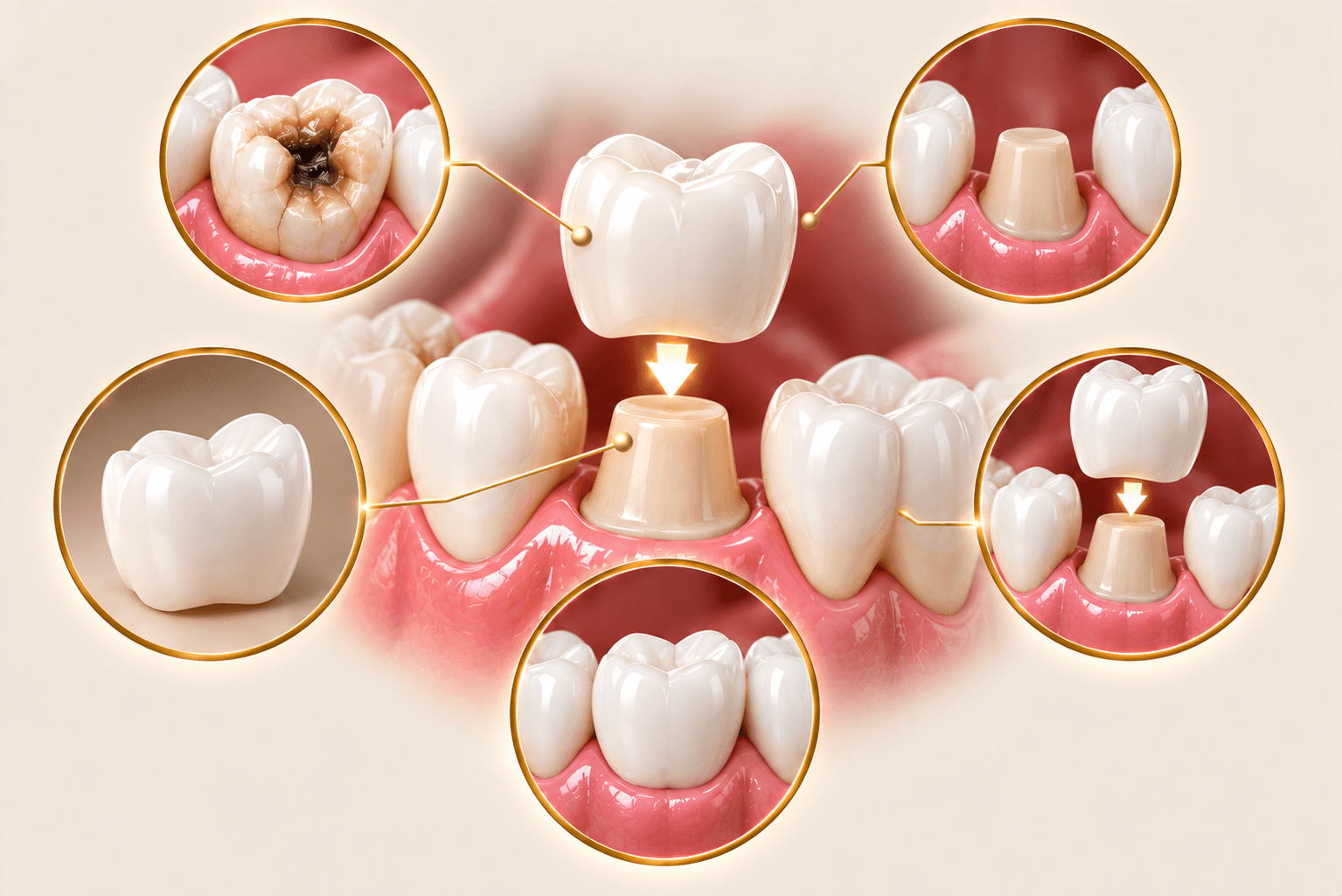
Your new zirconium crowns are in place. Now you may be wondering how they will feel over the next few days and how to look after them. For most people, zirconium crown recovery is fairly simple. You can usually eat, talk and get on with your day soon after the appointment. Still, it helps to know what is normal, what you can do to feel comfortable and when to call your dentist.
This guide covers the most common experiences after crowns are fitted: tooth sensitivity, getting used to how your teeth meet, gum care and long-term daily habits. Keep in mind that everyone heals differently. Your treating dentist is the best person to advise you on your own recovery.
What zirconium crown recovery usually looks like
Zirconium crowns are tooth-coloured caps made from zirconia, a strong ceramic. They are bonded onto a prepared tooth or attached to a dental implant. The treatment is done as an outpatient in a dental clinic and usually needs no hospital stay, so there is no long recovery period like there is after surgery.
In the first hours and days you may notice:
- Numbness from the local anaesthetic, which wears off over a few hours
- Mild sensitivity to hot or cold food and drinks
- Sore or tender gums around the edge of the crown
- A bite that feels slightly different from what you are used to
These are common and tend to settle. How long they last varies from person to person. It depends on things like how many teeth were treated, the condition of the teeth beforehand and whether any other treatment was needed first.
Tooth sensitivity after zirconium crowns
Sensitivity is one of the most common things people notice after a crown is fitted. Shaping the tooth and bonding the crown can irritate the tooth for a while, especially if the tooth still has its natural nerve. You might feel a short, sharp twinge when you drink something cold or breathe in cold air.
To keep things comfortable while your teeth settle:
- Avoid very hot or very cold food and drinks for a while if they bother you
- Use a soft toothbrush and brush gently around the crown
- Ask your dentist whether a toothpaste for sensitive teeth is suitable for you
- Take any pain relief only as advised by your dentist or pharmacist
Mild sensitivity that slowly gets better is usually part of normal healing. Sensitivity that gets worse, keeps you awake or turns into a throbbing ache is different. In that case, contact your clinic. Now and then the nerve of a crowned tooth becomes inflamed and needs further treatment, such as root canal treatment.
Getting used to your new bite
Your dentist checks the fit and bite carefully before bonding the crown. Even so, a new crown can feel a little unfamiliar at first. Your tongue notices small changes in shape and surface, and while you are still numb it is hard to judge how your teeth come together.
Many people find their bite feels natural again within a short time. Some things that may help:
- Wait until the numbness has fully worn off before chewing properly, so you do not bite your cheek, lip or tongue
- Chew slowly at first and pay attention to how your teeth meet
- Notice whether the crowned tooth touches first or harder than the teeth around it
If one tooth feels "high", or your bite still feels uneven after the numbness is gone, tell your clinic. A small adjustment is often all that is needed, and it is better to sort this out early. A bite that stays uneven can make the tooth sore, strain your jaw and, over time, put extra stress on the crown.
Caring for your gums and eating in the first days
The gum around a new crown can be a little tender, especially if a temporary crown was worn before or if the edge of the crown sits close to the gumline. Gentle, regular cleaning helps the gum settle and keeps the area healthy.
In the first days after fitting, it may help to:
- Brush twice a day with a soft brush, angling the bristles gently towards the gumline
- Clean between your teeth the way your dentist advises, using floss or small interdental brushes
- Choose softer foods if your teeth or gums feel tender
- Avoid very hard or sticky foods for a while, such as hard sweets, ice or chewy toffee
Keep in mind that a little gum tenderness is common. Swelling that grows, bleeding that does not stop, or pain that gets worse should be checked by a dentist.
Daily care for zirconium crowns over the long term
Zirconia is a strong material, but the tooth underneath a crown can still decay, and the gums around it can still become inflamed. Good habits help protect both the crown and your natural teeth.
Daily habits that support healthy crowns:
- Brush twice a day, paying attention to where the crown meets the gum
- Clean between your teeth every day, as decay can start at the edge of a crown when plaque builds up
- Limit sugary snacks and drinks
- Do not use your teeth as tools, for example to open packaging or bite your nails
If you grind or clench your teeth, mention it to your dentist. Heavy grinding (bruxism) puts a lot of force on crowns and natural teeth, and your dentist may suggest wearing a night guard.
Regular check-ups let your dentist look at the crown's fit, the health of your gums and the surface of the crown. A well-polished crown surface is important, as a rough surface can wear down the natural teeth it bites against.
Recovery when you have crowns fitted abroad
If you are travelling for treatment, plan your trip with recovery in mind. Ask the clinic how many visits your treatment plan needs and whether there is time for a follow-up check after the crowns are bonded. That way, small bite adjustments can be made before you fly home.
It is also worth asking:
- Who to contact if you notice a problem after you return home
- What written aftercare advice you will receive
- Whether your X-rays and treatment notes can be shared with your local dentist
Having a local dentist for regular check-ups makes long-term care easier, wherever your crowns were made.
When to talk to your dentist
Some discomfort after crowns is expected. Still, do not wait it out if something does not feel right. Contact your clinic or a dentist if you notice:
- Pain or sensitivity that gets worse instead of better
- Throbbing pain, swelling of the face or gums, or a bad taste in the mouth
- A bite that still feels uneven once the numbness has gone
- A crown that feels loose, moves or comes off
- A chip, crack or sharp edge on the crown
- Gum bleeding or irritation around the crown that does not settle
If a crown comes off, keep it safe and contact a dentist rather than trying to glue it back yourself. If you have known sensitivities to dental materials, mention them at your consultation. Recovery, risks and suitability differ for every person, so always discuss your own situation with your treating dentist.
Compare clinics and plan your treatment
If you are thinking about zirconium crowns, it helps to understand the whole process, including recovery and aftercare, before you choose a clinic. On our site you can compare verified clinics, read about their approach and send one free request. The clinics then contact you to discuss your situation and give you a personal quote. Learn more on our zirconium crowns treatment page.