
All-on-4 recovery: swelling, soft foods and aftercare tips
What to expect after All-on-4 surgery, from swelling and soft foods to cleaning your temporary bridge and going to check-ups. Practical tips to help you feel more prepared for healing.
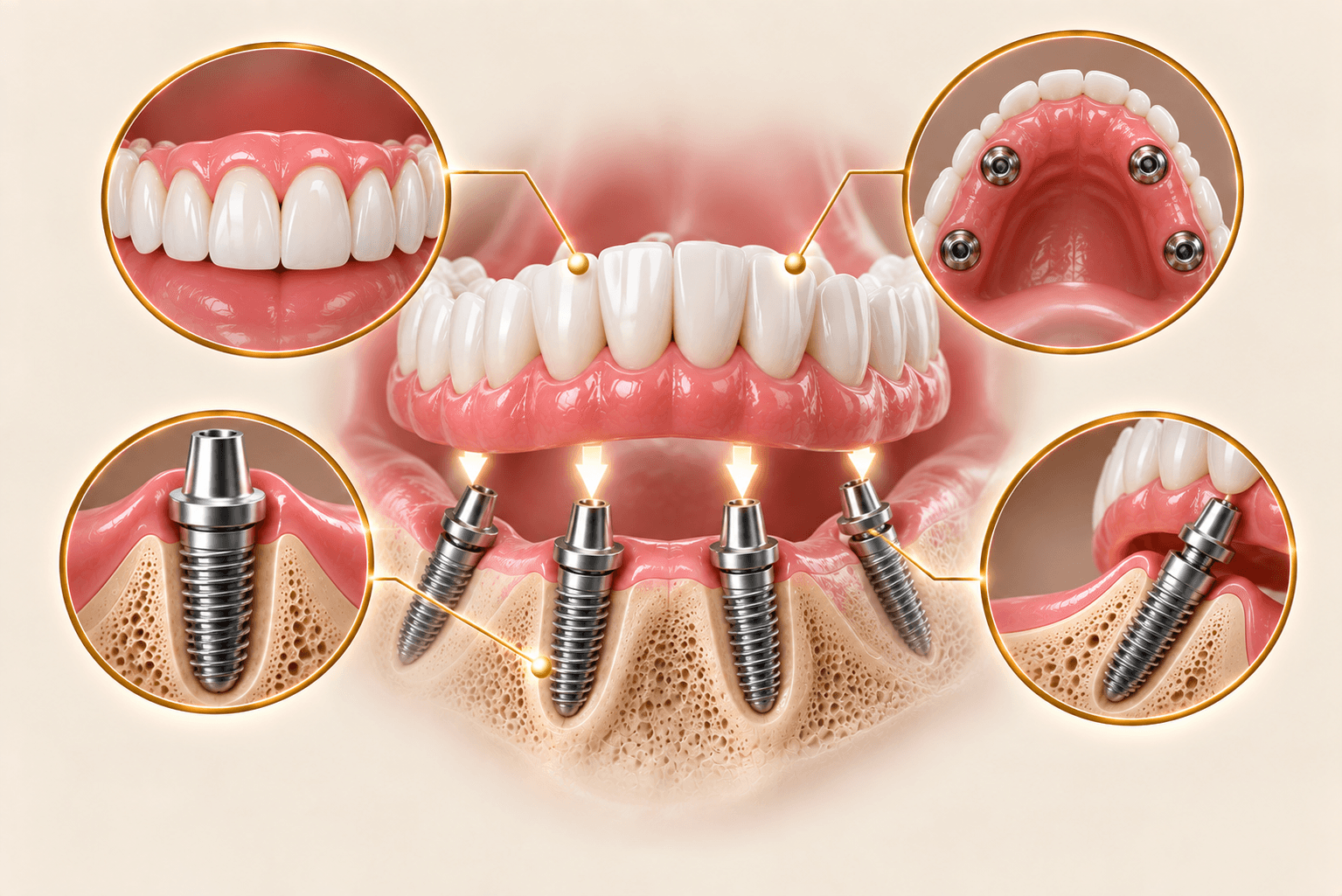
Getting a full arch of new teeth on four implants is a big step, and it's natural to wonder how the weeks afterwards will feel. Knowing what usually happens during all-on-4 recovery can make healing calmer and less confusing. This guide covers swelling, eating, cleaning and everyday comfort. Recovery is different for everyone, though, so your own dentist's instructions always come first.
The first days of all-on-4 recovery
All-on-4 is normally done as an outpatient procedure, so most people go home the same day. Depending on your treatment plan, you may have had local anaesthesia, sedation or general anaesthesia. If you were sedated or had a general anaesthetic, you will usually need someone to take you home and stay with you for a while.
In the first few days, many patients notice:
- Swelling in the cheeks, lips or around the jaw
- Some bruising, which may spread down towards the neck
- Discomfort or soreness, usually managed with medicines your dentist prescribes
- Slight bleeding or oozing at first
- Feeling tired, especially after a longer procedure or sedation
These are common reactions to surgery and usually settle over time. How strong they are, and how long they last, varies from person to person. It helps to plan a quiet few days with no heavy commitments, plenty of rest and your medicines ready at home or in your hotel.
Managing swelling and discomfort
Swelling is your body's normal response to surgery. There are some simple things that can help you feel more comfortable:
- Cold packs: use them on the outside of your face as your dentist advises, usually with short breaks in between
- Rest with your head raised: an extra pillow at night can help
- Medicines as prescribed: take pain relief and any other prescribed medicines exactly as instructed, and don't add other medicines without asking first
- Avoid strenuous activity: heavy exercise and bending over can make throbbing and swelling worse in the early stage
- Stay hydrated: sip water regularly, following your dentist's advice on how to drink
If you take regular medicines, for example ones that affect blood clotting, check with your dentist and doctor how to handle them around surgery. Never stop or change a medicine on your own.
What to eat: soft foods after All-on-4
A soft diet is one of the most important parts of the healing phase. Your new implants need time to fuse with the bone, and the temporary bridge is lighter than the final one. Chewing hard foods can put strain on both.
Soft foods that patients often find helpful include:
- Smooth soups and broths, lukewarm rather than very hot
- Yoghurt, smoothies and protein shakes
- Mashed potatoes, sweet potatoes or other soft vegetables
- Scrambled eggs and omelettes
- Porridge and soft cereals
- Well-cooked pasta, rice and risotto
- Soft fish, tofu and finely minced meat in sauces
- Hummus, avocado and soft cheeses
Foods that are usually best avoided while you heal:
- Hard, crunchy foods such as nuts, crisps, raw carrots and hard bread crusts
- Chewy or sticky foods like toffee, gum and tough meat
- Biting directly into whole fruit or sandwiches with your front teeth
- Very hot food and drinks in the first days, especially while your mouth is still numb
Your dentist will tell you how long to stay on soft foods and when you can slowly add firmer textures back. That timing depends on your case, so follow the plan you're given rather than a general rule.
Keeping your mouth clean during healing
Good hygiene helps lower the risk of infection, but in the early days it needs to be gentle. Your clinic will explain the exact routine, which often includes:
- Gentle rinses, for example with salt water or a prescribed mouthwash, as directed
- Careful brushing of the temporary bridge with a soft toothbrush once you're told it's safe
- Avoiding forceful spitting or rinsing in the first period
- Using extra cleaning aids, such as a water flosser or small brushes, only when your dentist recommends them
Over the long term, an All-on-4 bridge needs daily cleaning and regular professional check-ups, just like natural teeth. Careful cleaning around the implants helps prevent gum inflammation, known as peri-implantitis.
Habits that support all-on-4 recovery
Beyond swelling and diet, a few everyday habits can make a difference:
- Avoid smoking: smoking can slow healing and is known to raise the risk of implant problems. If you smoke, ask your dentist for advice before and after surgery.
- Limit alcohol: it can interfere with healing and some medicines, so check what is advised for you.
- Protect your bridge: if you grind your teeth, tell your dentist, as they may suggest ways to protect the bridge.
- Go to every check-up: including remote follow-ups if you travelled abroad for treatment.
- Be patient with speech and feeling: it can take time to get used to a new bridge in your mouth.
Recovery phases: from temporary to final bridge
All-on-4 recovery usually happens in stages. First comes early healing with a temporary bridge, often fitted soon after surgery when the implants are stable enough. Then there is a healing period of several months while the implants gradually bond with the jawbone. Finally, a stronger, custom-made final bridge is fitted and your bite is adjusted.
If you're having treatment abroad, this often means two trips: one for surgery and temporary teeth, and another for the final bridge. Ask your clinic early on how follow-up works between visits and who to contact if you have questions once you're home.
When to talk to your dentist or doctor
Some discomfort is expected, but certain signs should be checked quickly. Contact your treating dentist, or seek medical help, if you notice:
- Swelling or pain that gets worse instead of slowly improving
- Fever, chills or feeling generally unwell
- Bleeding that doesn't settle with gentle pressure
- Pus, a bad taste or an unpleasant smell that won't go away
- Numbness or tingling in the lip or chin that persists
- Sinus symptoms after upper jaw implants, such as congestion on one side
- An implant or the bridge feeling loose, cracked or broken
- Difficulty breathing or swallowing, which needs urgent medical attention
Every patient is different. Your dentist knows your medical history and treatment plan, so they are the right person to judge whether something is normal for you.
Compare clinics with confidence
A smooth recovery starts with good planning and clear aftercare. When you look at clinics, ask how they support patients after surgery, what follow-up is included and how they handle problems once you're back home. You can learn more about the treatment and compare verified clinics on our All-on-4 dental implants page, then send one free request. Clinics will contact you, so you can ask your questions and decide at your own pace.